

W: Leo Black
The Parsons MFA Fashion Design and Society Class of 2025 distinguished itself through a profound commitment to "introspective design," where personal heritage and digital nostalgia replaced fleeting trends. Kimberly Ortega re-authored Ecuadorian history by blending traditional iraca palm with deadstock textiles, while Camila Bustamante translated 2010s internet subcultures into two-dimensional "flattened" silhouettes. Effe Qi He elevated urban grit by deconstructing vintage sports jerseys into high-luxury couture, and Dina Mahrouz utilized architectural geometry and upcycled garments to create a visual narrative of liberation from restriction.
Rounding out this visionary cohort, Mikaeru (Jianghao Mo) explored modern identity through fluid, translucent layers anchored by industrial hardware, juxtaposing vulnerability with strength. Chi-An Yu contributed a poetic study on memory by bonding tracing paper to fabric, allowing garments to physically wrinkle and "age" during the runway show. Together, these designers utilized the 2025 showcase to redefine luxury as a medium for archival storytelling, prioritizing artisanal construction and radical sustainability over mass production.
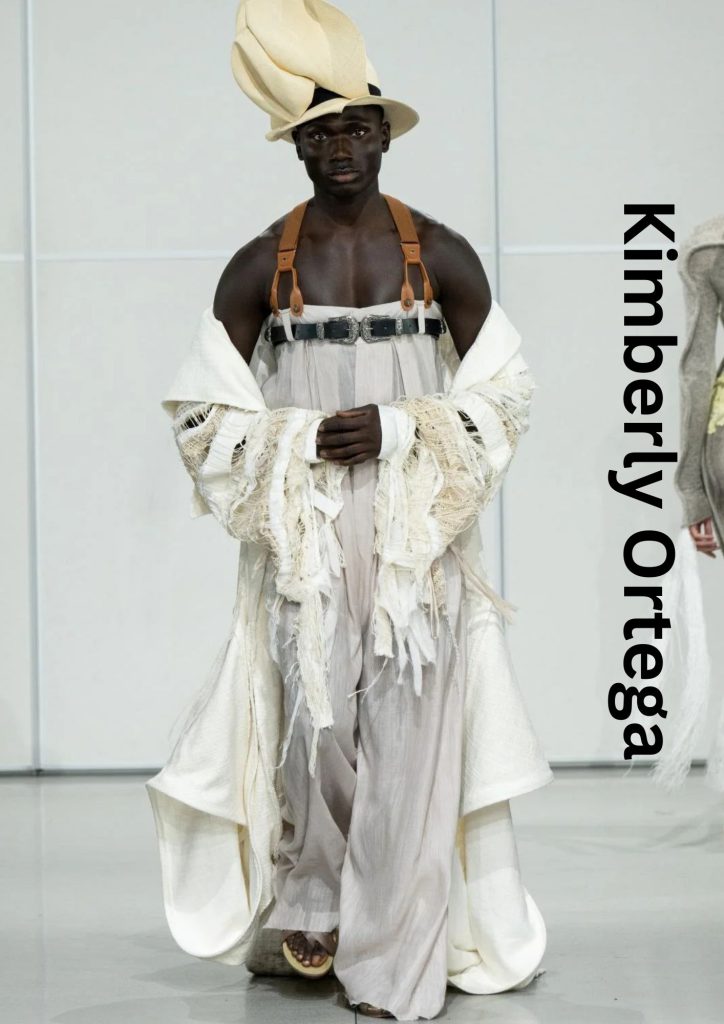
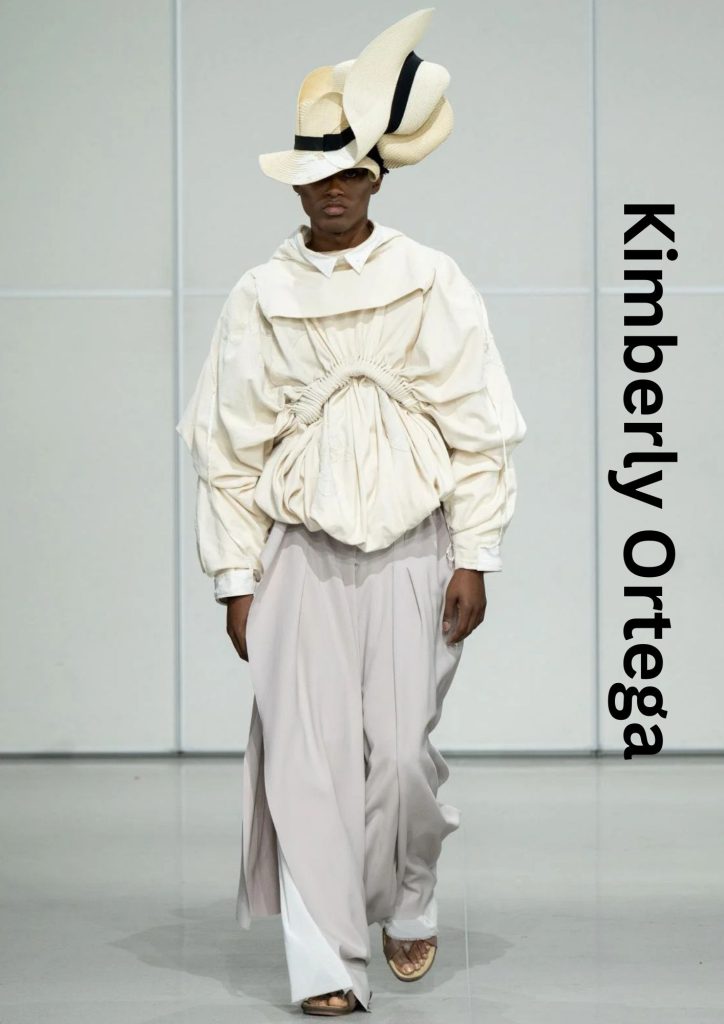
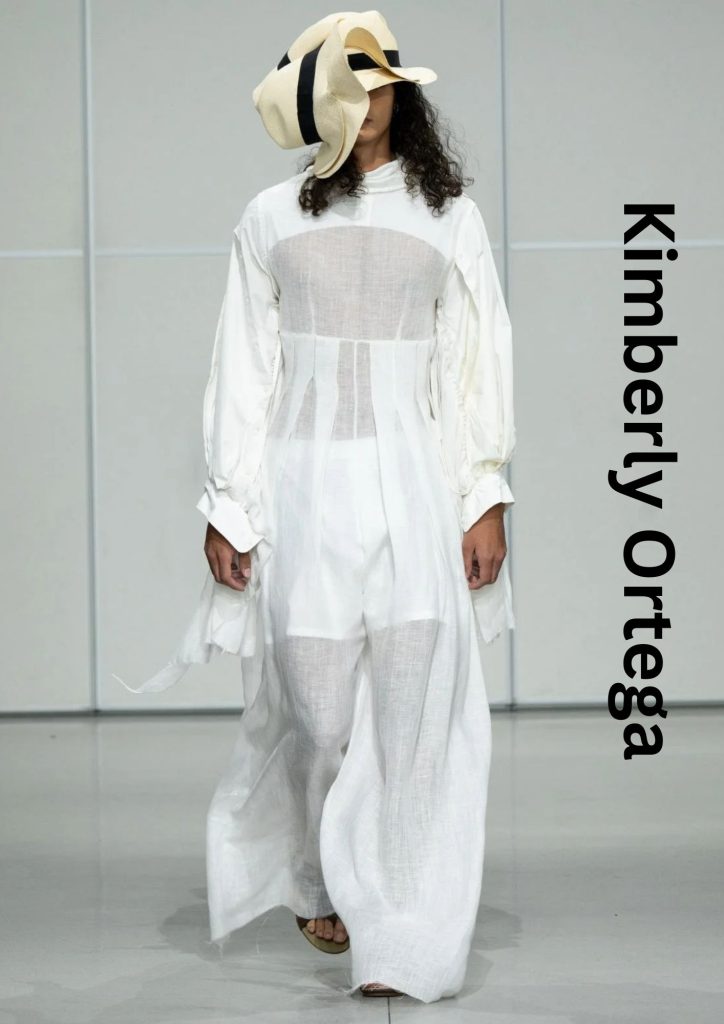
Kimberly Ortega’s graduate collection for the Parsons "Generation 14" show, titled "The Art of the Unwanted," serves as a profound bridge between her Ecuadorian heritage and her background in chemical engineering. Rather than a simple exercise in garment construction, the collection is a deliberate reclamation of cultural history, specifically aimed at correcting the origins of the "Panama Hat." By spotlighting the intricate craft of paja toquilla weaving and collaborating with master weavers like Ilda Maria Sanchez, Ortega honors the Ecuadorian artisans who pioneered the technique. In doing so, she effectively strips away colonial labels and replaces them with a narrative of resilience, proving that graduate fashion can be both intellectually rigorous and deeply human.
The collection’s aesthetic is defined by "resourceful luxury," featuring voluminous, genderless silhouettes and a grounded palette of earthy, organic tones. Ortega creates a compelling tension by blending rigid, hand-woven straw with fluid, repurposed deadstock fabrics, transforming discarded materials into sculptural high-fashion artifacts. This approach has earned her acclaim from industry observers for its maturity and social conscience. Through her brand, SOAK, Ortega rejects fleeting trends in favor of an intentional fashion system, ultimately demonstrating how the "unwanted" remnants of the industry can be woven into a powerful statement of cultural pride.
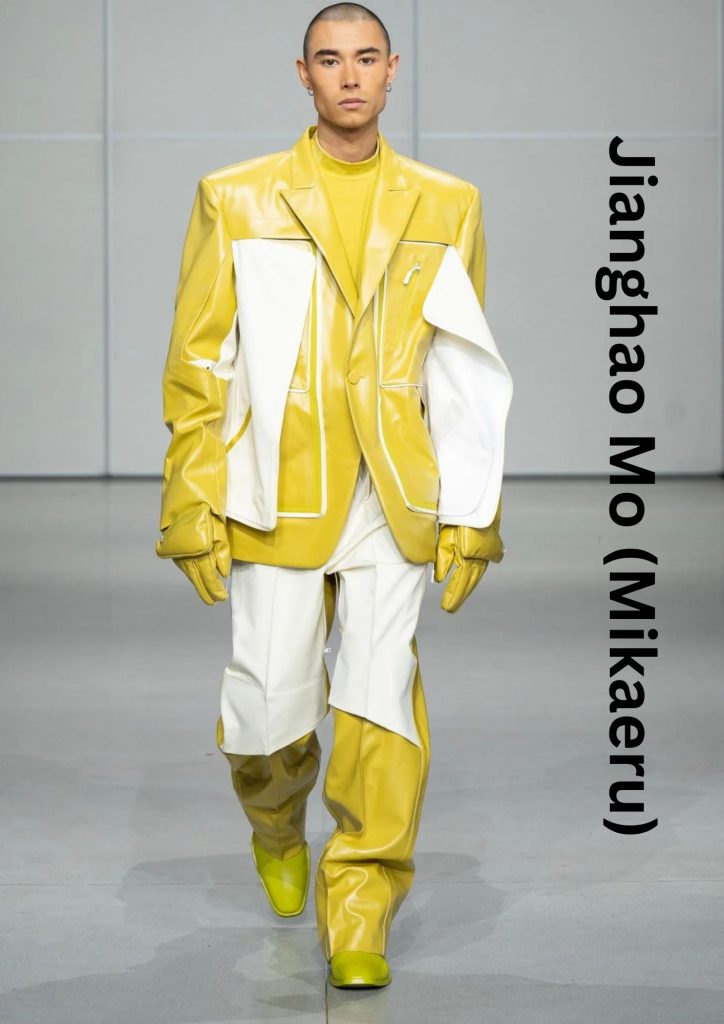
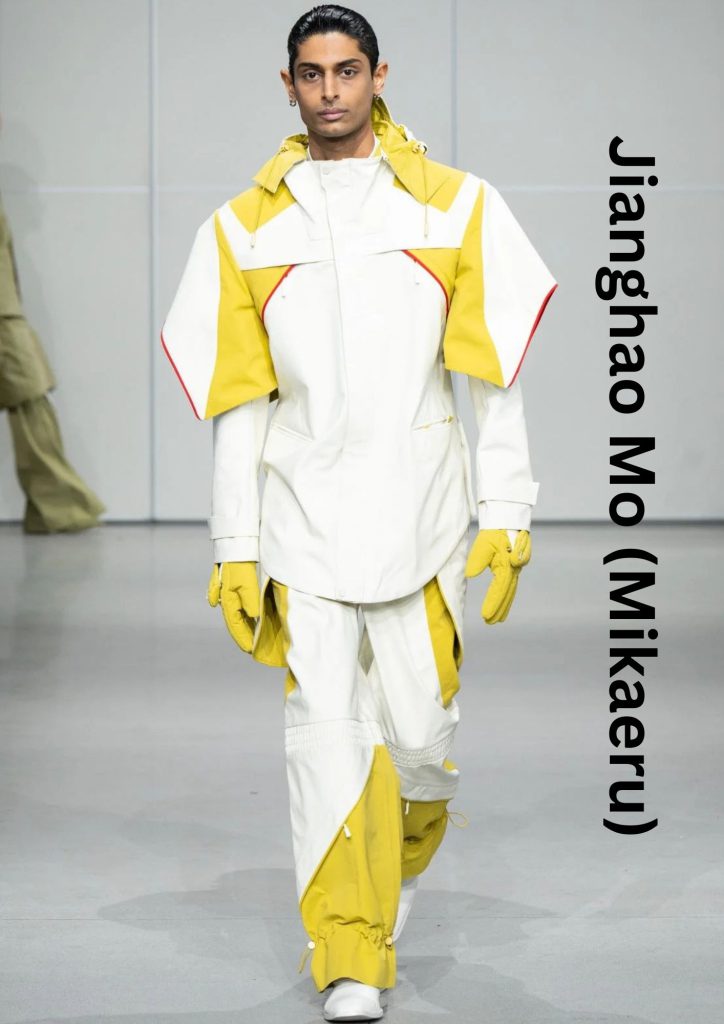
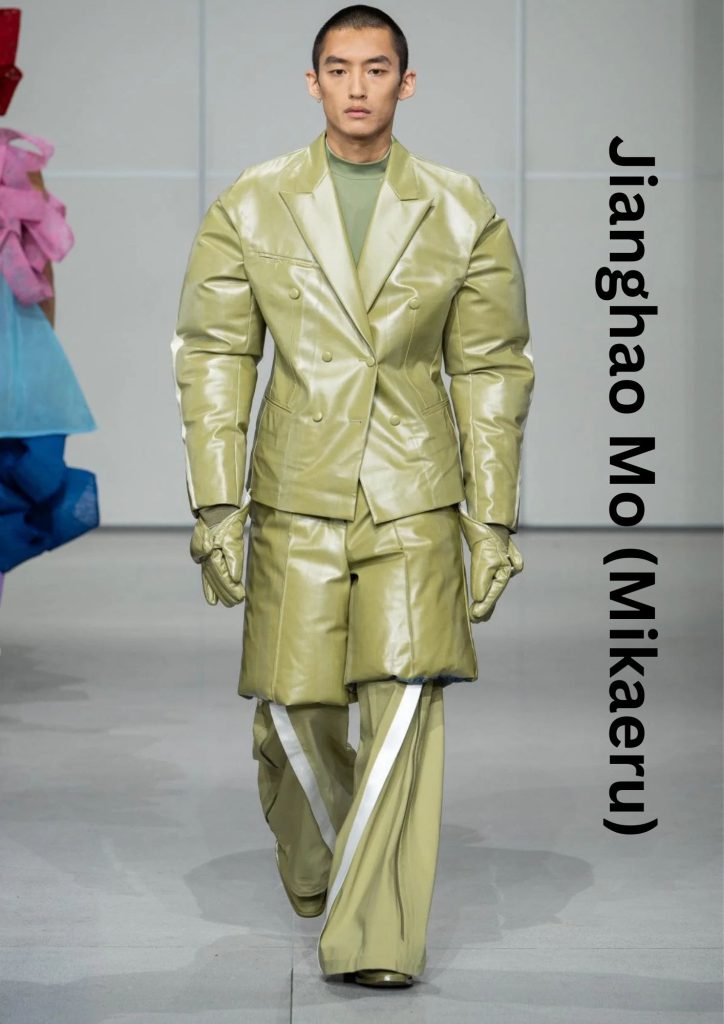
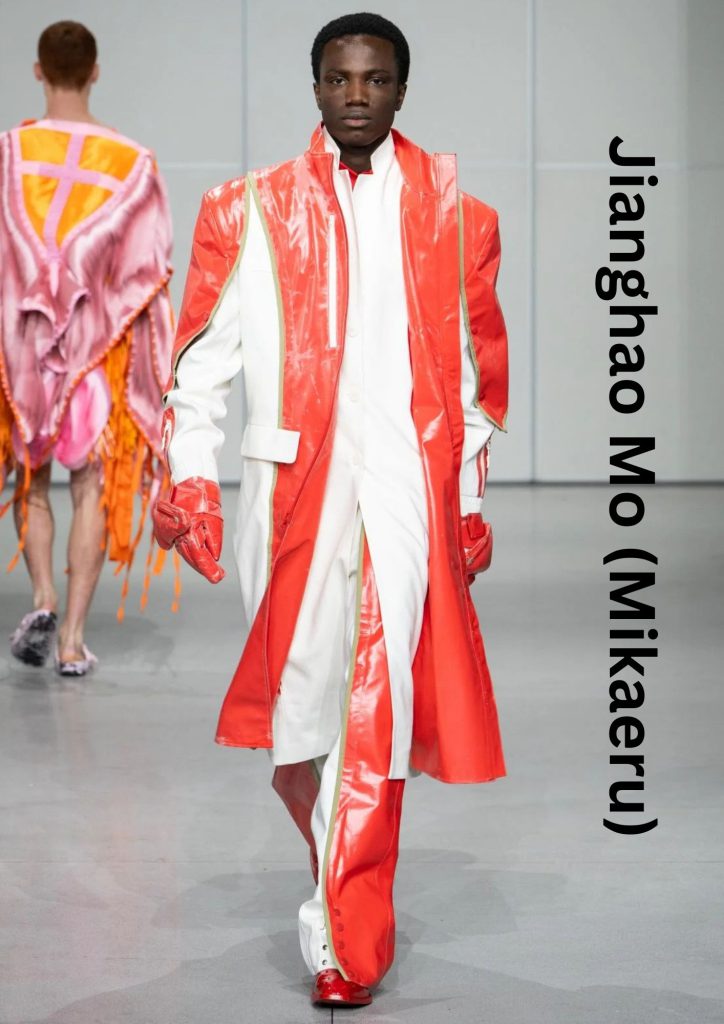
Jianghao Mo (Mikaeru) solidified his reputation as a visionary in "tech-artisanal" fashion with his 2025 Parsons MFA collection, "Cut by Wind, Sewn by Hand." Shown as part of the prestigious Generation 14 runway during New York Fashion Week, the collection was a sophisticated response to the demands of a changing climate, blending the precision of high-end tailoring with the rugged functionality of extreme performance gear. Mikaeru utilized a contrast of materials—pairing architectural wool suiting with laser-cut waterproof nylons and thermal shells—to create a "nomadic luxury" aesthetic. The standout feature was his mastery of modularity; by incorporating magnetic hardware and Fidlock systems, he created garments that could be reconfigured on the fly, transforming from sleek city coats into protective, wind-resistant carapaces.
Critics and industry insiders praised Mikaeru for evolving the "Gorpcore" trend into something more mature and intellectually grounded. While many of his peers focused on digital nostalgia, Mikaeru leaned into a utilitarian realism that treated clothing as a survival tool without sacrificing its artistic silhouette. His work stood out for its impeccable pattern-making, which managed to maintain a sharp, tailored form even when layered with voluminous technical fabrics. By bridging the gap between the high-energy streetwear influence of Shanghai and the rigorous craftsmanship of New York's MFA program, Mikaeru’s 2025 showcase proved he is a leading voice in the future of functional, adaptive luxury fashion.
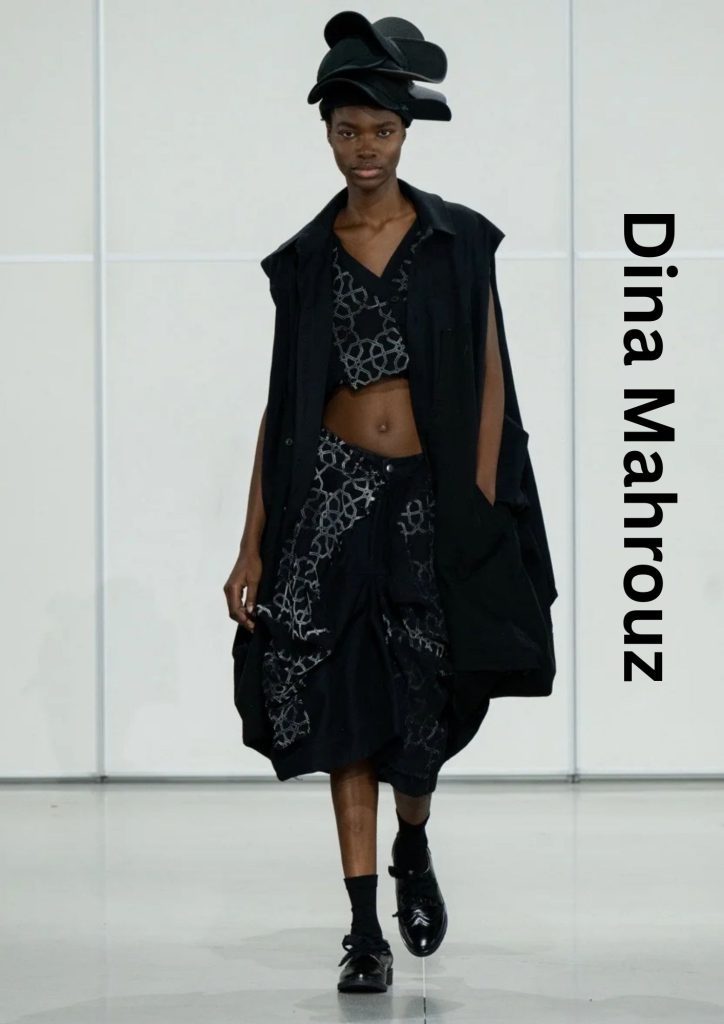
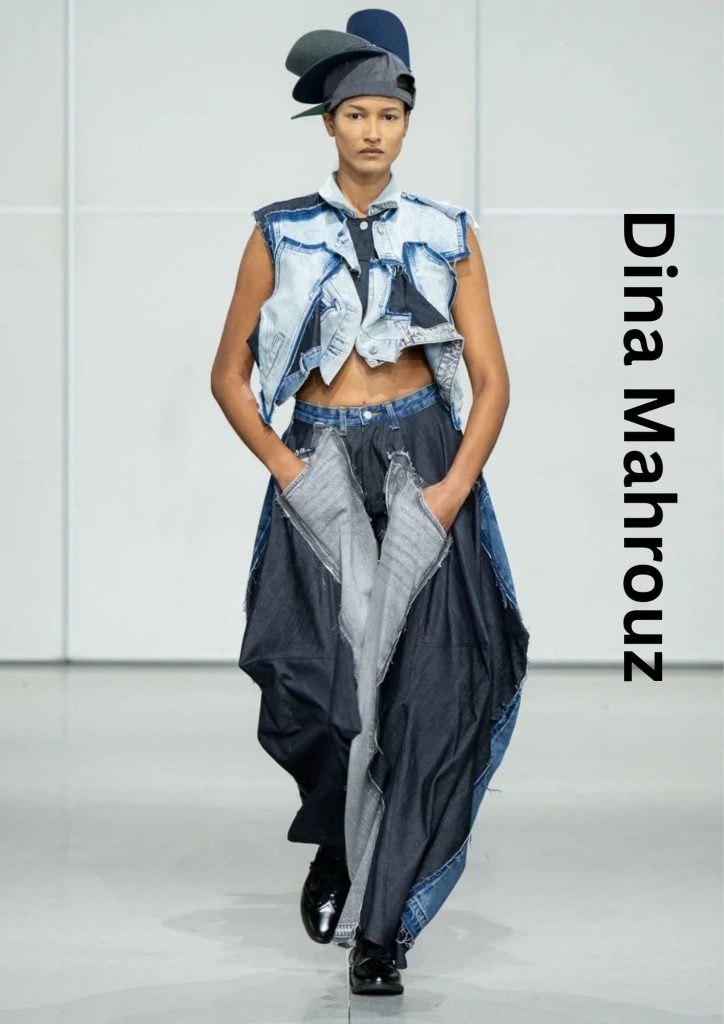
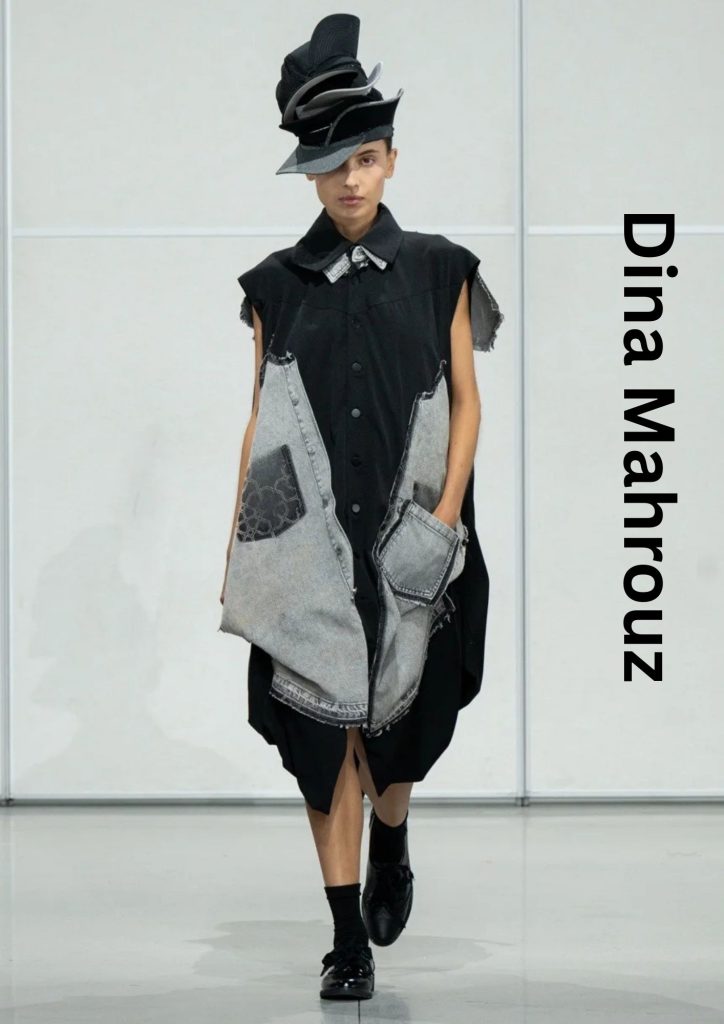
Dina Mahrouz’s graduate collection, "From Framework to Freedom," was a standout at the Parsons "Generation 14" showcase during the September 2025 New York Fashion Week, earning her the Parsons Student Research Award. The collection is a sophisticated exploration of personal liberation, reclaiming memories of the "ill-fitting garments" and emotional restrictions of her teenage years. Mahrouz masterfully translates this historical discomfort into a visual language of release, utilizing sharp, geometric patterns rooted in Iranian art and architecture as a structural backbone. These motifs serve as the foundation for a dramatic evolution on the runway, where rigid, cage-like frameworks gradually give way to expansive, billowing forms, symbolizing a profound psychological journey from constraint to autonomy.
Technically ambitious and sustainably minded, the collection features complex 3D silhouettes transformed from 2D geometric puzzles that shift dynamically with the wearer’s movement. Mahrouz demonstrated a commitment to "sustainable luxury" by composing half of her work from upcycled secondhand cotton and denim, elevating discarded materials to the level of high-concept fashion. By employing a largely monochrome color story, she directs the viewer’s focus toward the intricate textures and the precision of her pattern-making, creating a sharp contrast between rigid aesthetics and breathable, natural textiles. Critics have praised the collection for its "technical mastery," noting that by physically deconstructing the frameworks of her past, Mahrouz has created a body of work that is as academically rigorous as it is deeply human.
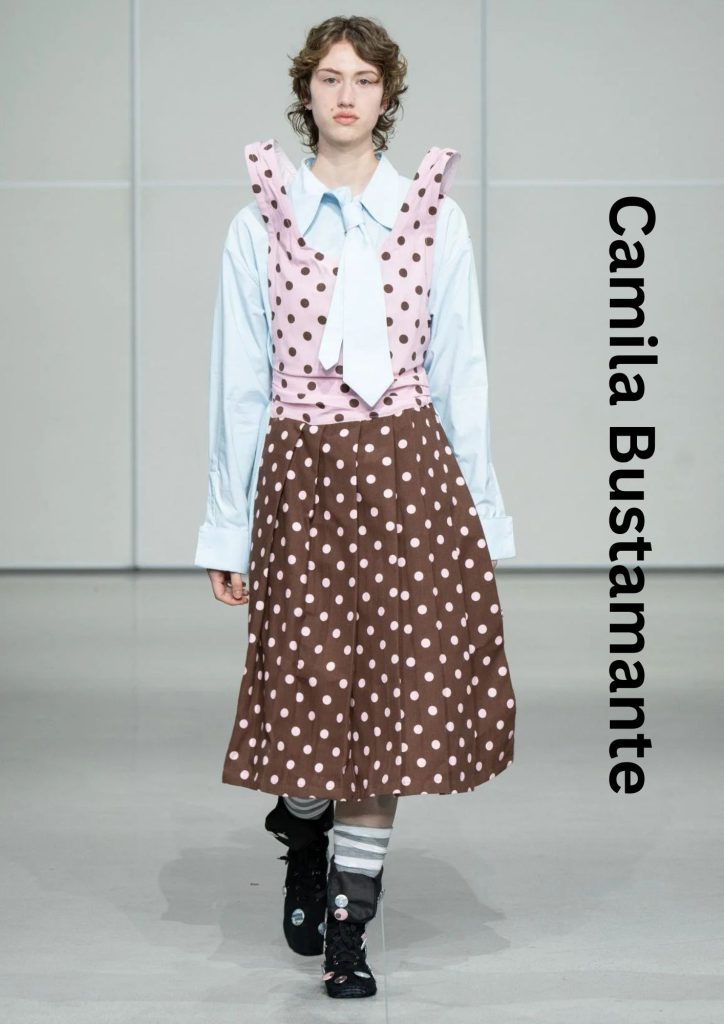
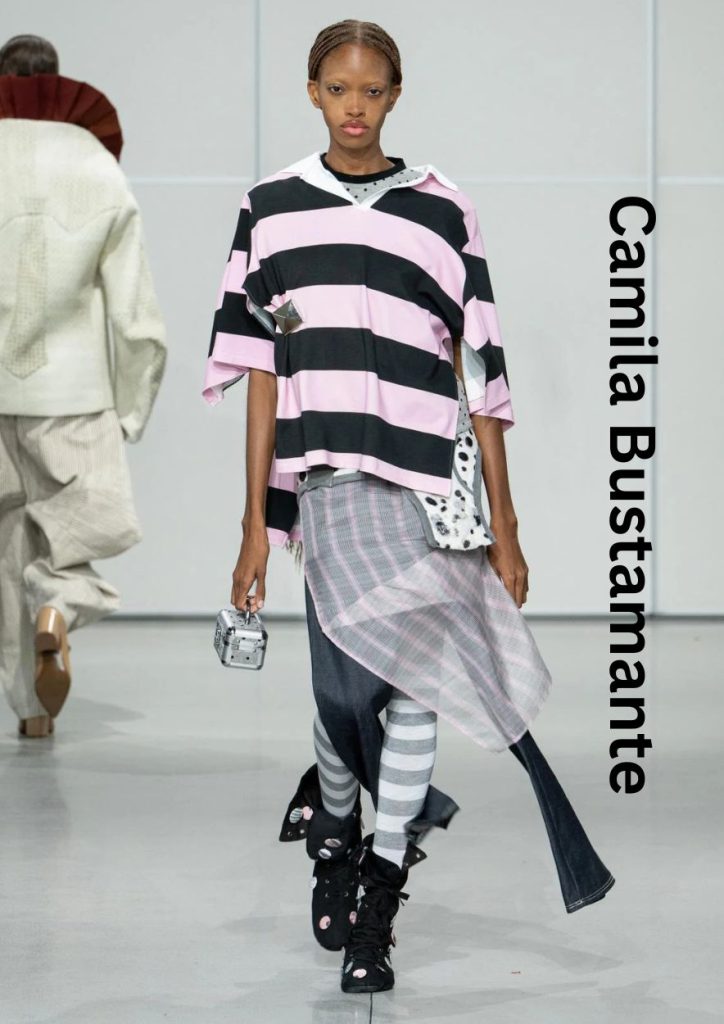
Camila Bustamante’s collection at the Parsons MFA Fashion Runway Showcase 2025 was a compelling, nostalgic exploration of digital culture and adolescent identity. Drawing deep inspiration from her upbringing in mid-2010s Lima, Peru, Bustamante channeled the aesthetics of Tumblr and early YouTube into a tangible wardrobe. Her work stood out for its unique ability to translate the "flatness" of a digital screen into three-dimensional garments. By utilizing materials like neoprene and Japanese denim, she created structured, layered silhouettes that mimicked the look of a digital collage—simultaneously awkward, ironic, and deeply personal.
The review of her collection highlights a sophisticated tension between wearability and high-concept storytelling. While many graduate collections lean into the avant-garde, Bustamante’s pieces—noted for their functional details like zippers and utilitarian fabrics—maintained a grounded sense of reality. Critics praised her use of distorted proportions and "off-ish" construction, such as skirts cut purposefully short and exaggerated layering, to capture the inherent discomfort of the teenage years. Ultimately, her 2025 showcase served as a poignant "personal archive" of the internet age, marking her as a designer who masterfully blends cultural memory with modern textile innovation.


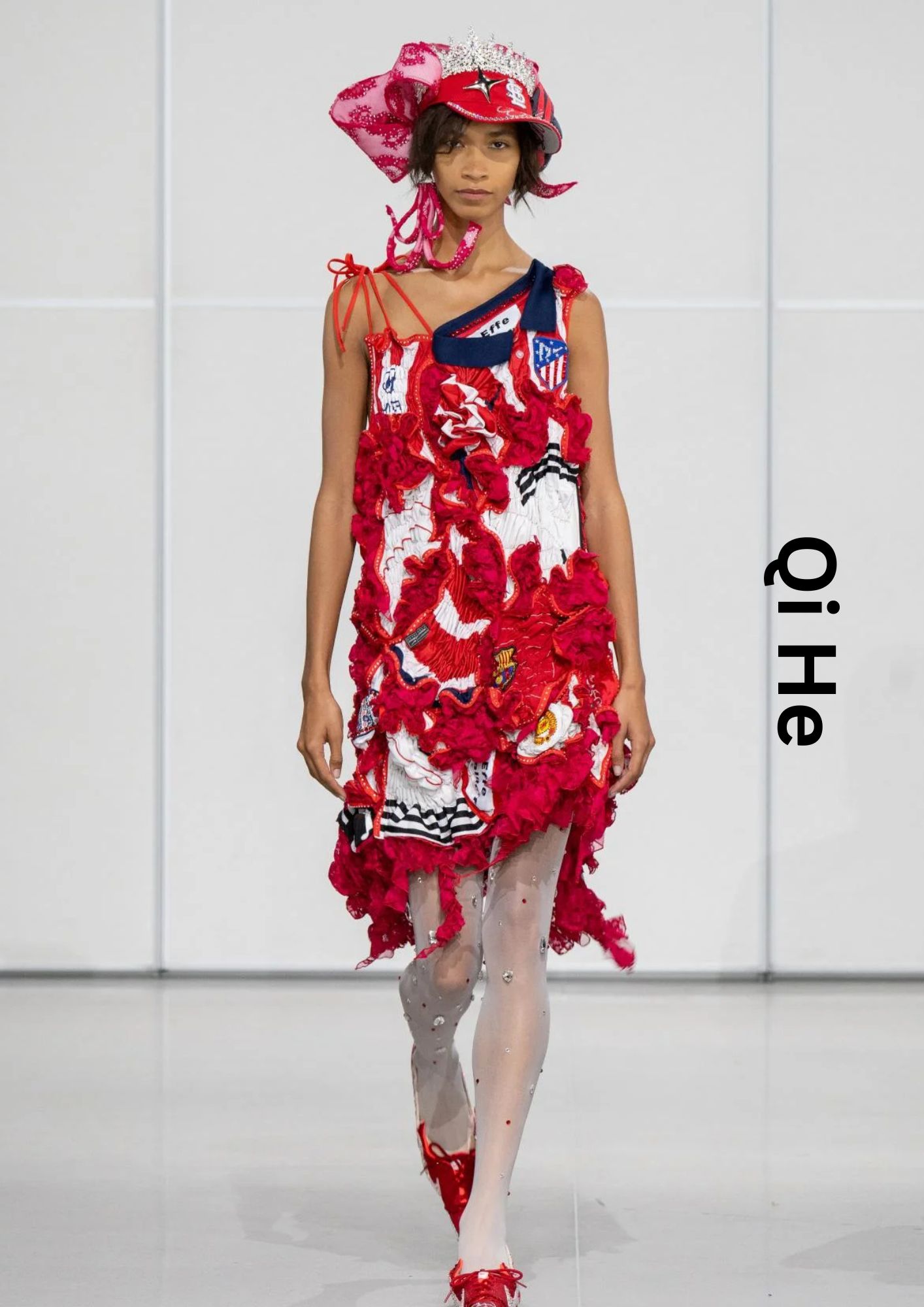
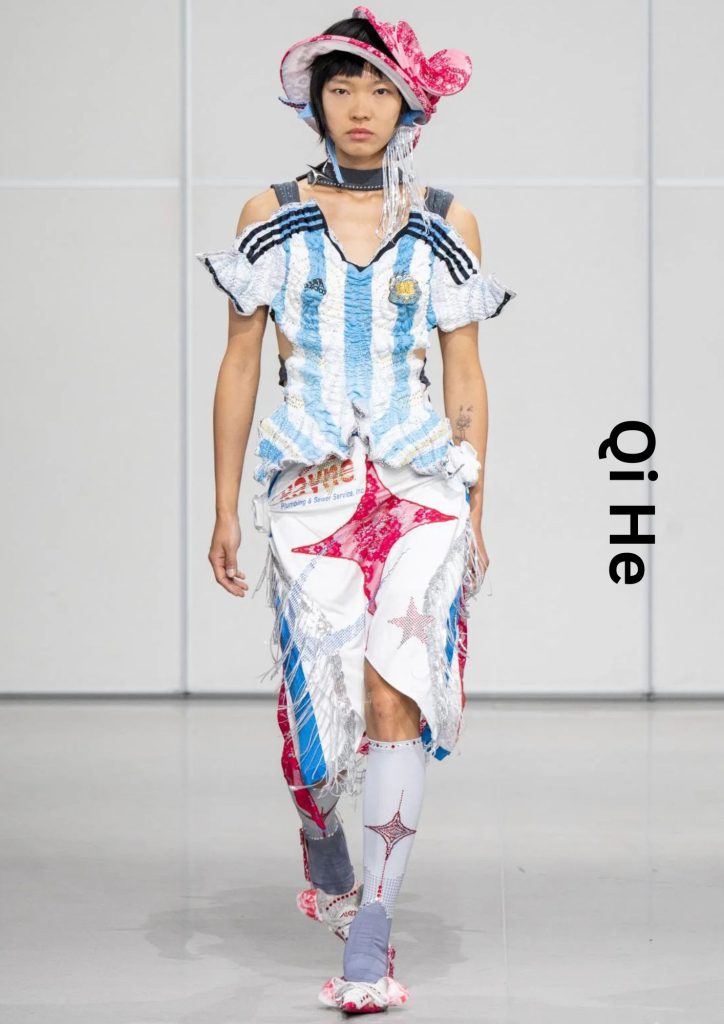
Qi He, known professionally as Effe Qi He, presented a standout collection titled "31: Offside Identity" at the Parsons MFA Fashion Runway Showcase 2025. Her work served as a powerful manifesto on the shifting nature of femininity, drawing heavy influence from the world of vintage sportswear and athletic uniforms. He's collection was celebrated for its bold juxtaposition of traditionally "masculine" utility with delicate, hyper-feminine details. By deconstructing sports jerseys often found in New York vintage shops and reassembling them with intricate lace and neon accents, she created a visual language that challenged the rigid codes of performance-wear and gendered dress.
The technical execution of the collection was particularly noted for its "armor-like" construction, specifically through the use of sculptural, structured bras and corsetry integrated into athletic silhouettes. Reviewers highlighted her ability to use upcycled garments—a hallmark of her sustainable approach—to create high-fashion "phygital" aesthetics that felt both nostalgic and futuristic. The collection didn't just play with fabric; it played with identity, using the concept of the "offside" (a sports penalty) as a metaphor for being outside the norm. Ultimately, Effe Qi He established herself as a designer capable of blending gritty, street-level realism with a whimsical, avant-garde refinement that captivated the 2025 NYFW audience.
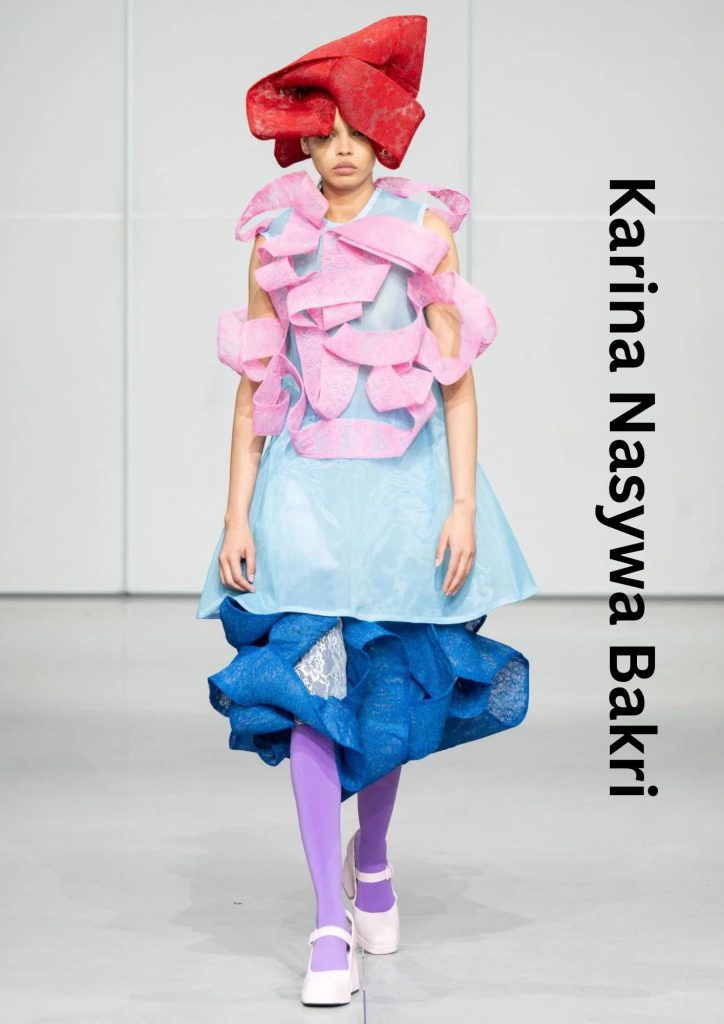
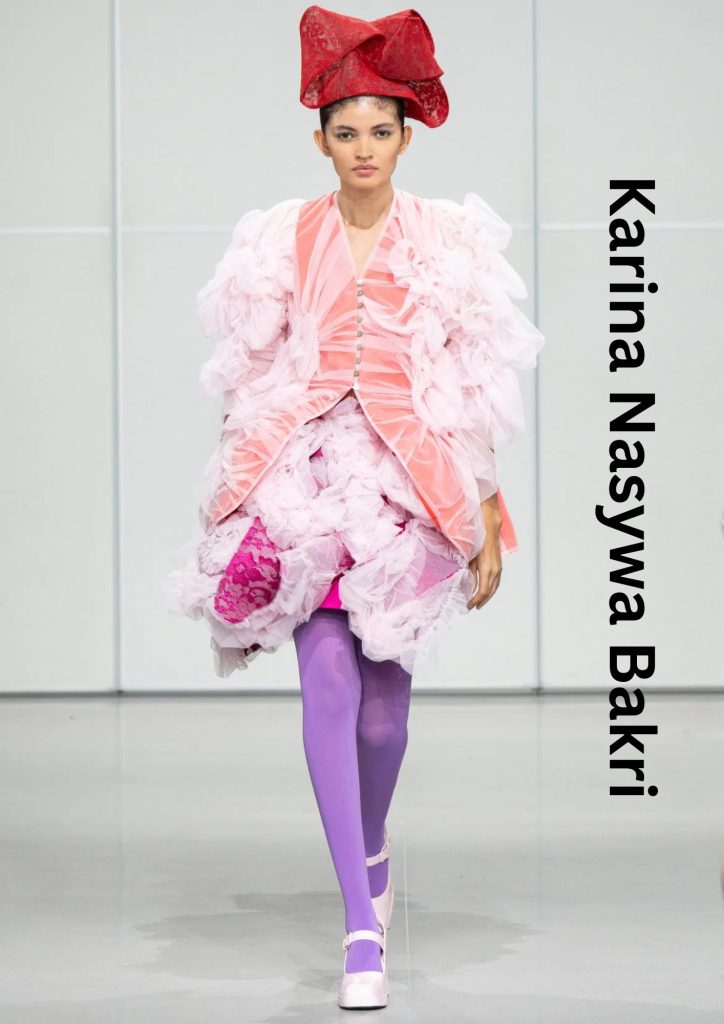
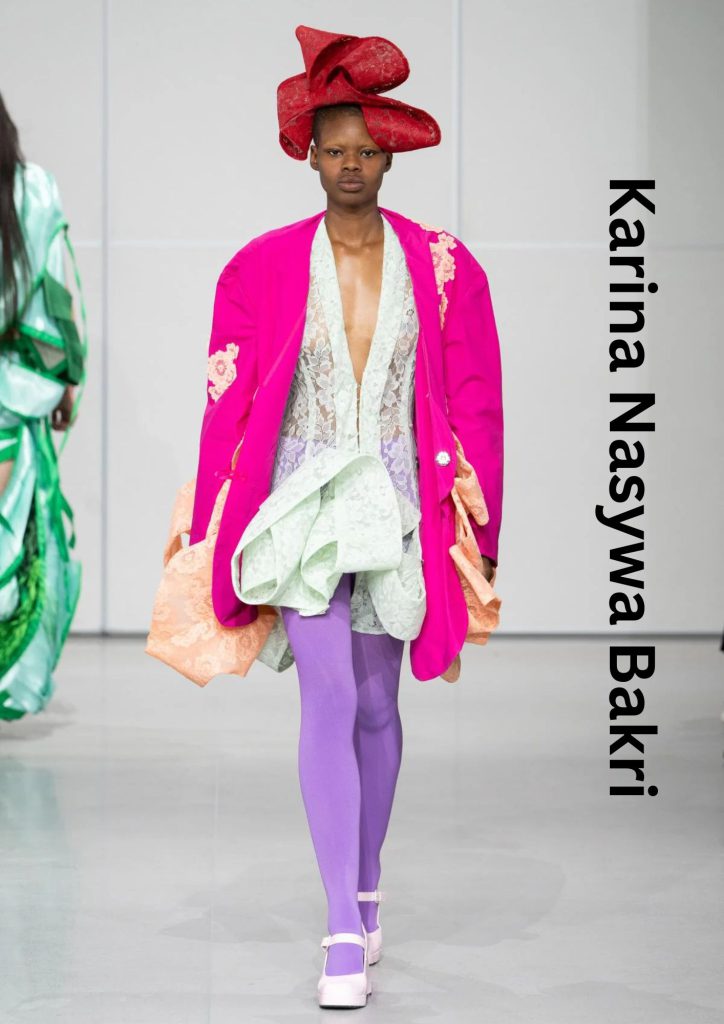
Karina Nasywa Bakri’s collection at the Parsons MFA Fashion Runway Showcase 2025 was a vibrant, deeply personal tribute to her Indonesian heritage and family history. Her work focused on the concept of "controlled chaos," a philosophy inspired by her late father’s architectural sketches. The collection was celebrated for its innovative reimagining of the traditional kebaya, transforming it from a classic blouse into sculptural, three-dimensional forms. By blending delicate motifs with exaggerated volumes and bright, saturated colours—reminiscent of early 2000s Indonesian pop magazines—Bakri created a bridge between nostalgic memory and contemporary silhouettes.
From a technical standpoint, Bakri’s showcase was a masterclass in sustainable craftsmanship and material manipulation. Approximately 75% of the collection utilized deadstock and reclaimed outdoor-gear fabrics, such as those from the Takihyo for Good initiative, paired with donated lace. The juxtaposition of rugged, utilitarian materials with high-fashion elements like floating lace hats (inspired by religious wedding headwear) and platform Mary Janes highlighted her ability to elevate discarded textiles. Critics noted the collection's "doll-like" playfulness and voluminous bows, marking Bakri as a leading voice in the movement toward a "contemporary luxury" that prioritizes personal storytelling and environmental responsibility.