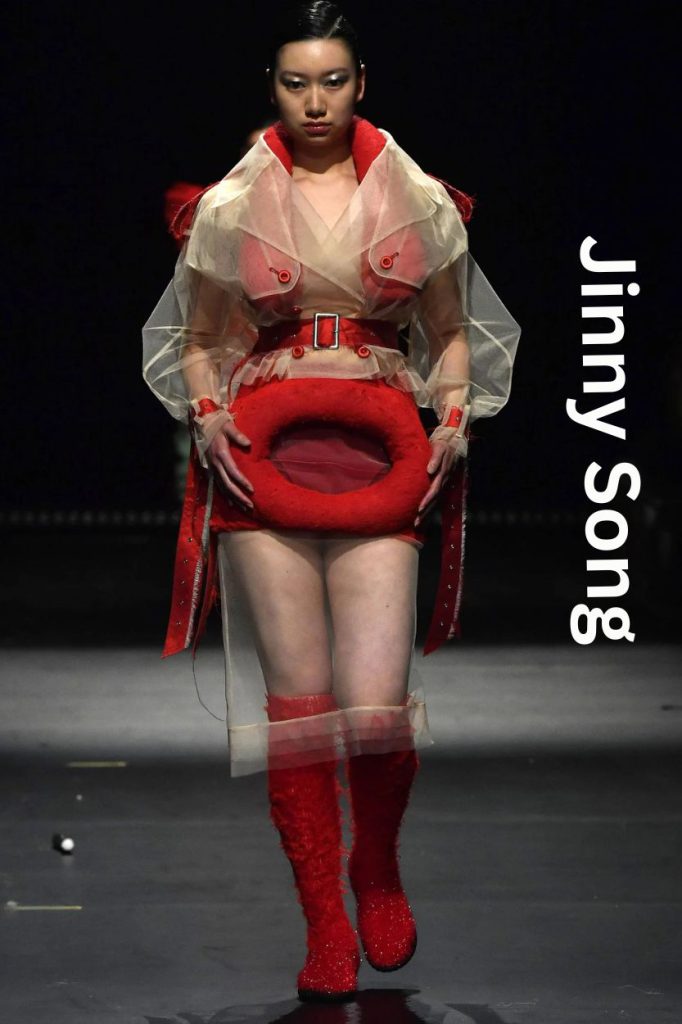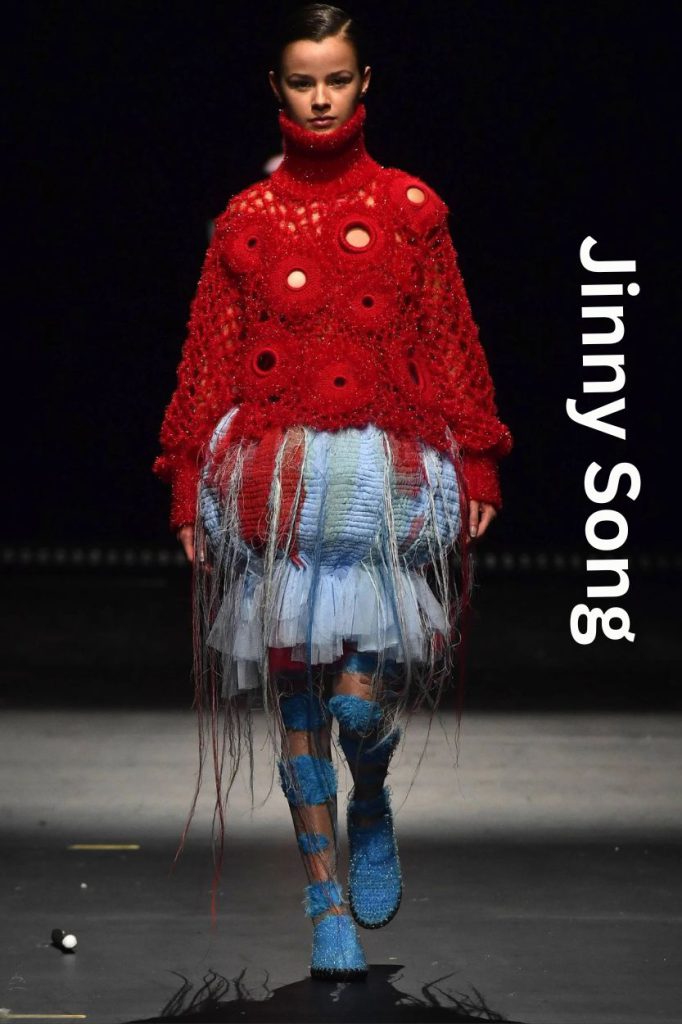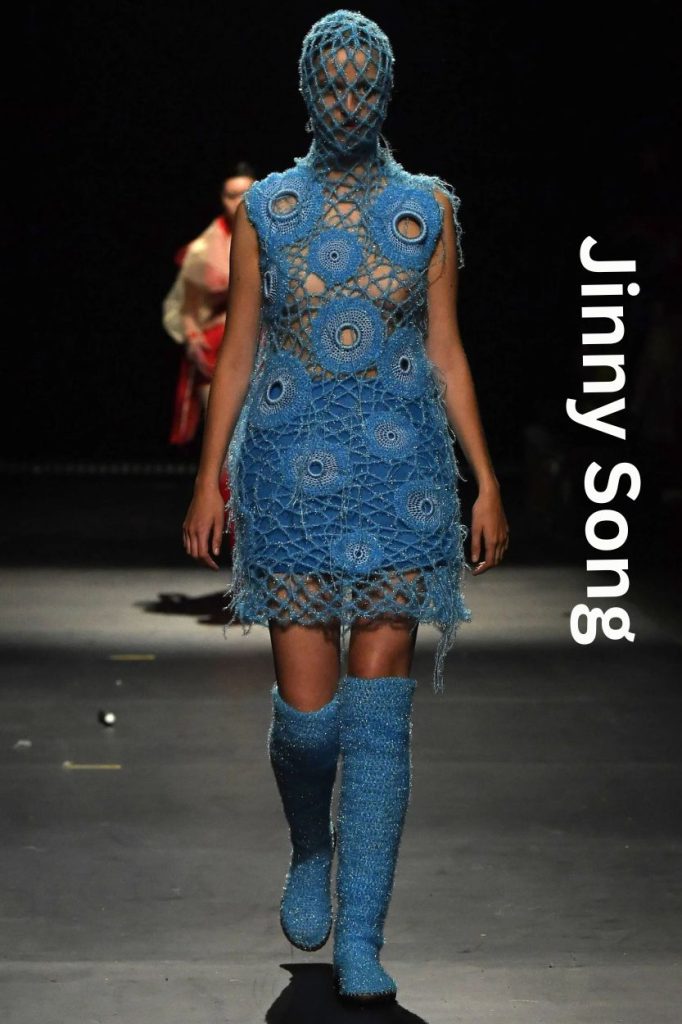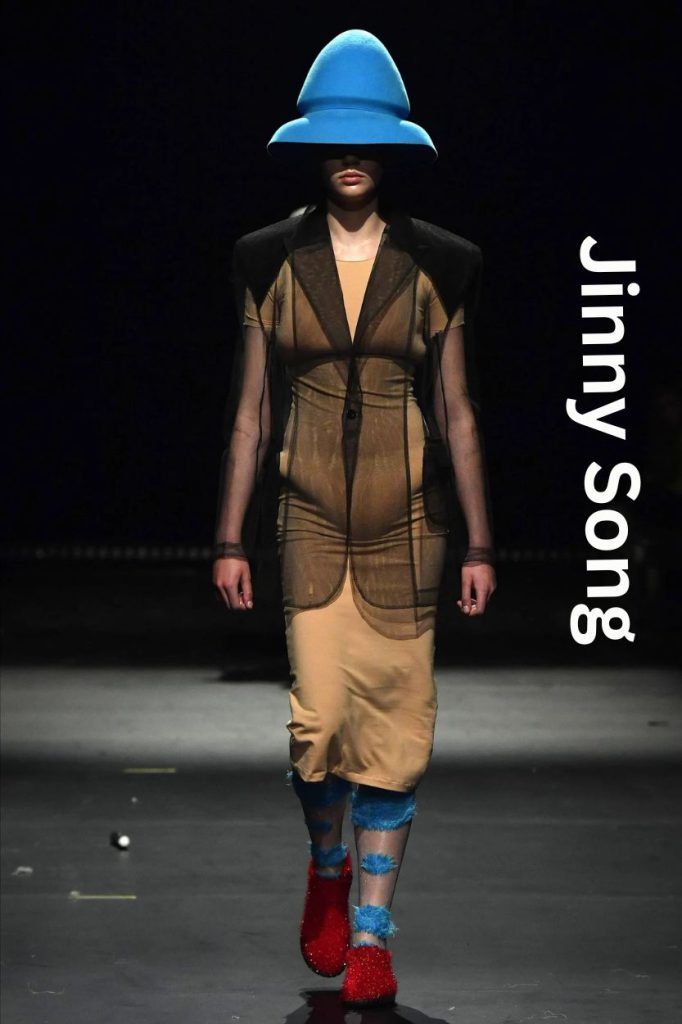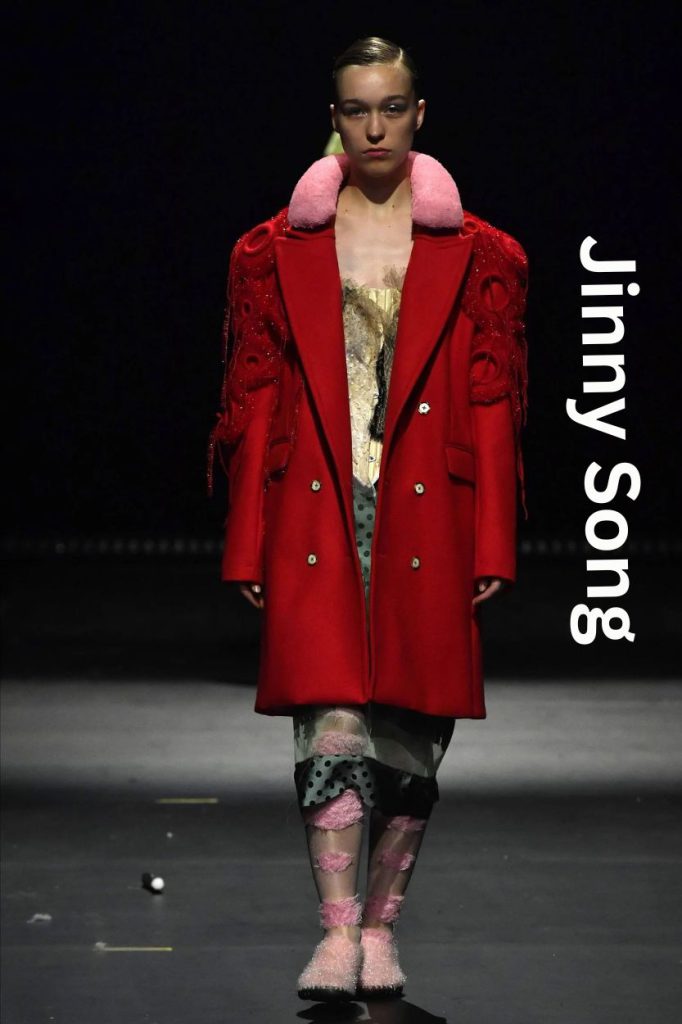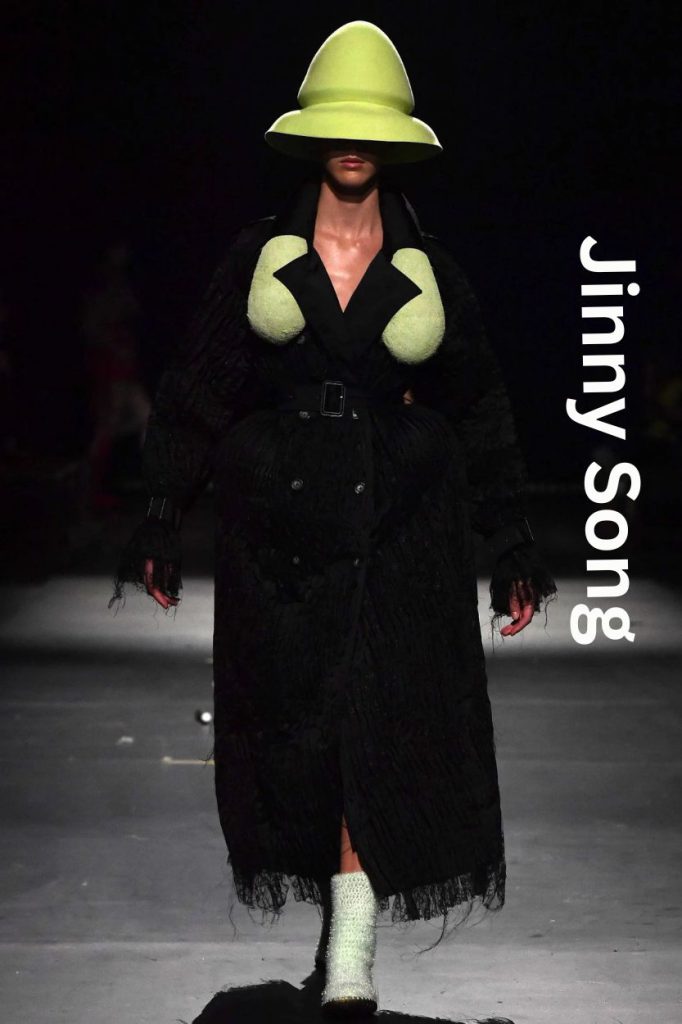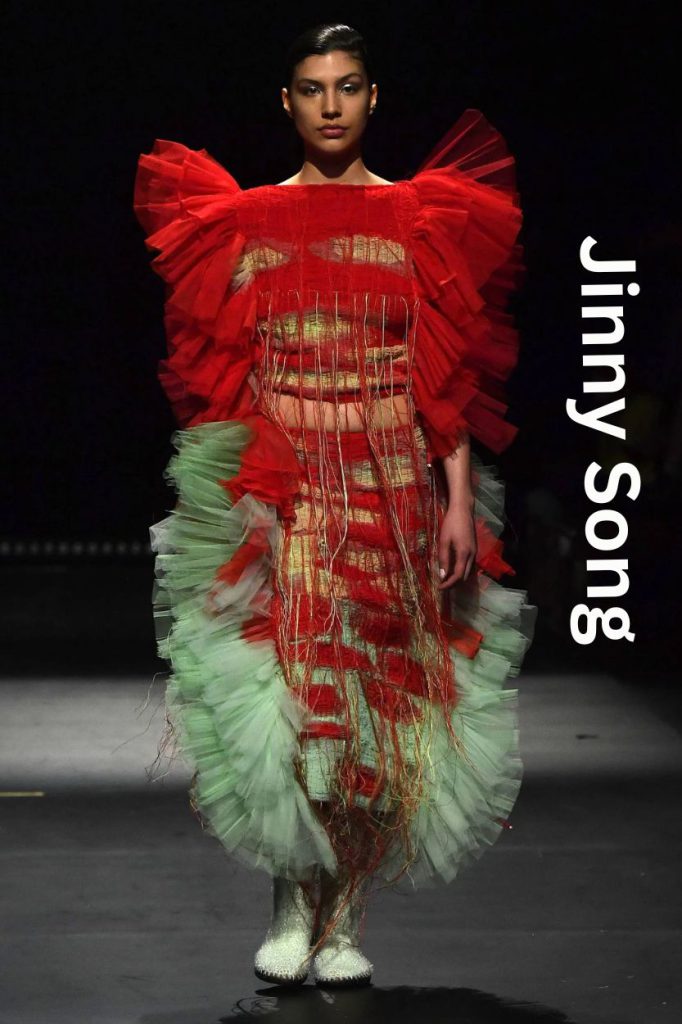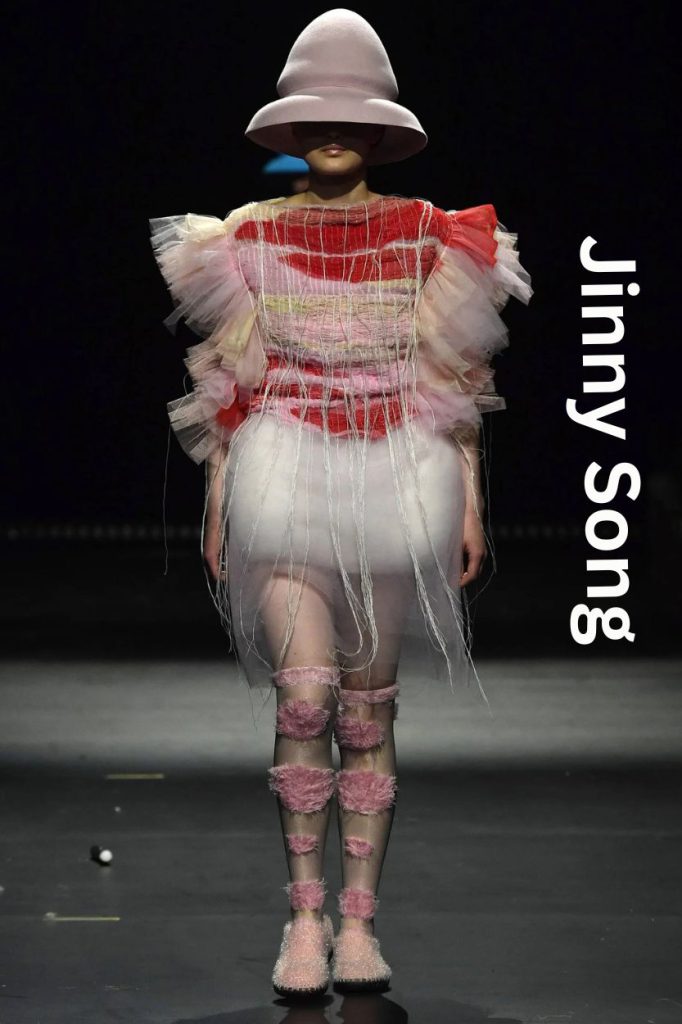


Designer: Jinny Song
Institution: Royal Academy of Fine Arts Antwerp
Theme: Maternal Legacies and the Venus of Willendorf
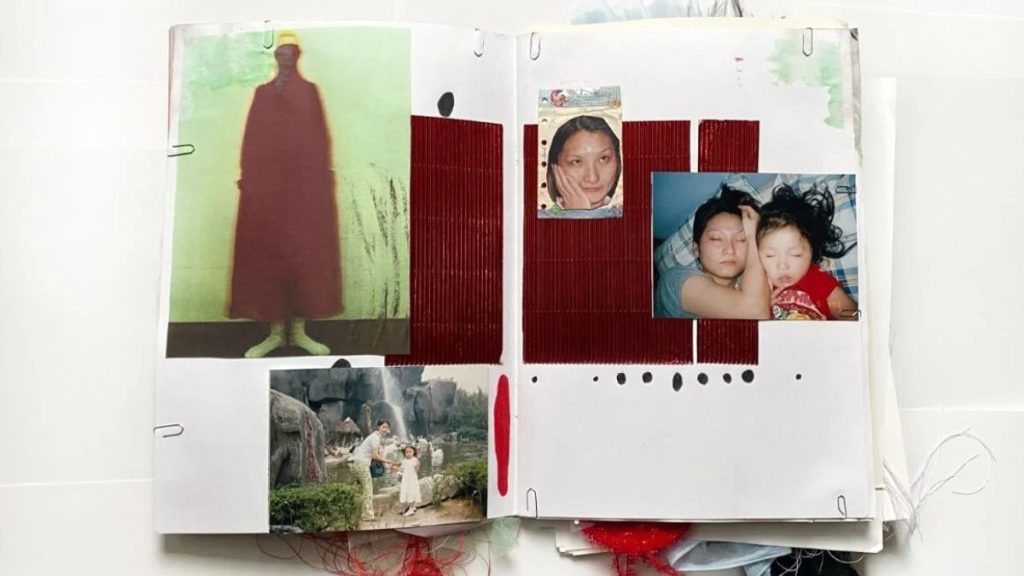
For Jinny Song, the journey to the Antwerp graduate runway didn’t begin in a studio, but on a flight back to Los Angeles. After a four-year absence, the city served as a catalyst for a deep dive into the formative years of her childhood and the intricate, often heavy, emotional architecture of her relationship with her mother.
What emerged is a collection that functions as a sartorial exorcism—an exploration of love, healing, and the invisible threads that bind generations.
The Genesis: A Return to the "City of Angels"
The collection is rooted in the visceral experience of returning home. Song utilized this homecoming to confront the "complex dynamics" of her maternal bond. Rather than focusing on surface-level nostalgia, she looked toward the Venus of Willendorf. As a primal symbol of the maternal figure and a precursor to historical deities, the Venus provided a structural and symbolic foundation for the silhouettes.
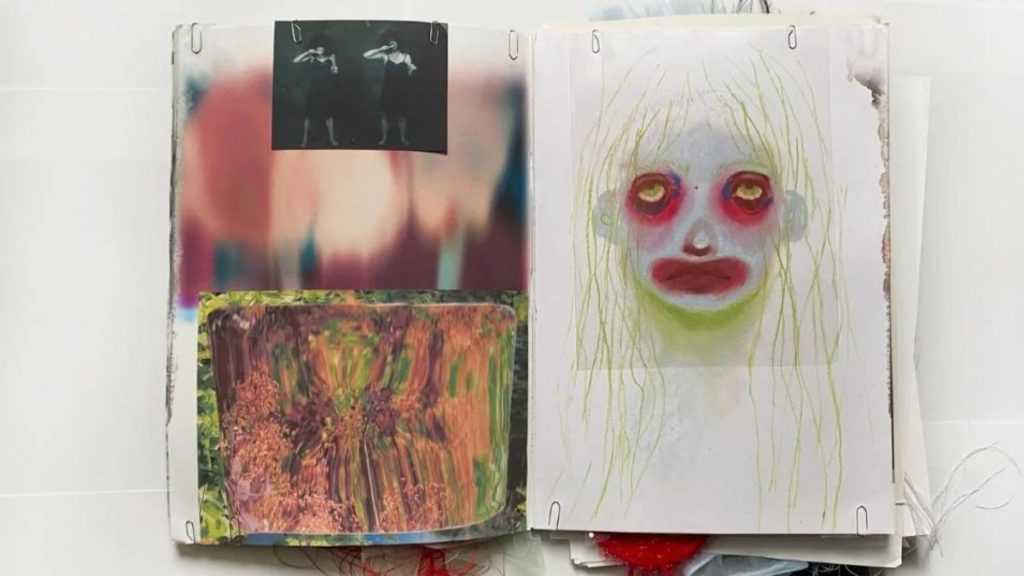
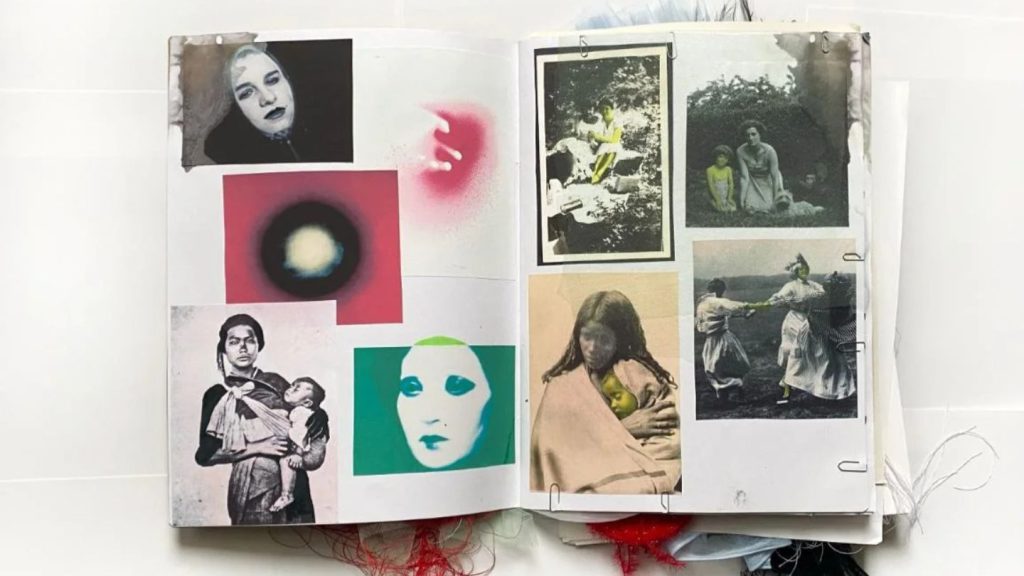
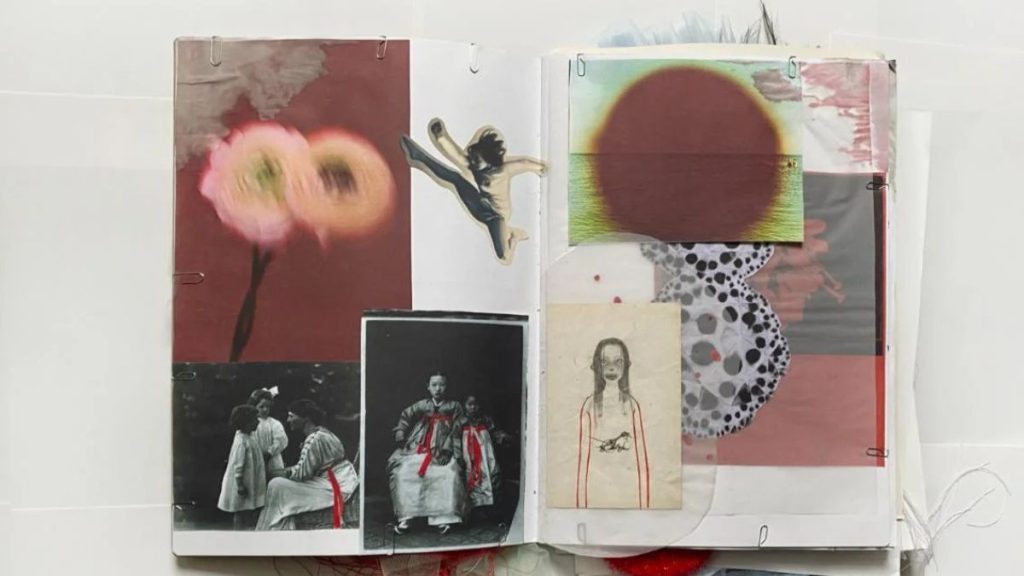
The Craft: Fabric as Emotion
In Song’s work, fabric treatment is never merely decorative; it is a language. To translate the abstract essence of motherhood into a physical medium, she focused on:
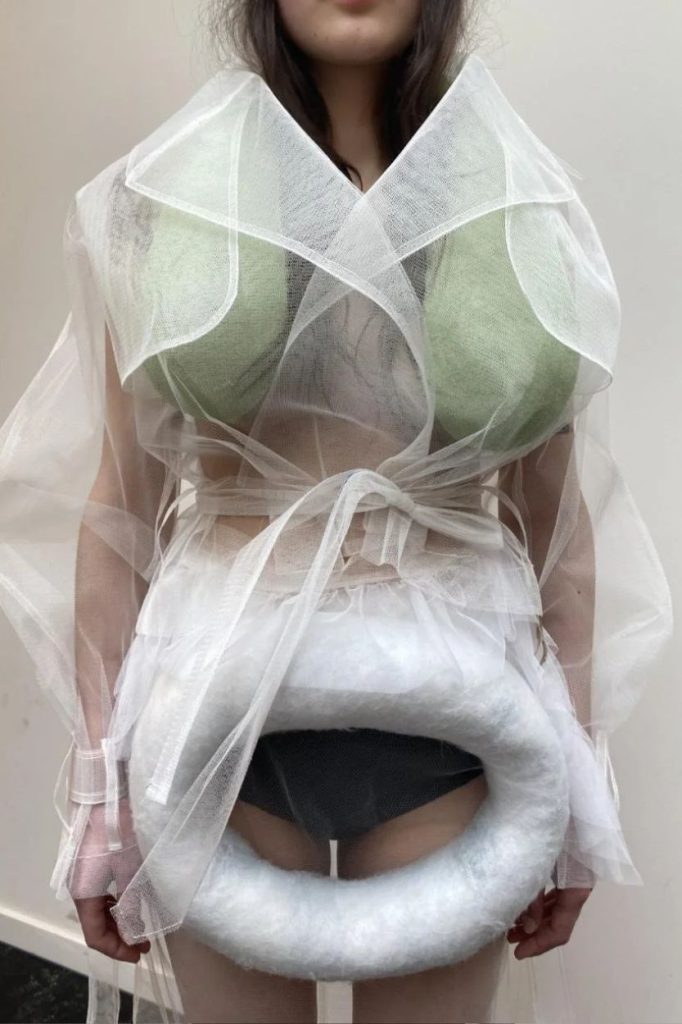
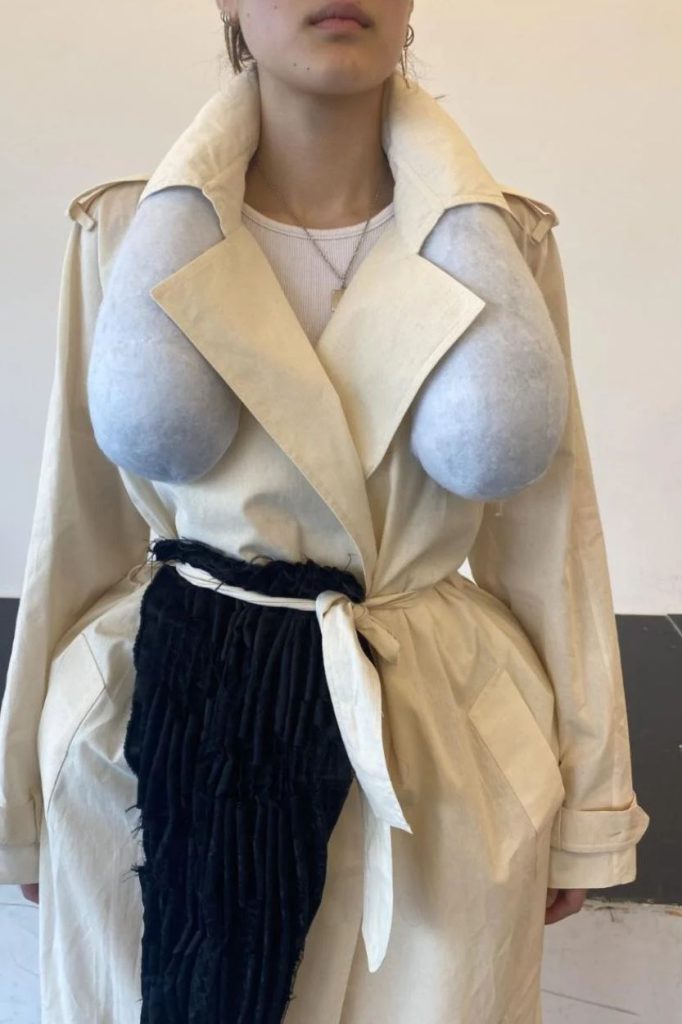
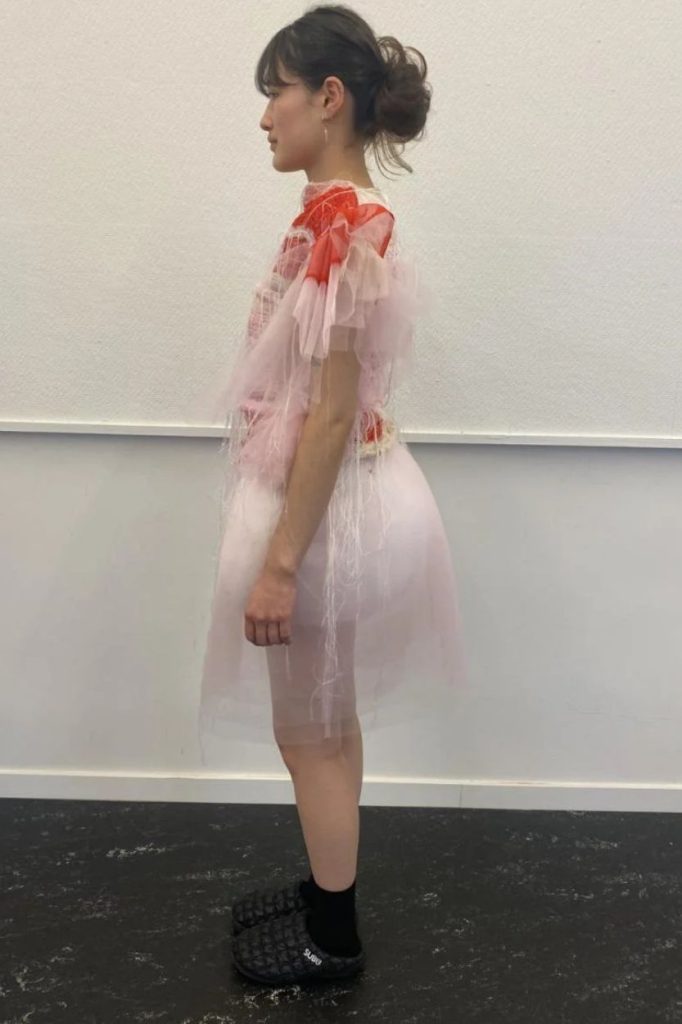
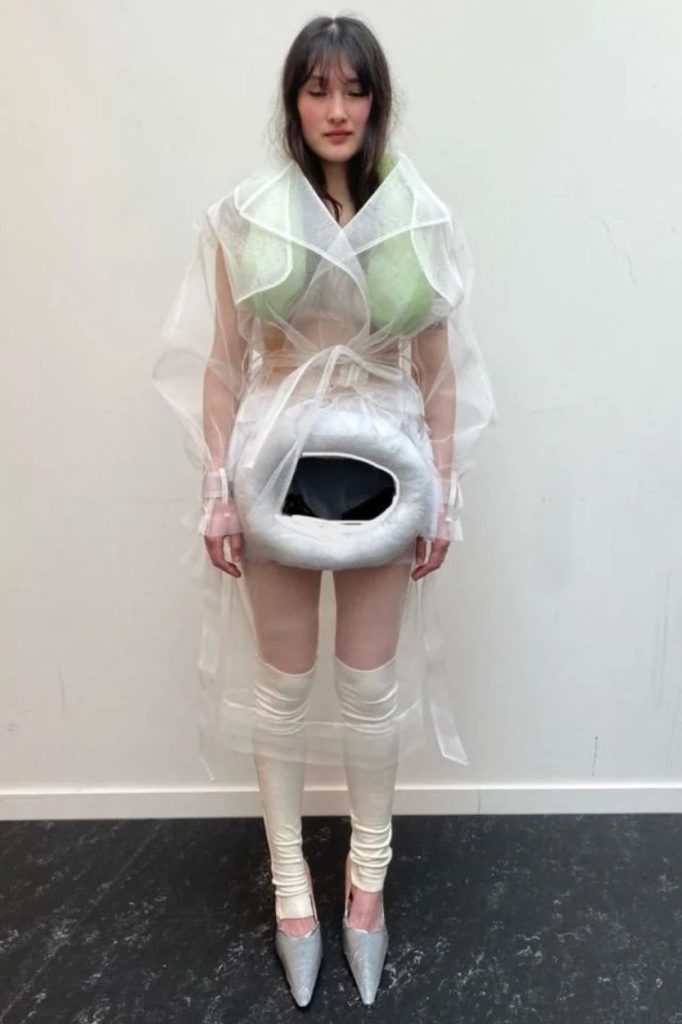
- Mass and Form: Mimicking the exaggerated, fertile curves of ancient maternal totems.
- The Weight of Legacy: Using fabric to represent the "silent legacy" passed from mother to daughter.
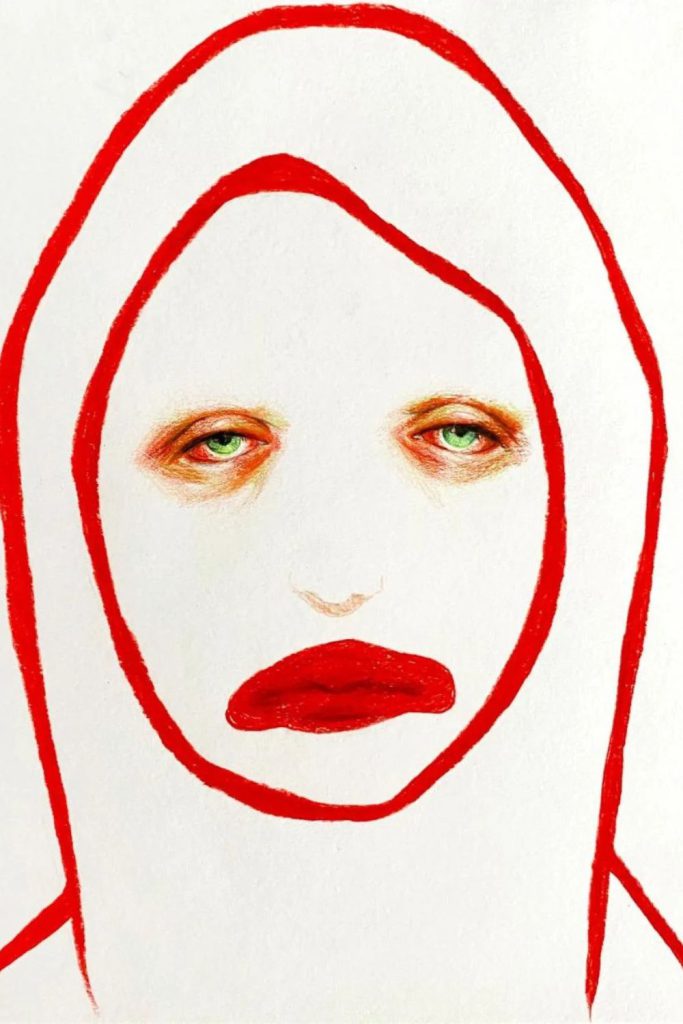
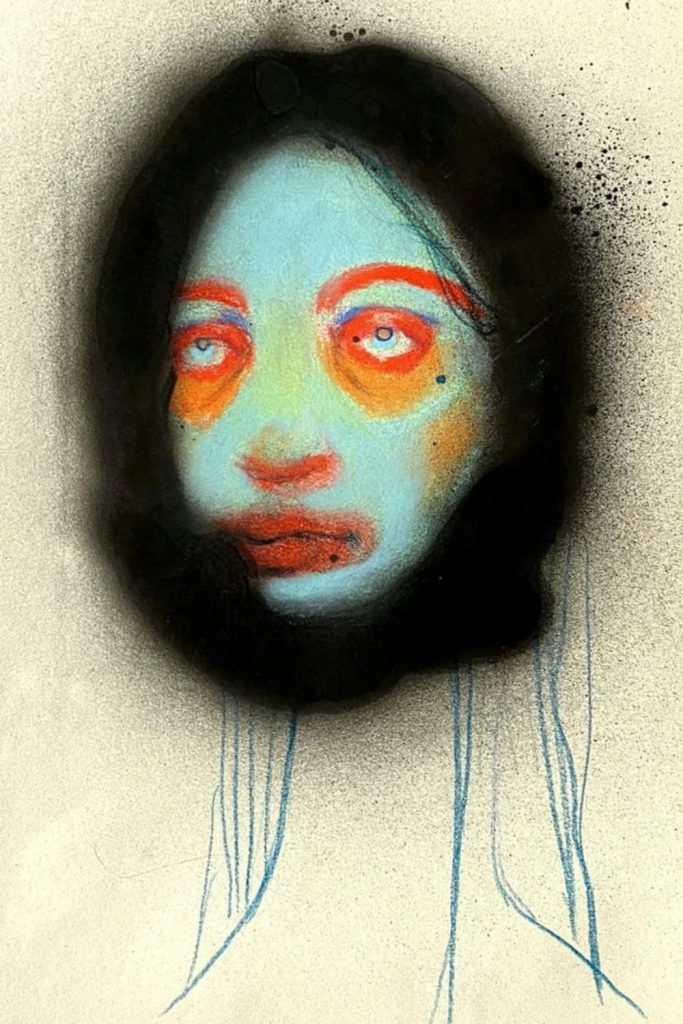
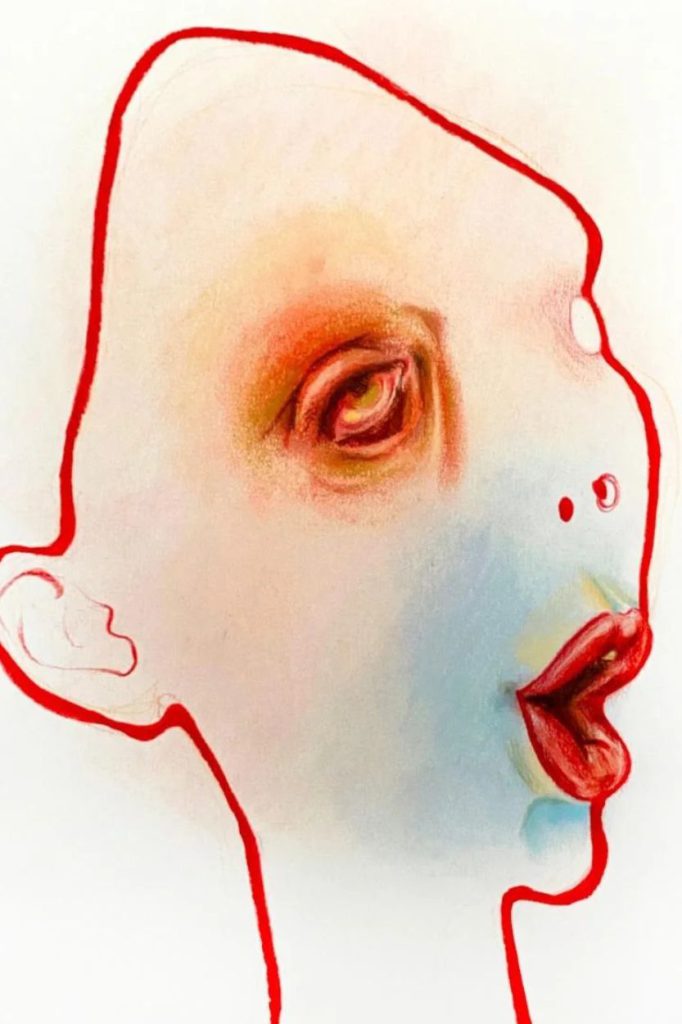
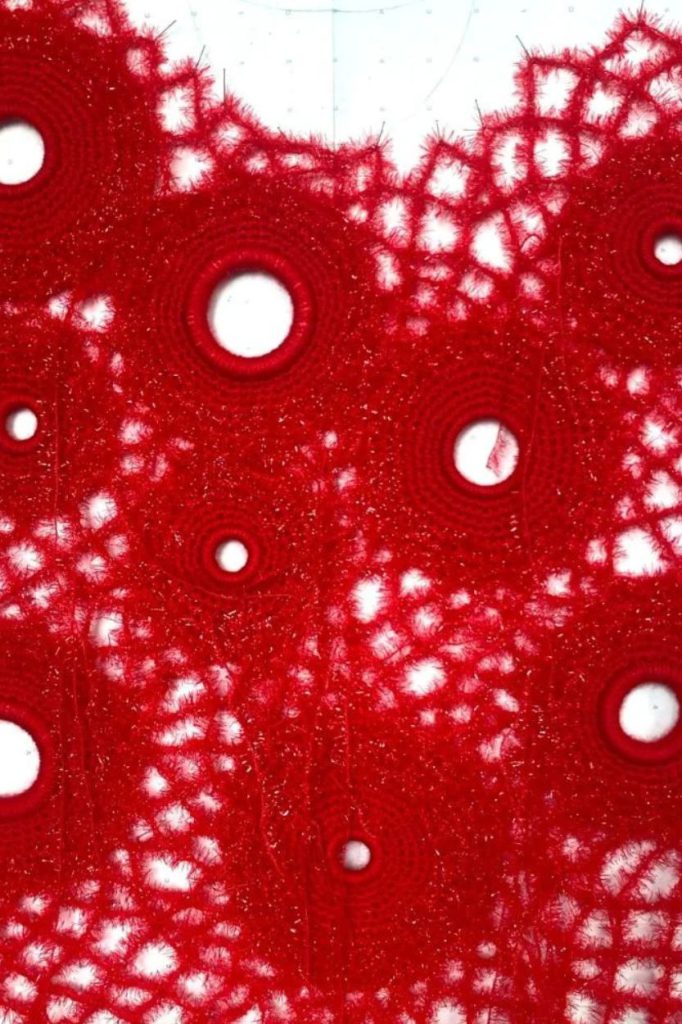
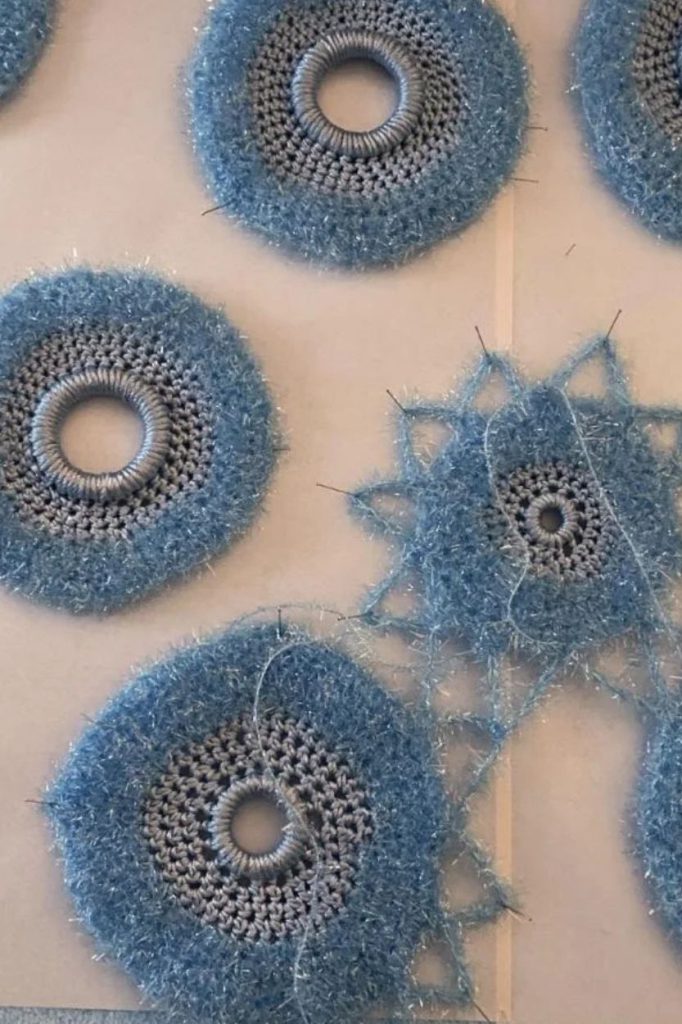
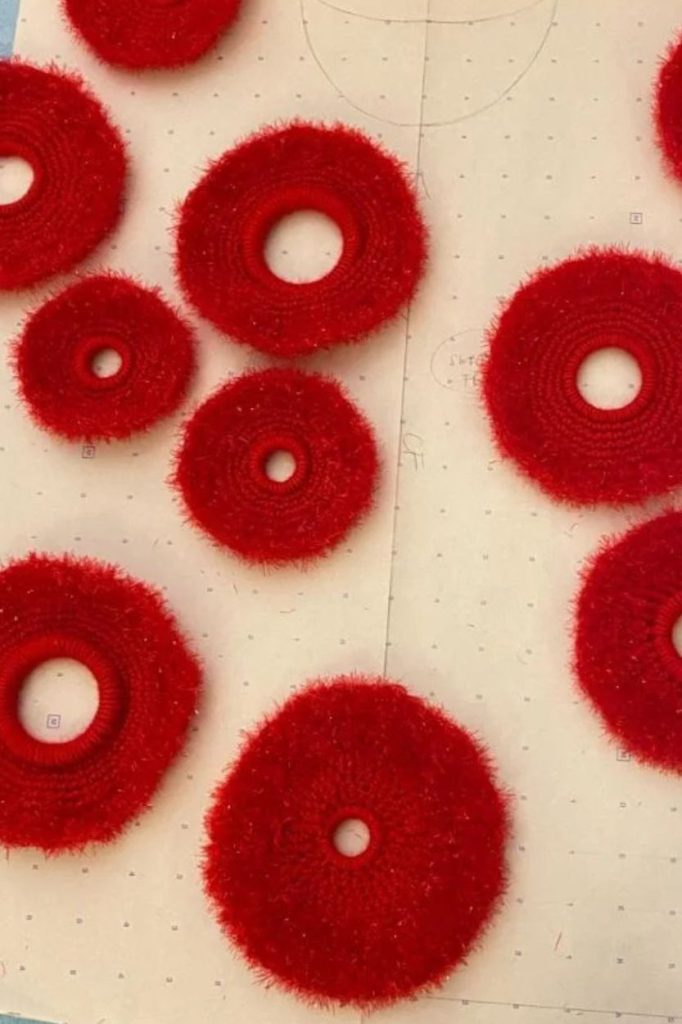
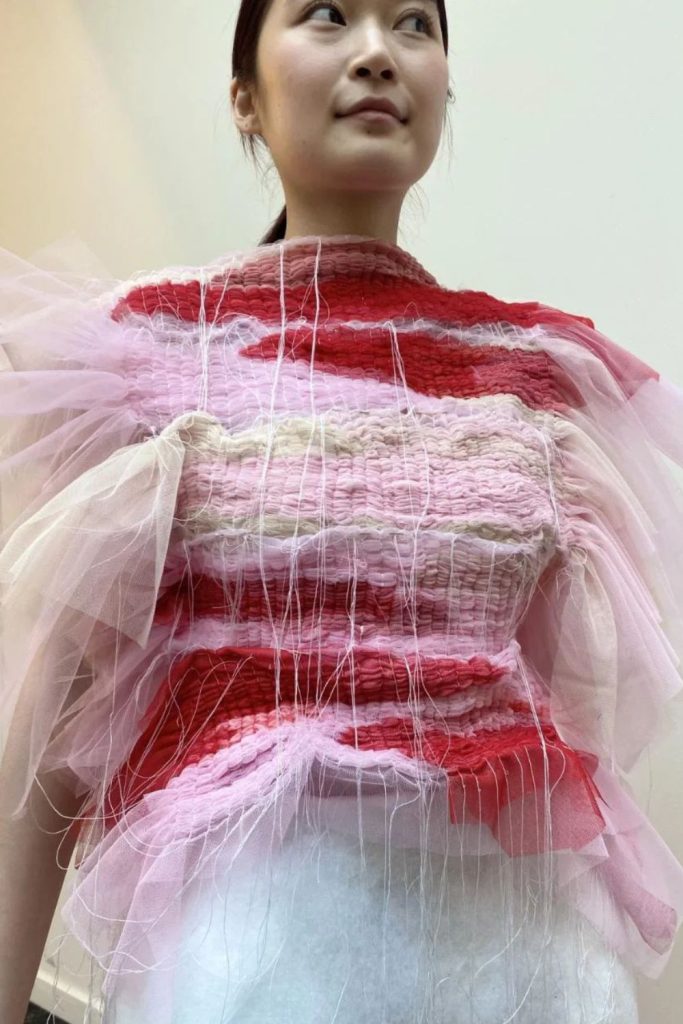
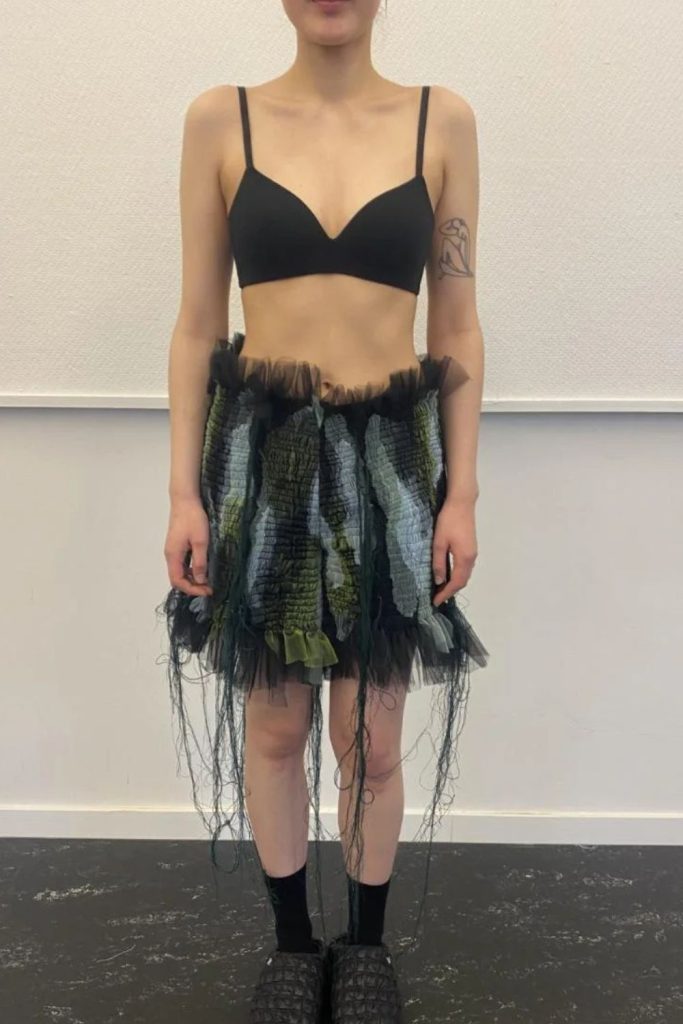
- Texture as Narrative: Every treatment was chosen to embody the specific emotions evoked by the thought of her mother—ranging from protective density to vulnerable transparency.
The Philosophy: The Transfer of Trauma
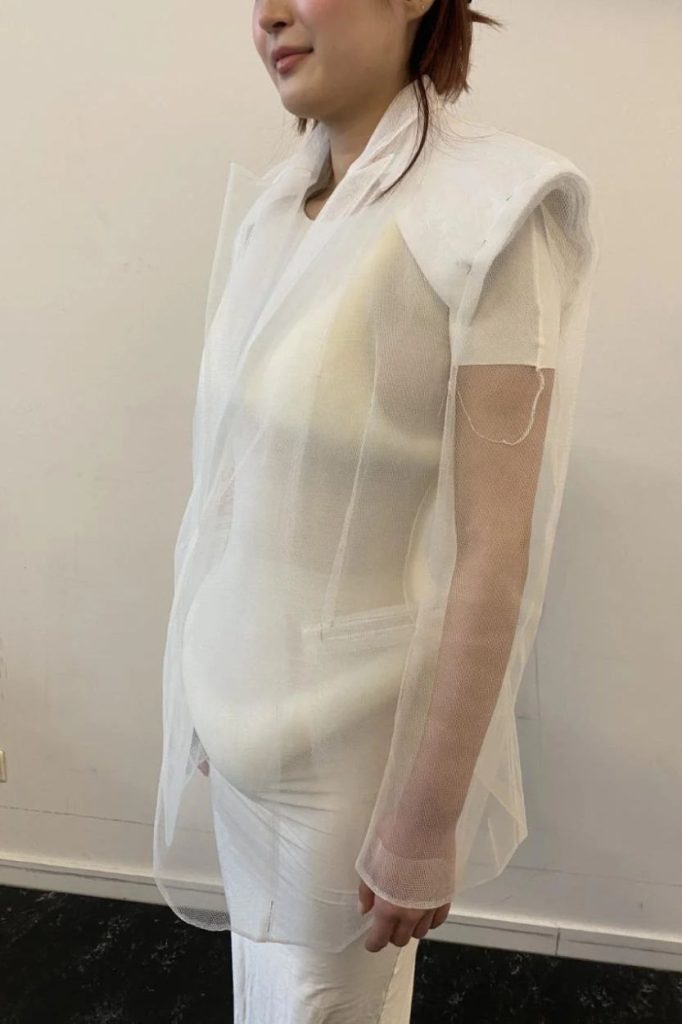
The most poignant element of Song’s graduate work is her exploration of intergenerational trauma. She visualizes this invisible burden through a sophisticated layering technique.
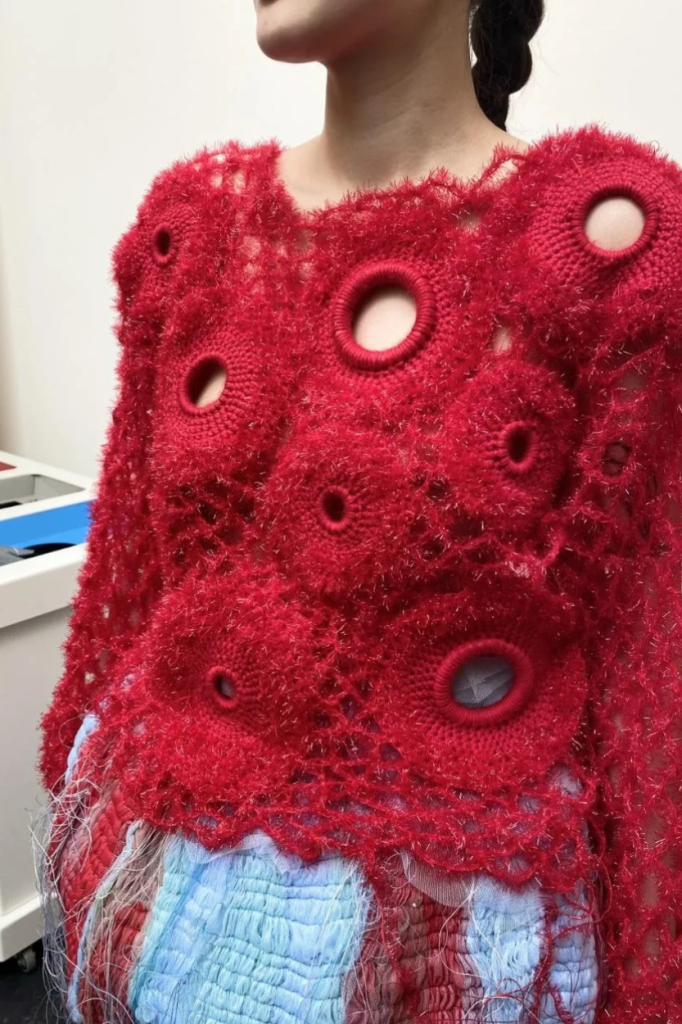
“The interplay of sheer fabrics, overlaying forms and masses signifies the generational transfer of emotional trauma—a silent legacy carried forward across time.” — Jinny Song
By stacking sheer textiles over heavy forms, Song illustrates how experiences are filtered and distorted as they move through time, creating a visual metaphor for the weight children often carry for their parents.
The Catwalk: The Final Transformation
On the Antwerp runway, these concepts culminated in a parade of silhouettes that felt both ancient and futuristic. The collection moved beyond traditional "wearability" to become a series of living sculptures. The audience witnessed a transition from the primal, earthy origins of the Venus figure to the ethereal, sheer complexities of modern emotional healing.
It wasn't just a display of technical skill; it was a public act of reconciliation—a transformation of private pain into a universal statement on the endurance of the maternal bond.