

W & I: Ste Brodie
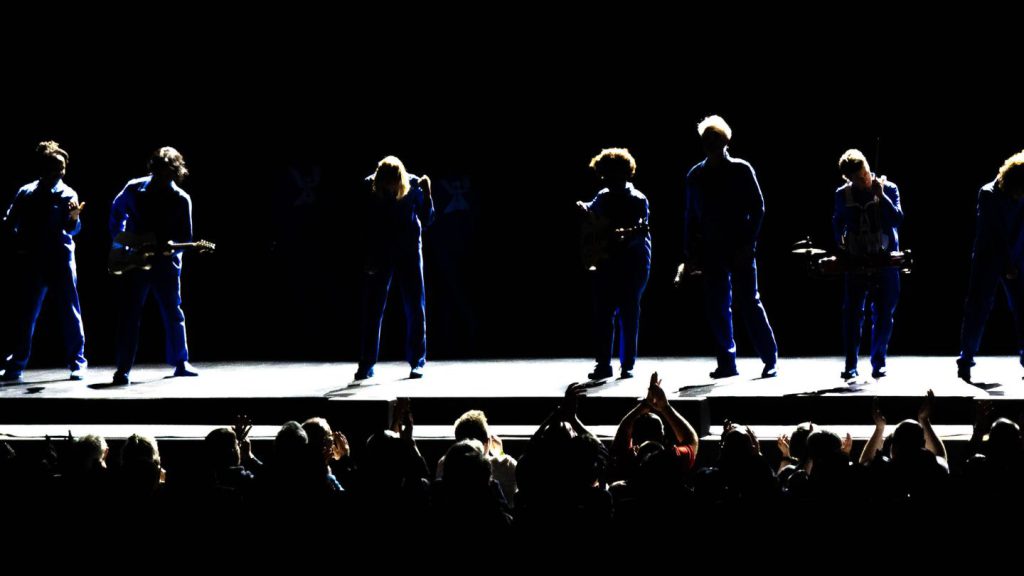
The night ignited with a disembodied, God-like narration from Byrne himself, crackling over the PA like a transmission from a friendly alien. He issued a deadpan warning: dancing is permitted, but if you’re boogying in the aisles near the doors, you’re basically cheating the exit strategy. He then treated us to a slideshow of his London odyssey, highlighted by the surreal image of a police diver in the Thames, blind in the muck, feeling his way through the riverbed like a tactile ghost. It was peak Byrne—finding the profound in the murky depths of the mundane.
What followed was a sonic riot, a jagged jigsaw puzzle of Talking Heads anthems smashed against his pandemic-era solo work. He spoke of the COVID-19 lockdown not as a prison, but as a sketchbook, showing off the creative fruits of a world gone quiet. But tonight? Tonight was anything but quiet. The crowd was a localized lightning storm, vibrating with an electric intensity that ignored every fire safety protocol in Hammersmith. As the opening chords of the classics hit, the "no disco" mantra became the ultimate lie. The Apollo wasn't just a venue; it was a sweating, pulsing, rhythmic sanctuary.
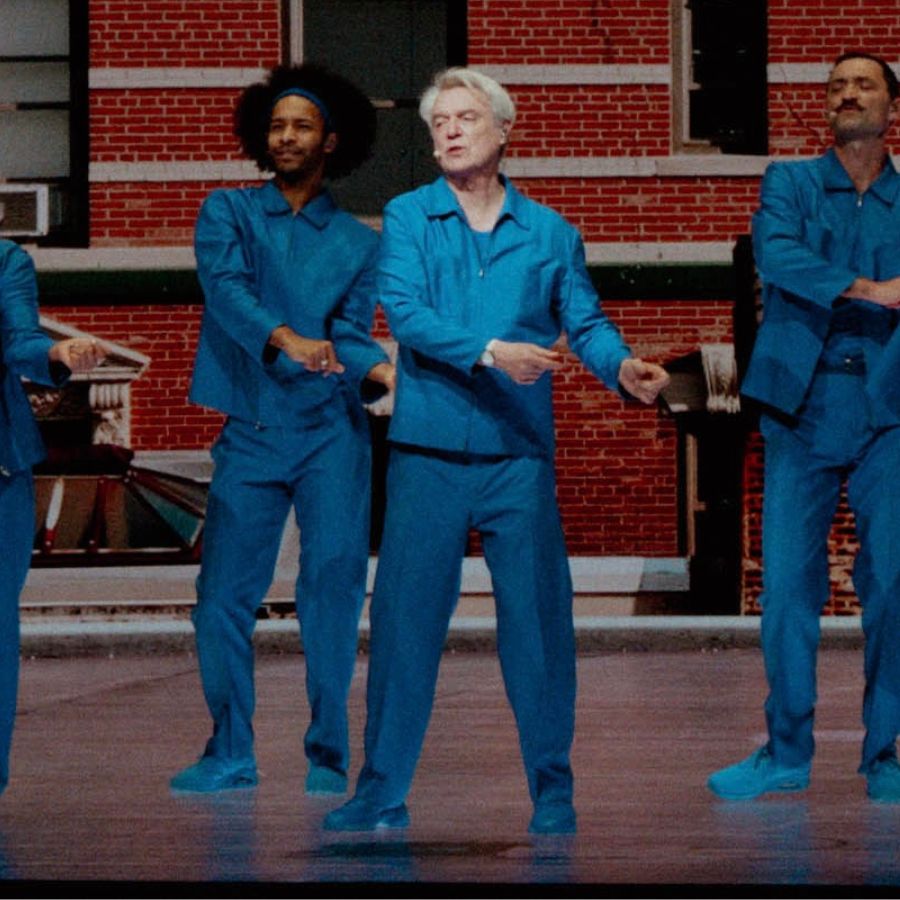
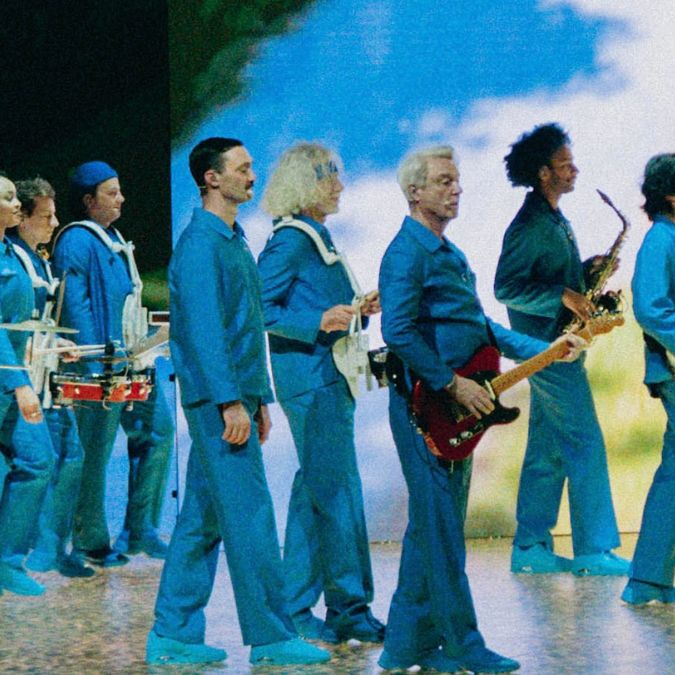
The sheer physicality of the performance felt like a middle finger to the stillness of the last few years. Byrne, looking like a silver-haired wizard of art-pop, didn't just sing; he curated a frantic, beautiful chaos that demanded you move or be left behind. By the time the house lights flickered, the air was thick with the scent of joy and the realization that we’d all just participated in a massive, rhythmic exorcism. If this is what "no party" looks like, then I never want to go home.
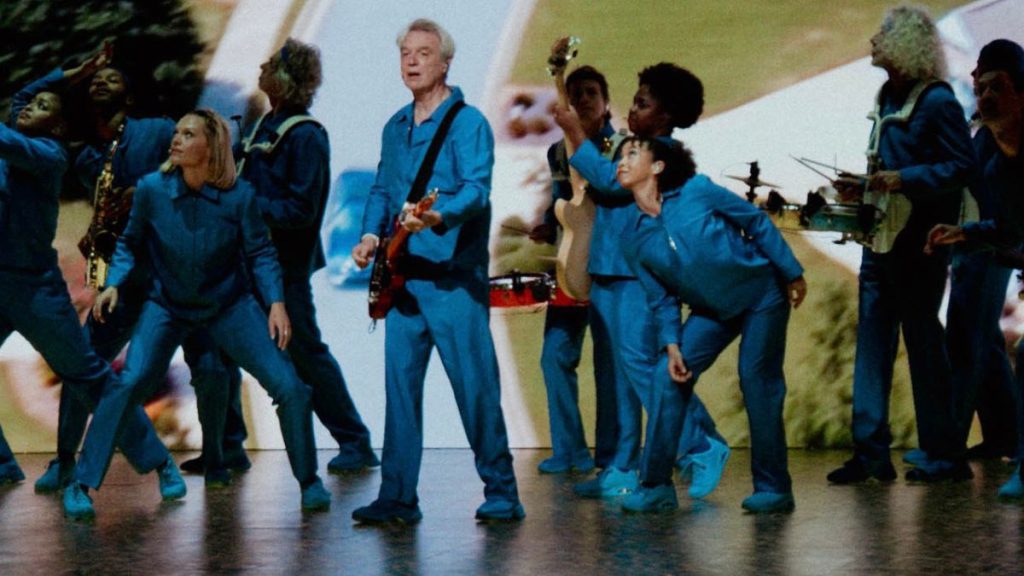
The stage itself was a masterclass in minimalist surrealism—a stark, three-sided "room" defined by shimmering chain curtains that looked like falling rain frozen in time. There were no messy cables, no clunky monitors, and absolutely no clutter; just a vast, grey void that acted as a canvas for the choreography. Byrne and his band, clad in their iconic matching grey suits, moved through this space like a nomadic tribe of avant-garde office workers. The lighting was surgical, casting long, dramatic shadows that turned every synchronized step into a high-art fever dream. It was clean, it was clinical, and it was visually arresting, proving that when you have this much charisma, you don’t need a backdrop—you are the backdrop.