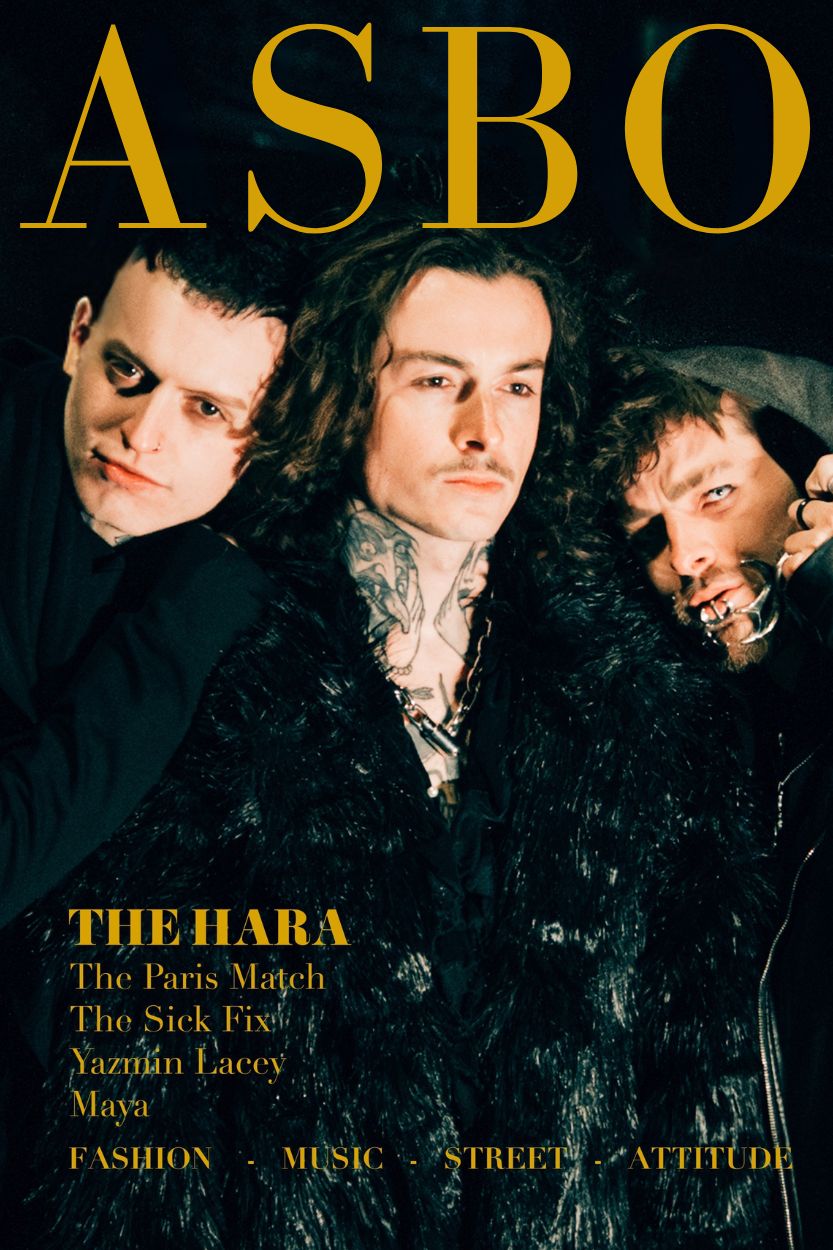


W: & I: Lauren Mulvey
This series of portraits serves as the essential sister project to my documentary, ‘DRAG: Behind-The-Scenes’. While the film captures the movement, the noise, and the kinetic energy of the stage, these images seek a different kind of truth: the stillness. My primary aim was to create a collection of intimate and highly detailed portraits of drag performers from across the UK, moving past the footlights and into the quiet, often overlooked space where the persona and the person coexist.
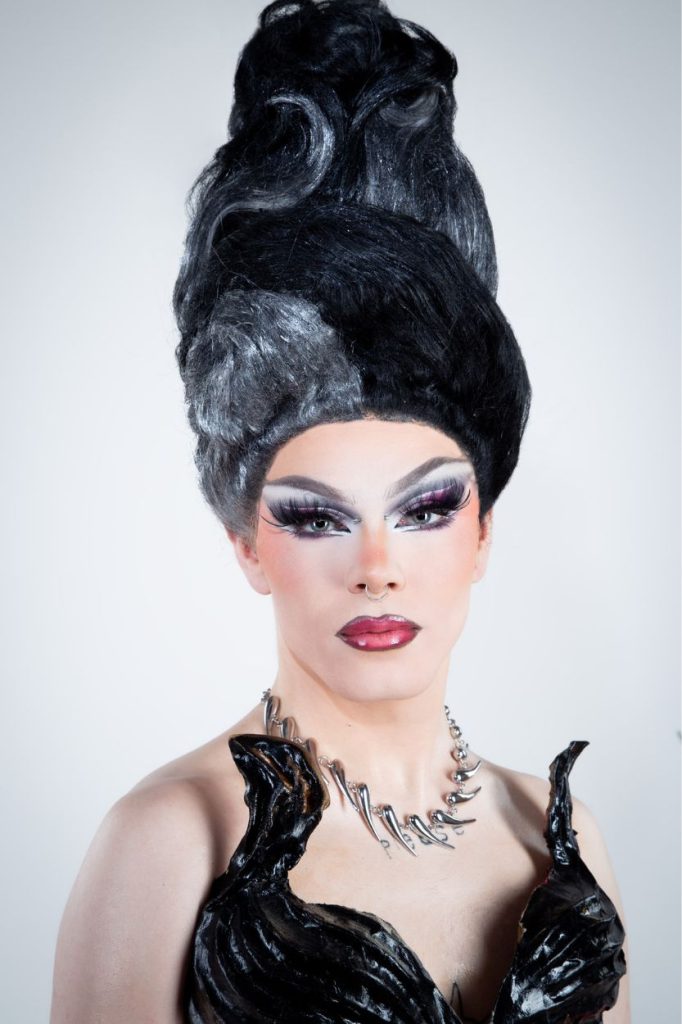
Brandi Barcode
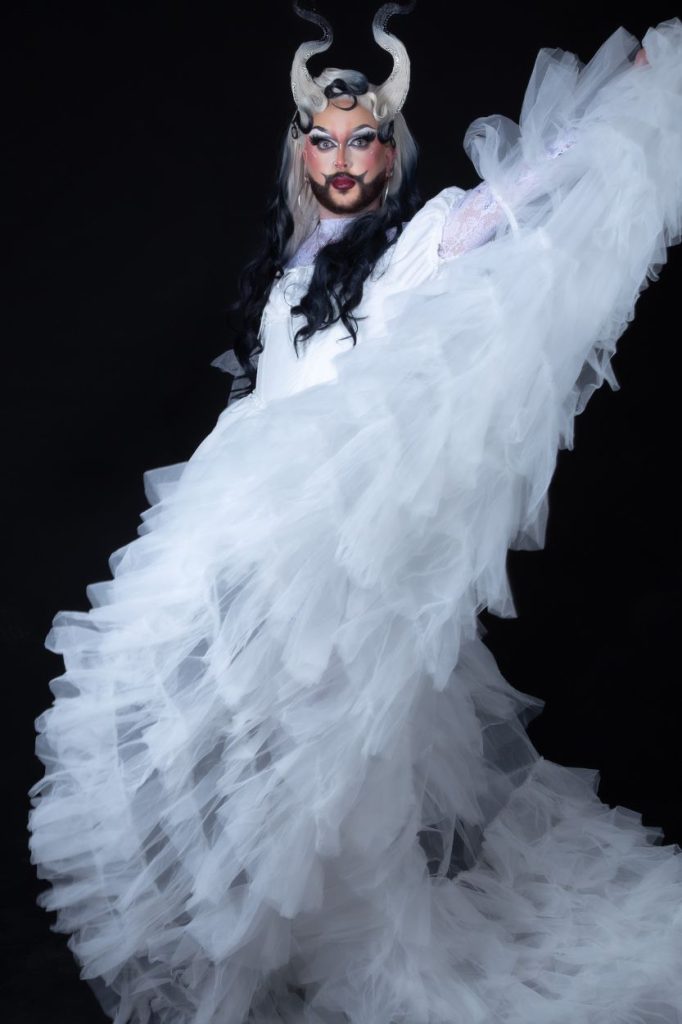
The Only Poison Queen
To achieve this, I opted for the deliberate, slow-motion methodology of a studio environment and a large-format camera. In an age of instant digital snapshots, the large-format process demands a specific kind of patience from both the photographer and the subject. It requires a stillness that allows the performance to drop away, even if the makeup remains. These portraits are not just captures of a look; they are high-fidelity maps of identity, rendered with a clarity that reveals every bead of sweat, every line of character, and the subtle flicker of the eyes that tells a story far deeper than the contouring.
There is a common misconception that to find the real person, one must strip away the drag entirely. I found the opposite to be true. To separate the performer from the drag is to ignore the very medium through which they communicate with the world. Drag is not a mask used to hide; it is a tool used to reveal. For many, this revelation begins with a pencil and a sketchbook before it ever reaches the face.
Brandi Barrcode captures this evolution perfectly, noting that drag is an outlet where art and identity collide. "As someone who grew up loving art and drawing," she explains, "finding drag through TV and drawing each queen and getting into makeup, taking elements of each queen's style I loved and creating my own hybrid until I found myself... it felt so freeing to see another side of myself." For Brandi, the meticulously crafted exterior is a source of internal strength. "Creating outfits and make-up looks to match is so rewarding, and the confidence it gives is something anyone can take into their everyday lives; it really is a power in itself."
It was therefore vital that everyone appeared in full makeup and costume for these portraits. Having these elements present was an integral part of the process, acknowledging that the artifice is, in fact, an authentic part of their lived experience.
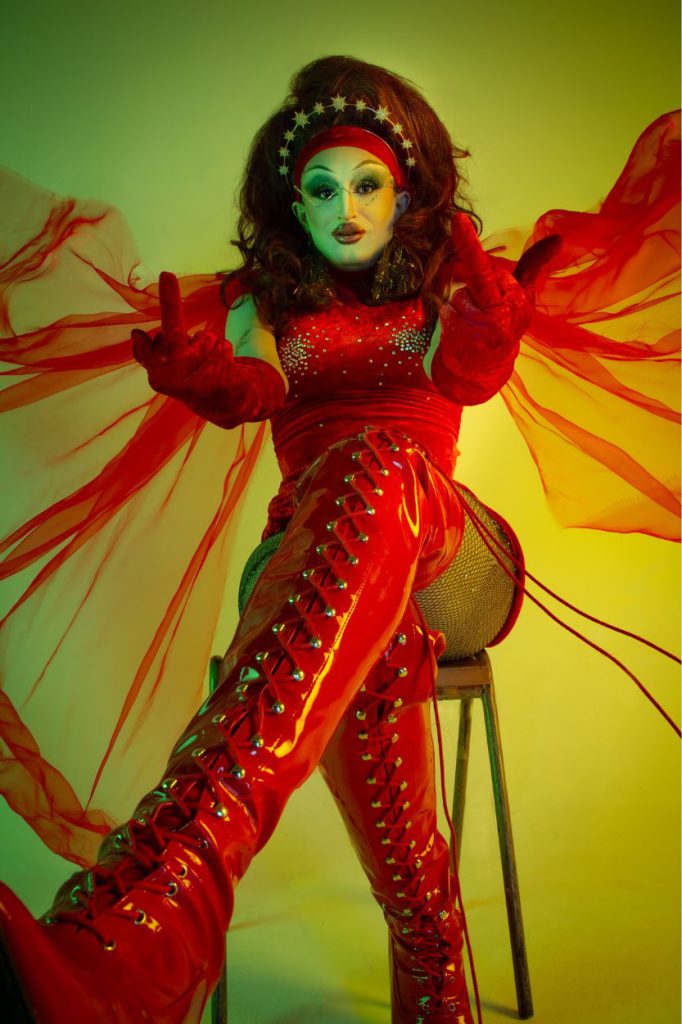
Reese Wetherspoon
A Sanctuary for Revelation
The studio became a sanctuary for these revelations. Away from the roar of the club and the pressure of the spotlight, we found a middle ground. By focusing on the person within the performance, rather than the performance itself, the project explores the duality of identity. We see the craftsmanship of the costume, but we also see the weight of the crown. We see the precision of the paint, but we also see the vulnerability of the gaze.
In this quiet space, the heavier themes of the craft often surfaced. For Sweet Boy, the art form is a lifeline rather than a mere hobby. "Drag for me is not only a creative outlet and a political statement, it’s quite literally a means to go on for me," they share. "I wouldn’t be half the person I am today if it wasn’t for the confidence, pride, and life that drag has brought to me. Long live the weirdos!"
This sentiment is echoed by Reese Wetherspoons, who views the drag persona as a vessel for suppressed truths. "Drag means being unafraid to be completely authentic," she says, "being able to express all of the crazy thoughts and ideas in my head that I’ve had to hold back for so long. Drag means being able to find community and having unforgettable experiences."
The Joy of the Connection
However, the project also highlights the sheer, unadulterated joy that fuels the UK scene. While the large-format camera captures the serious technical labour of the art, it also captures the mischief in the eyes of performers like Geezah Gobble. For Geezah, the heart of the craft is communal. "Drag to me is entertainment. It means so much to each person individually, but for me, it’s to make people laugh, forget about the bad times, and embrace the good! From Danny La Rue to Myra Dubois, to a big fat cow like me… it’s laughter and entertainment!"
This sense of lineage and connection is a recurring theme. The Only Poison Queen reflects on how the visibility of others paved the way for her own journey. "Growing up watching ‘Drag Race’, I always connected with the queens but never thought I’d ever do it. But as time has gone on, seeing people like Conchita Wurst and Danny Beard made me more confident in taking that leap." For her, the rewards are found in the bonds formed behind the scenes. "My main purpose in drag is to enjoy myself and have as much fun as possible and connect with people. It’s brought me some of my best memories and closest friends, which has been the biggest reward in my life."
A Shared Intimacy
Making these images was far more than a technical exercise in lighting and composition. It was a series of shared, intimate moments. Between the clicks of the shutter, there were conversations, some humorous, some heartbreaking, all deeply human.
The resulting photographs aim to honour these stories. By freezing these performers in high-resolution stillness, we allow the viewer to look past the spectacle and see the human being who has built themselves from the ground up. Engaging with such a remarkable group of diverse individuals from all over the UK has been a transformative experience. Their bravery and their humour, their profound sense of self are woven into the very grain of these photographs.
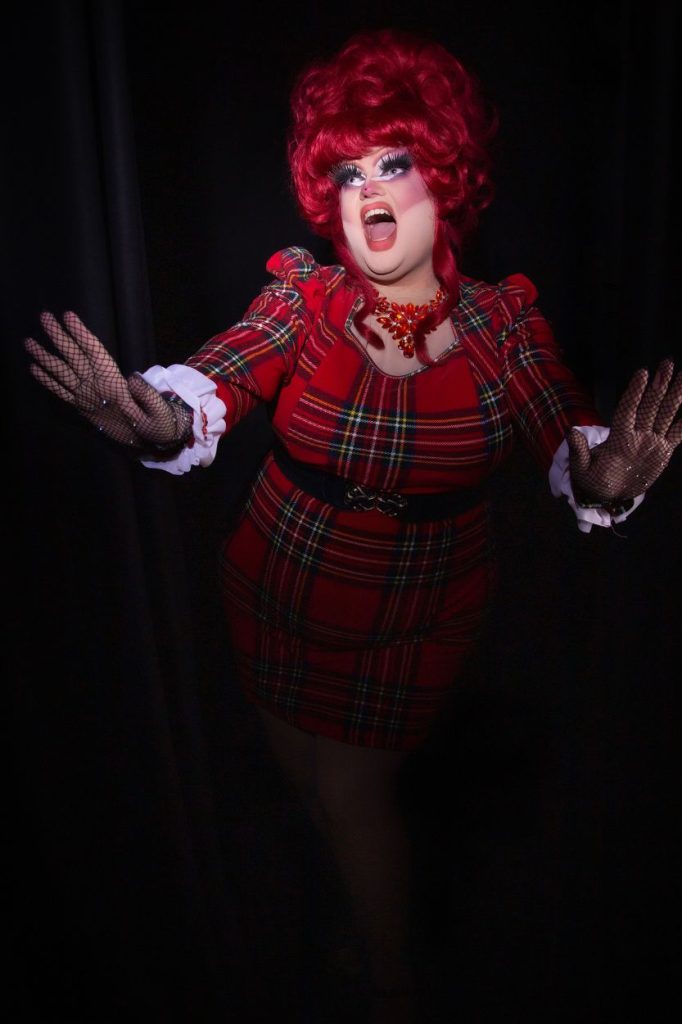
Gezzah Gobble
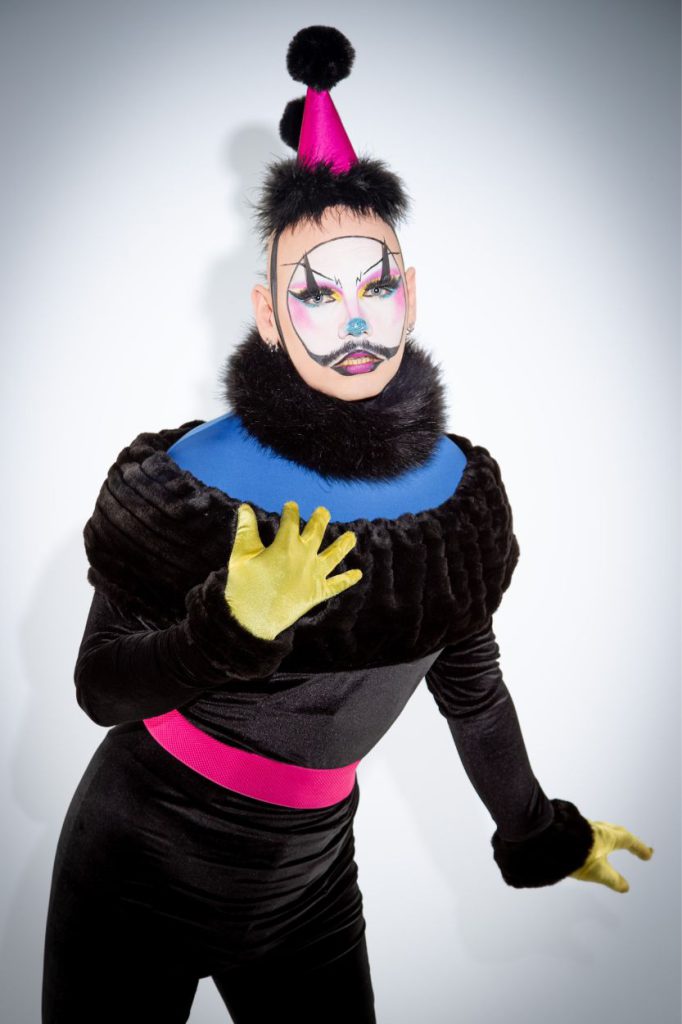
Sweet Boy