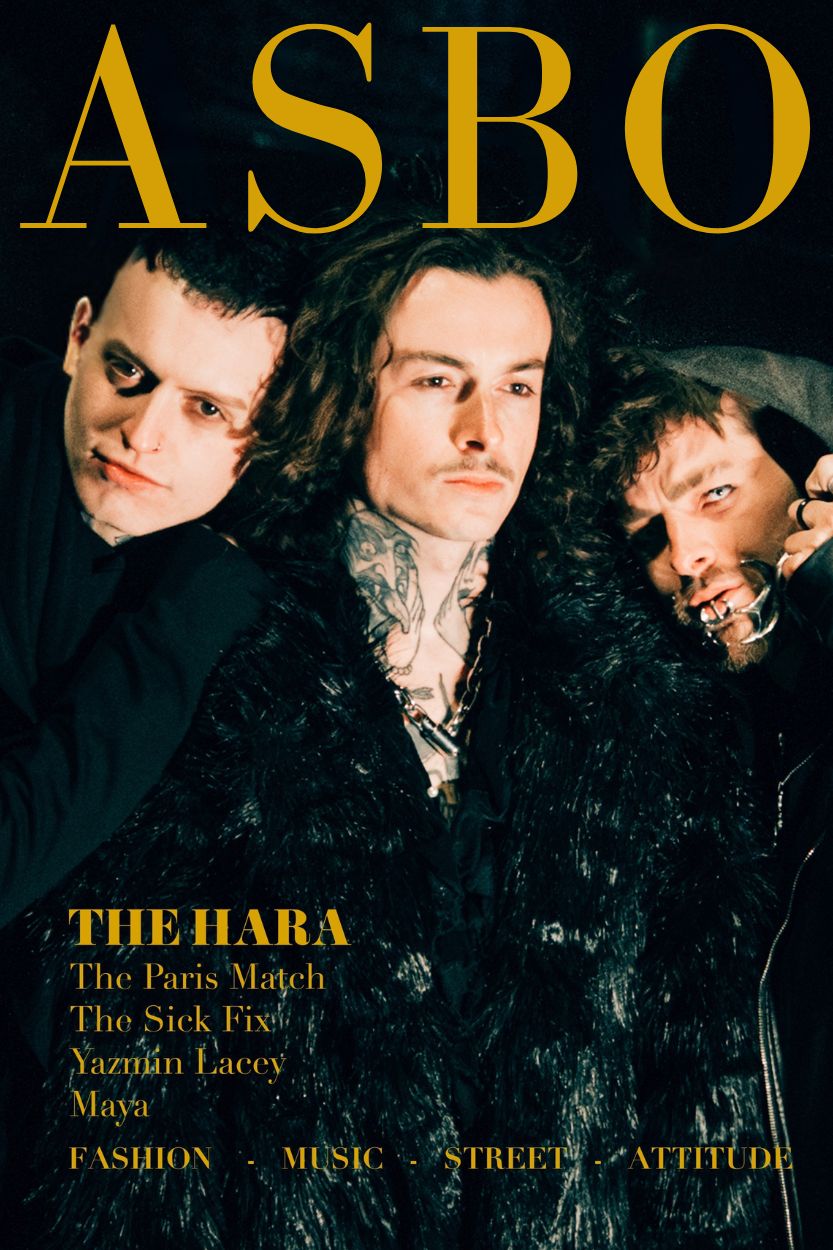


Catch The Munyks live on their UK tour this September.
Stripped of the noise, the stage lights, and the industry labels, what remains is the music that truly matters. The Lifeboat Playlist is a raw dive into the sonic DNA of the artists we love, forcing them to choose the ten definitive tracks they would carry into isolation. It is a survival kit built on gut-level resonance—a collection of anthems, heartbreaks, and high-octane riffs that define a lifetime. From stadium-sized roars to vulnerable late-night confessions, these are the songs that keep the fire burning when the horizon feels endless.
For this edition, Markus, lead singer of The Munyks—stepped up to curate the list and share the story behind each choice.
Narrowing a lifetime of obsession down to just ten tracks was pure agony. Leaving out giants like The Doors, The Animals, Them, The Velvet Underground, Jefferson Airplane, and Deep Purple felt almost wrong.
Yet these ten final tracks are far more than just personal favorites. They are time machines and survival tools, deeply rooted in ’60s beat, garage, psychedelia, soul, melody, attitude, and glorious imperfection. They are constant reminders that a great song can be raw, beautiful, urgent, strange, and completely alive in under three minutes.
This is my lifeboat playlist: ten songs I’m taking into the wild, because without them, something essential would be missing.
The Music Machine: “Double Yellow Line”
The Music Machine have always been something like my secret ideal of a band. Which is strange, because they never really became widely recognized and remained more of an underground legend. But maybe that is exactly part of the attraction.
There is something in their sound that I always wanted a band to have: the fuzz, the darkness, the nervous drive, Sean Bonniwell’s voice, and this perfect point between garage pop and psychedelia. Not necessarily as a direct sound blueprint, but as an attitude. “Double Yellow Line” has that feeling of moving forward without asking for permission. It is tense, cool, slightly dangerous, and maybe that is very close to what I always hoped The Munyks could feel like.
The Kinks: “Till the End of the Day”
When I hear this song, I immediately feel freedom, summer, and a strange kind of emotional strength. It gives me the feeling that I do not need anybody, which is funny, because the song is actually about being with someone.
Maybe I misunderstood it emotionally when I first learned it. I was single at the time and somehow ignored Ray Davies singing “we” instead of “I”. The guitar riff was so captivating that I turned the song into something else in my head: not a love song, but a declaration of independence. It still makes me feel like walking out into the evening with no plan, no explanation, and the feeling that life belongs to me for a few hours.
The Small Faces: “Afterglow”
“Afterglow” is one of those songs that feels almost too warm to touch. For me, it has less to do with nostalgia in a simple sense and more with the strange sadness of beauty after something has already passed.
Steve Marriott’s voice sounds so alive here. Not polished, but burning! I always feel that he is not just singing about love, but about the trace someone leaves behind in you. That emotional afterlight. It is powerful and vulnerable at the same time, and that combination has always moved me deeply.
The Beatles: “Helter Skelter”
I actually discovered “Helter Skelter” surprisingly late. Maybe because, with The Beatles, you sometimes think you already know the story, but then one song suddenly opens another door.
What I love about it is that it does not sound like a historical artefact. It still sounds modern, wild, and almost physically out of control. The Beatles could write songs that felt like the beginning of entire genres, and this one feels like it could have been the seed of grunge or heavy alternative rock. For me, it is a reminder that even the most famous band in the world once decided to stop being tasteful and just let everything fall apart beautifully.
The Who: “Substitute”
“Substitute” was the first cover song I ever played with a band. That alone gives it a permanent place in my personal mythology.
I remember that early feeling of standing in a room with other people and suddenly realizing: this is no longer just listening to records. This is becoming part of that world, even if only for three minutes and with probably questionable sound. The song still carries that first-band energy for me: excitement, insecurity, volume, and the strange joy of pretending to be cooler than you are until the music almost makes it true.
The Yardbirds: “Stroll On”
That Page/Beck guitar interplay still blows my mind: two legends pushing each other into something raw, nervous, and electric. It is not a polite guitar battle. It feels more like two brilliant forces accidentally meet in the same dangerous room.
When Jeff Beck died, we recorded our own version as a small tribute, although we never released it. That song still feels like a gateway to me: from rhythm and blues into something heavier, stranger, more future-facing. And honestly, meeting Jimmy Page one day would still be one of my remaining dreams in this life.
The Creation: “Nightmares”
The Creation have this guitar sound that, to me, almost defines a certain British 60s ideal: sharp, stylish, aggressive, and slightly unreal. “Nightmares” feels like pop art having a nervous breakdown.
What I love is that it is not just a good song. It has an atmosphere, a visual world, a colour. The psychedelic guitar solo feels like the ceiling suddenly opens. I also have a special weakness for their earlier Mark Four period, but “Nightmares” captures that moment where beat music becomes stranger and more intense. It is one of those tracks that makes me want to pick up a guitar immediately.
Shocking Blue: “A Long and Lonesome Road”
What fascinates me about Shocking Blue is the way they place Mariska Veres’ natural, almost effortless voice on top of such a hard and aggressive band sound. The guitars can feel close to hard rock, the rhythm has real attack, and yet the band still remains on the garage-beat side of things. “A Long and Lonesome Road” has this wonderful mix of drive and melancholy: it moves forward, but it never feels carefree. To me, it is garage psychedelic pop rock at its best: raw, stylish, melodic, and carrying the strange feeling of travelling somewhere without being completely sure whether you are escaping or searching.
The Remains: “Don’t Look Back”
The first thing that hit me was the voice. Raw, expressive, and so alive that I initially had trouble separating it from Mick Jagger in my head. But the more I listened, the more the song became its own thing.
What moves me is how simple and direct it is, and then suddenly that break in the middle appears, almost like a call-and-response moment from soul or church music. From a conventional songwriting perspective, it should maybe not work. It almost feels as if the song stops and becomes another song for a moment. But that is exactly why I love it. You wait for the main part to return, and when it does, it feels even stronger.
The Rolling Stones: “Gimme Shelter”
I started listening to “Gimme Shelter” intensely after a heartbreaking breakup. Not once or twice, but for years. Whenever it appeared in a playlist, I had to click it. I know every little tone, every noise, every shadow in that recording.
It matched the desolate state I was in, but at the same time the repetition gave me stability. That taught me something about music: it can only really help you if it first meets you where you are. Like people, songs need to be on your wavelength before they can reach you. “Gimme Shelter” did that for me. It did not cheer me up. It stayed with me in the dark, and sometimes that is much more important.
The Cure: “10:15 Saturday Night”
I love the minimalism of this song. It creates a waiting mood, the kind where you suddenly listen to every little sound because something is about to happen. And then the existential drama breaks open with that hard, precise, minimalist guitar. A guitar that knows exactly what it wants! Before everything falls back into emptiness again. To me, The Cure are almost a sixties garage beat band in spirit, only they took that raw simplicity and turned it into something completely their own: colder, stranger, more lonely, and absolutely excellent.
.