

W: Julian Green
"I wanted to use this devastating event as a metaphor for my struggles growing up as a queer child, drowning in the fear of revealing my true self." — Matthew David Andrews
The year is 1958. In the small South-East Essex town of Wickford, a violent storm billows as the community prepares for its annual carnival. Suddenly, the River Crouch bursts its banks, sending a tidal wave of terror through the streets. This historical disaster—and the ironic newspaper headline that dubbed the submerged town "The Venice of Essex"—serves as the haunting foundation for Matthew David Andrews’ graduate collection. But for Andrews, this isn't just a history lesson; it is a profound metaphor for the queer experience.

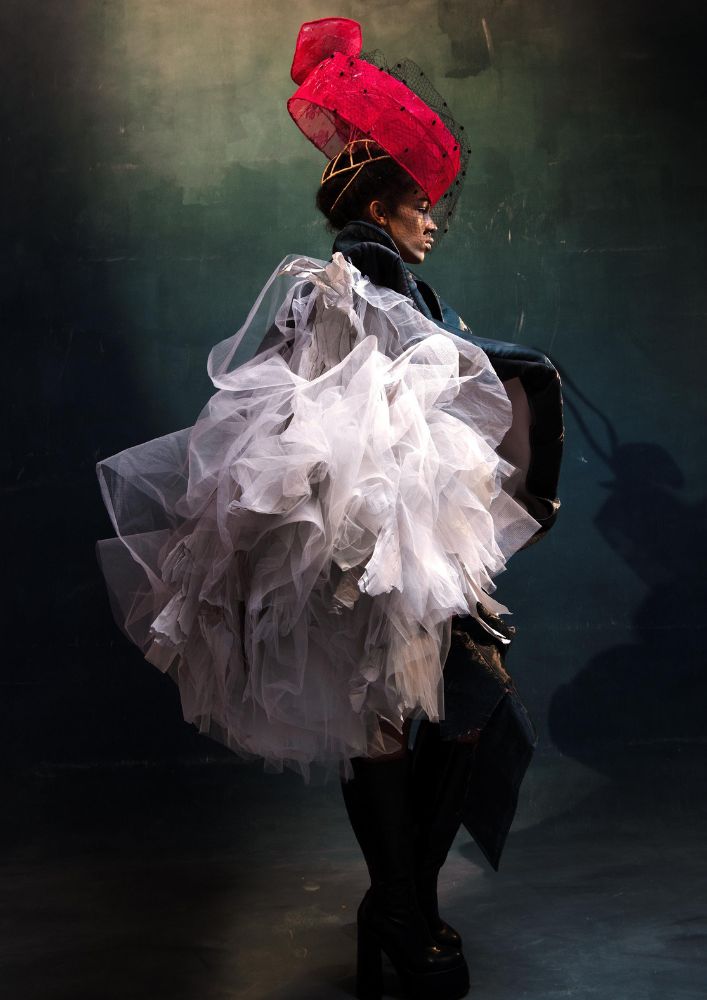
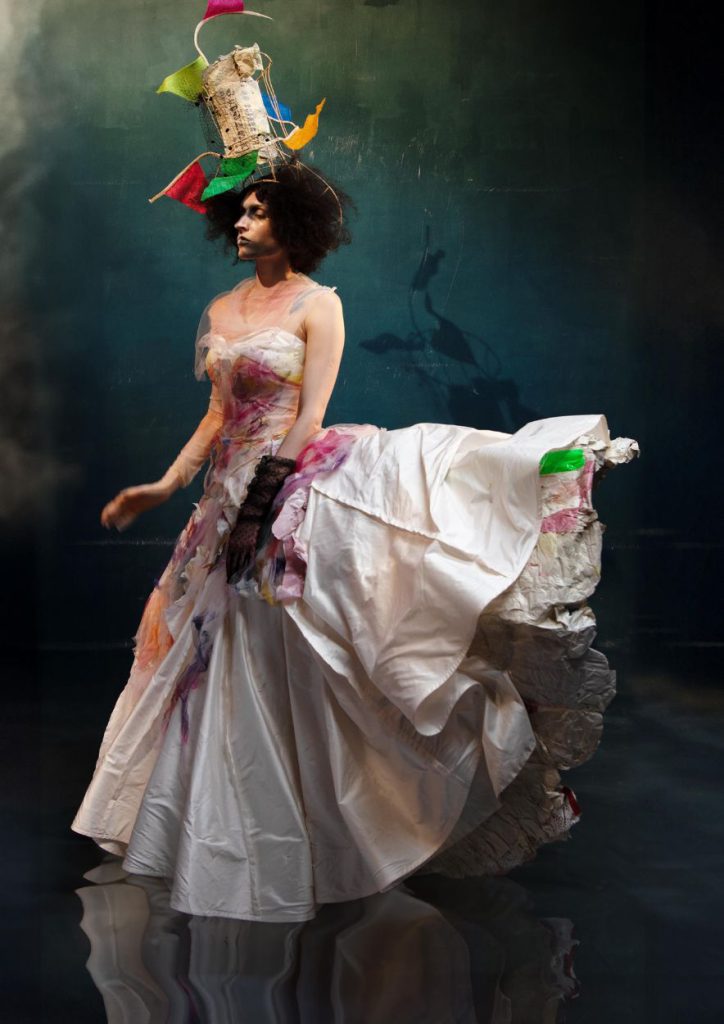
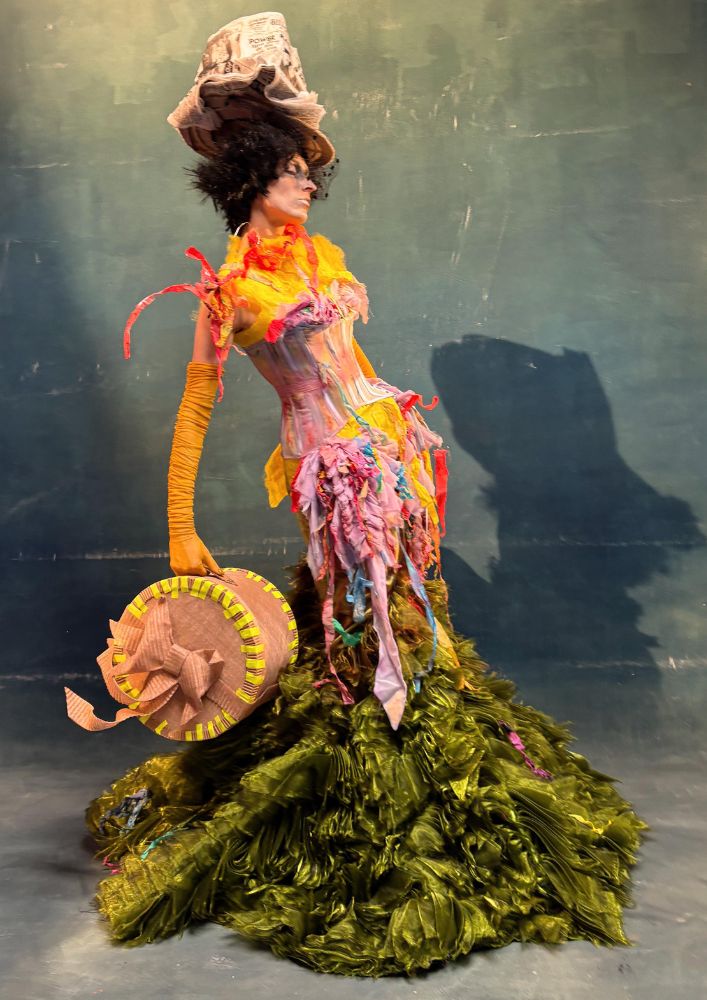
Not since the early days of John Galliano has a designer so masterfully blended historical costume with raw, cinematic emotion. Andrews uses the "Venice" moniker to bridge the gap between a provincial disaster and the fantastical opulence of the Venetian Carnevale. Each garment acts as a character in a disaster film, representing the turbulent emotions of a childhood spent suppressing one's true self. The structure of the collection follows the path of the storm: silhouettes dramatize as the flood worsens, becoming increasingly windswept, distorted, and frantic. Creating a texture that feels both nostalgic and avant-garde.
The material soul of the collection is rooted in Wickford itself. Andrews sourced second-hand prom and wedding dresses from his hometown, transforming these symbols of traditional heteronormative "milestones" into something entirely new. Through hand-painted sublimation dyes and childhood craft techniques, he incorporates excess sublimation paper into the designs. These papier-mâché accessories and millinery adornments evoke the DIY spirit of carnival floats, creating The climax of the show provided a technical and emotional spectacle rarely seen on a graduate runway. As models moved through the space, water began to rain from the brims of their hats. As the water hit the garments, a specially engineered water-soluble textile began to "disappear"—tearing apart in real-time to reveal vibrant colours and prints hidden beneath the surface.
This "couture apocalypse" is a literal representation of emotional suffering and the ultimate relief of coming out. By allowing the outer layers to "drown" and dissolve, Andrews reveals the "true colors" that were always there, waiting under the surface. It is a masterclass in narrative structure, proving that Matthew David Andrews is not just a designer, but a storyteller who uses fabric to navigate the storms of the human heart. In the wake of his "Venice of Essex," the fashion world has found its newest, most evocative voice.