


W: Maximiliano Dubois
On the evening of July 7, the historic Cinecittà Studios—the "Dream Factory" of Italian cinema—provided a cinematic backdrop for the next generation of design excellence. The Accademia Costume & Moda (ACM) "Talents 2021" show was not just a runway; it was a rigorous display of technical mastery and narrative depth, marking a high point during Altaroma. This showcase was particularly significant as it aligned with the Italian Chamber of Fashion’s Milano Moda Graduate initiative, a key scouting competition that emphasizes the importance of nurturing fresh perspectives within the industry.
The presentation stood out for its structural variety and specialized focus. Rather than a singular focus on apparel, the 15 selected students demonstrated a sophisticated understanding of the Italian supply chain across multiple categories. The lineup featured a balanced mix of menswear, womenswear, and genderless silhouettes, but it was the heavy emphasis on leather goods—ranging from men’s and women’s accessories to gender-neutral pieces—that highlighted ACM’s reputation for producing industry-ready accessory designers.
A defining element of this showcase was the collaboration with 39 prestigious "Made in Italy" companies. This partnership allowed students to move beyond academic experimentation and work directly with high-performance fabrics and luxury leathers. Each of the 15 capsule collections, consisting of six outfits each, reflected a professional-grade finish. By bridging the gap between student creativity and industrial reality, the collections showcased a blend of material innovation and technical precision that felt ready for the global market.
Ultimately, the collections were deeply personal, blending cultural research with individual storytelling. Whether exploring historical costume references or modern urban subcultures, the designs were characterized by a high level of acquired technical skill. The Class of 2021 successfully proved that the future of Italian fashion remains rooted in craft, proving that when academic institutions partner with industry leaders, the result is a powerful synergy of innovation and tradition.
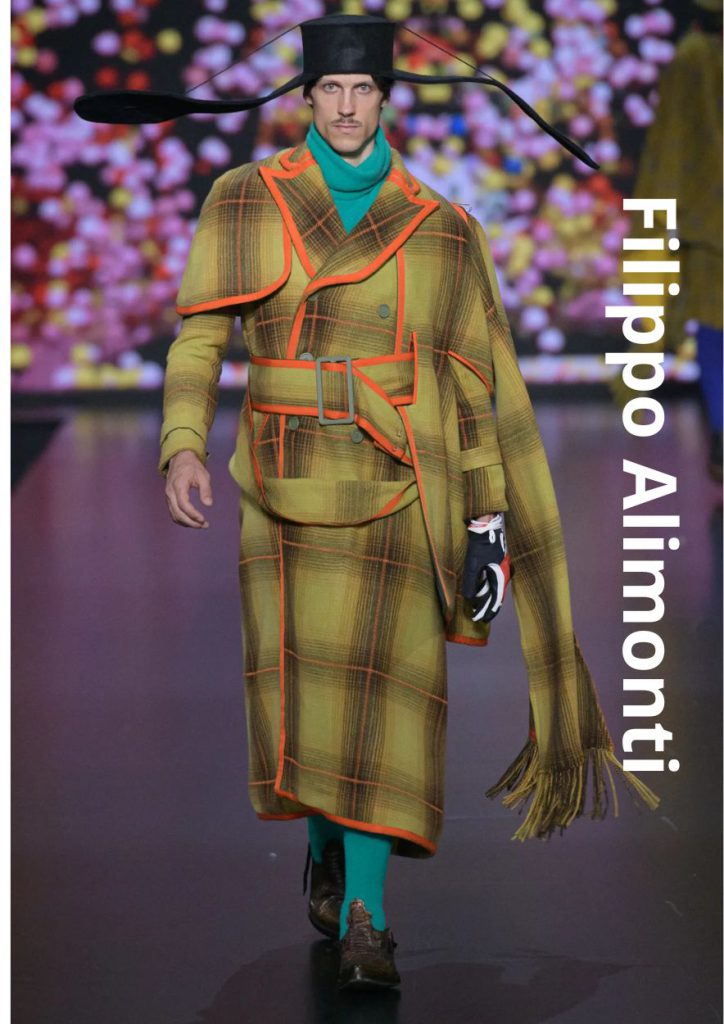
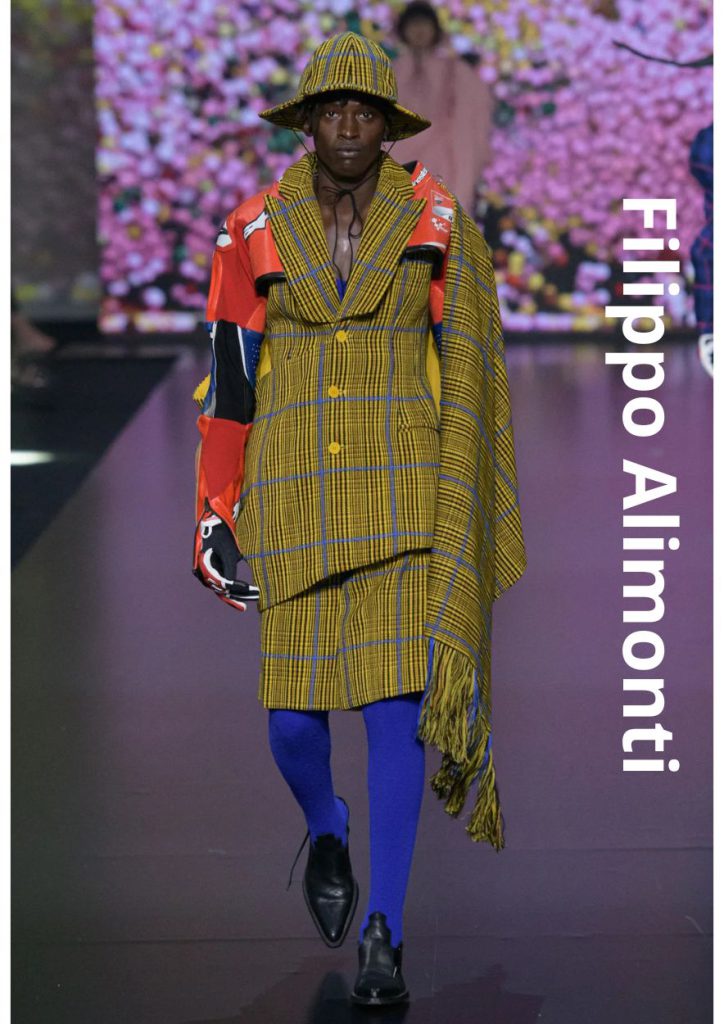
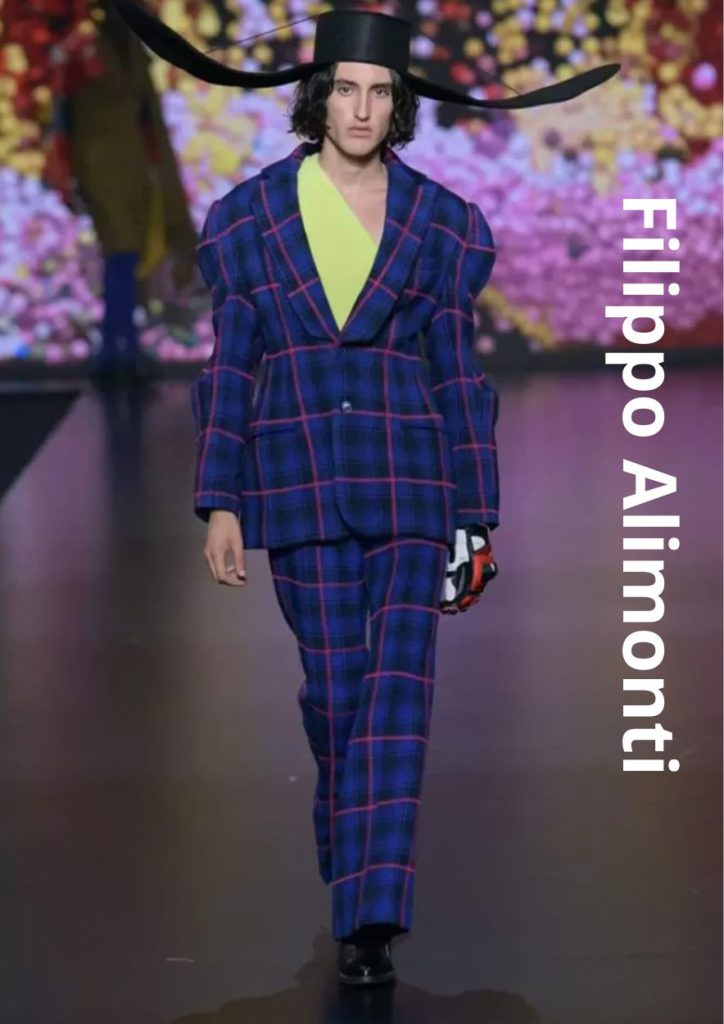
GACHO” is inspired by the film “Gummo”. Through the eyes of a rabbit-boy, director Harmony Korine describes the life of Xenia, a small town in the American province turned upside down by a hurricane; showing these degraded and grotesque environments. The project follows an imaginary journey of this boy-rabbit. In setting off on a motorcycle to discover his origins, he brings with him his childhood as a cholo, a mixed culture of Mexican-American gangsters. In his travels he rediscovers the rebozo, a large native Mexican shawl, used by his mother in all circumstances of life and the photographs by Malick Sidibé that portray the extravagant youth of his father in Mali in the 70s. The story is translated into a mix of racing suits elements with strongly 70’s shapes and volumes gathered together by rebozos that weld together a composite image. Male wools recovered from warehouse inventories, all starting in black and white, are dyed and embroidered to give it a new character, enhancing the existing design and creating a new one. The racing suits recovered in collaboration with Alpinestars are disassembled and re-assembled to transform a specifically technical product into a product that can be worn every day.
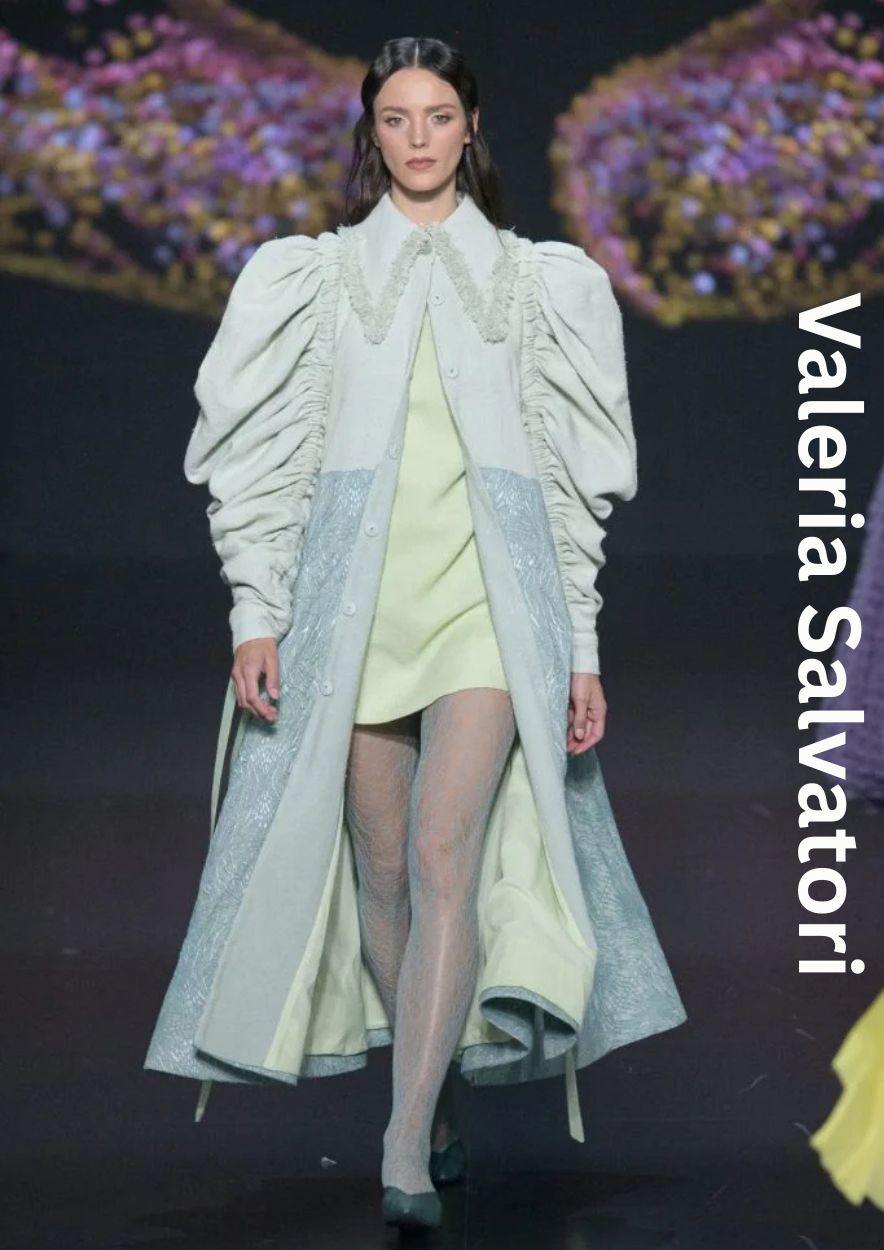
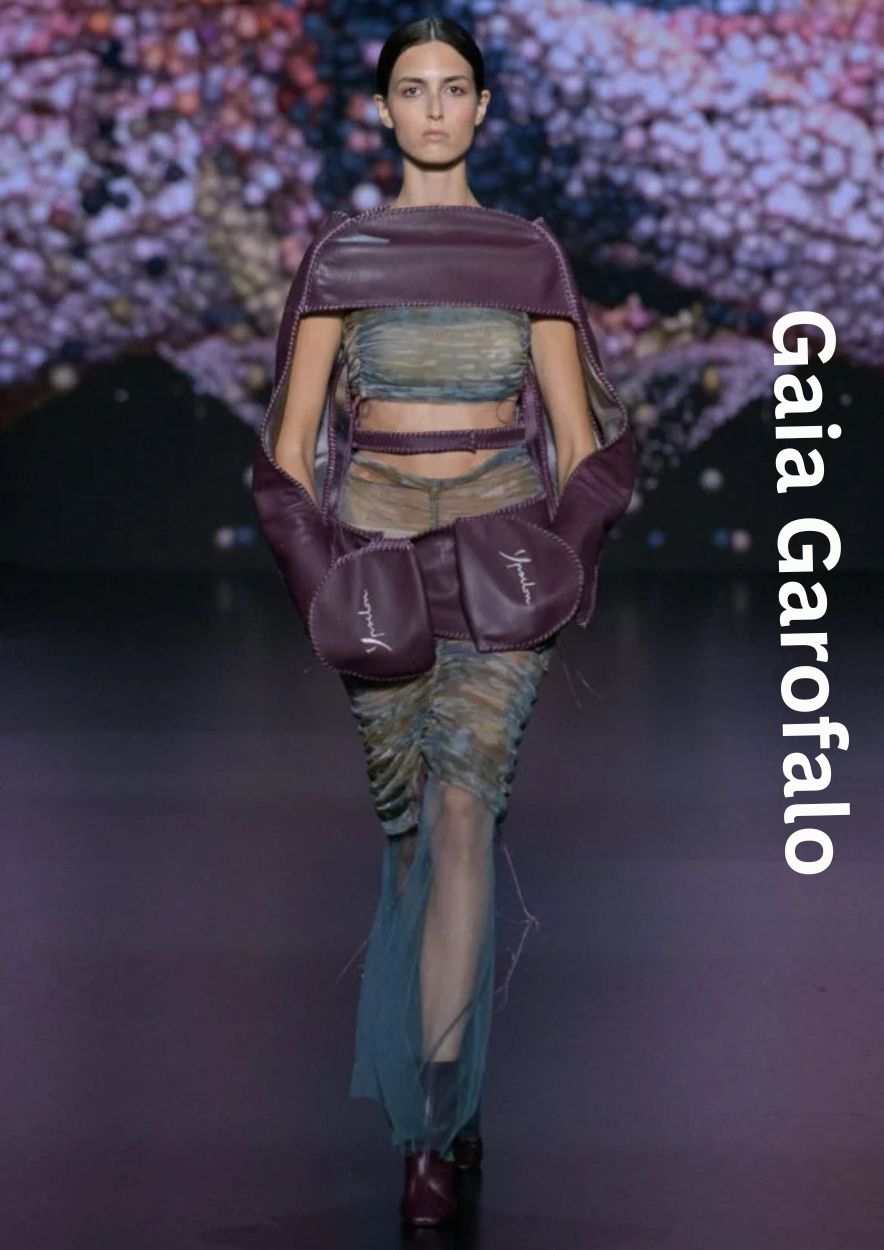
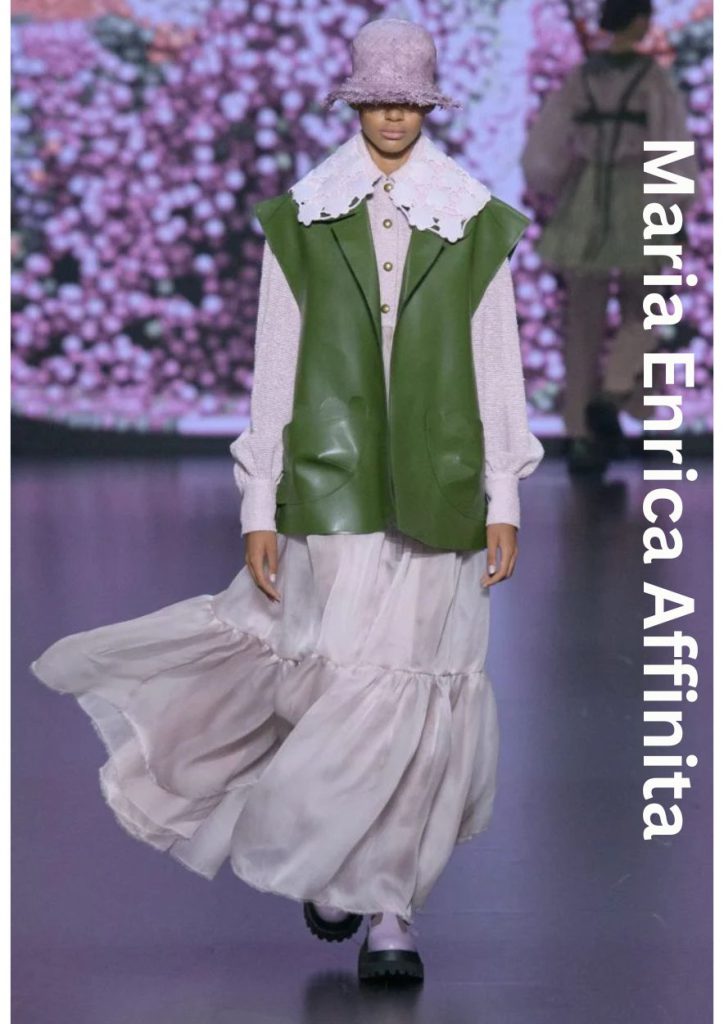
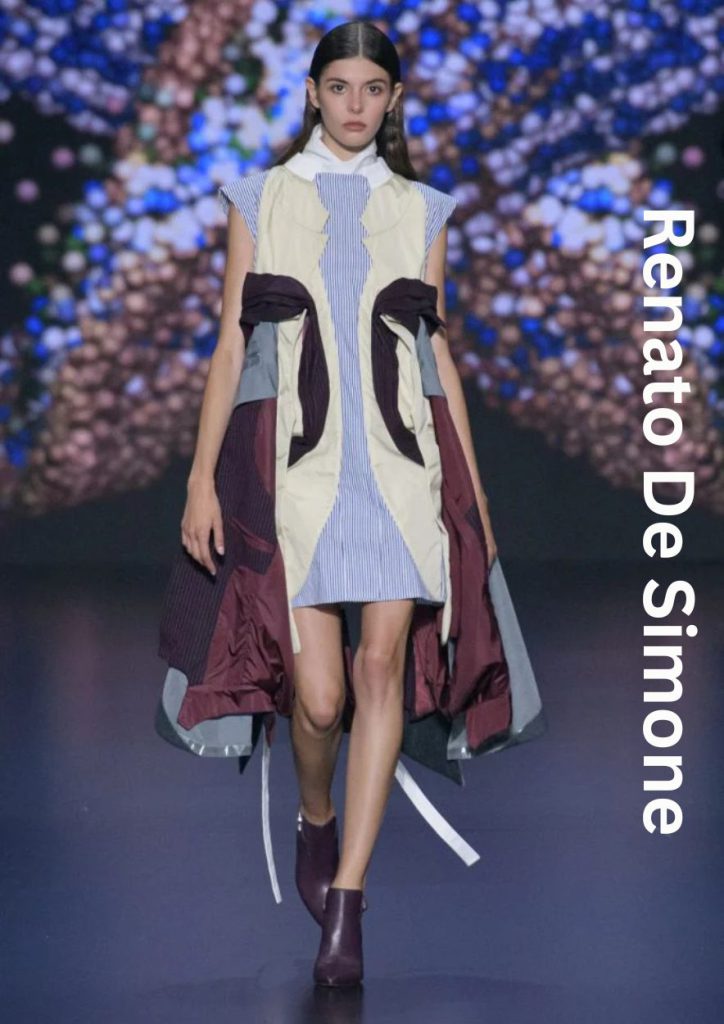
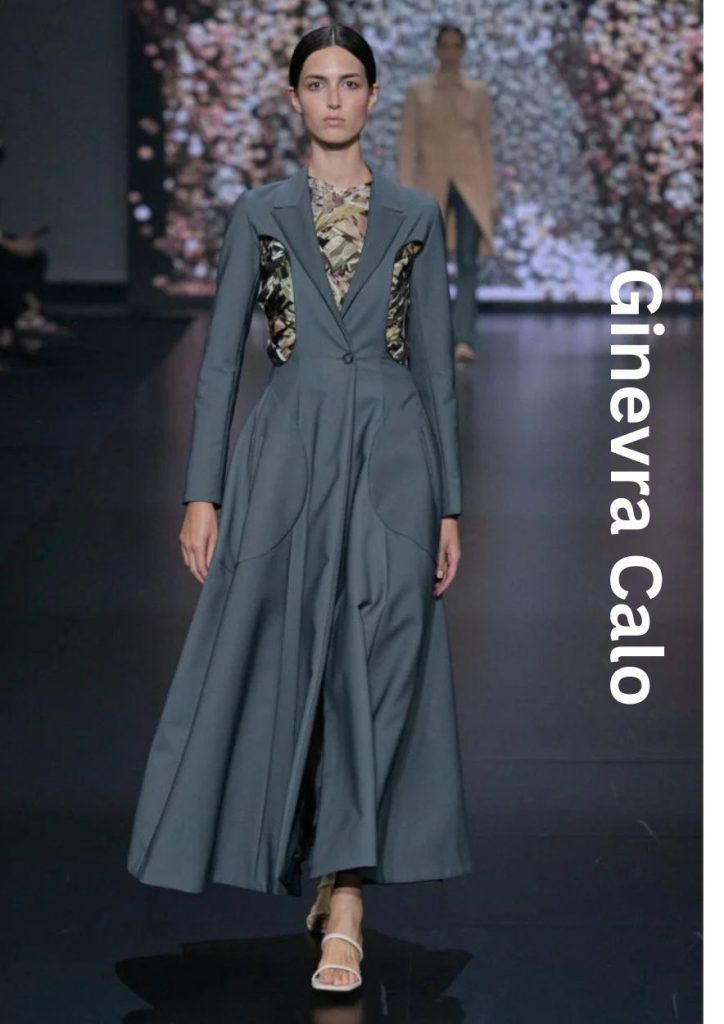
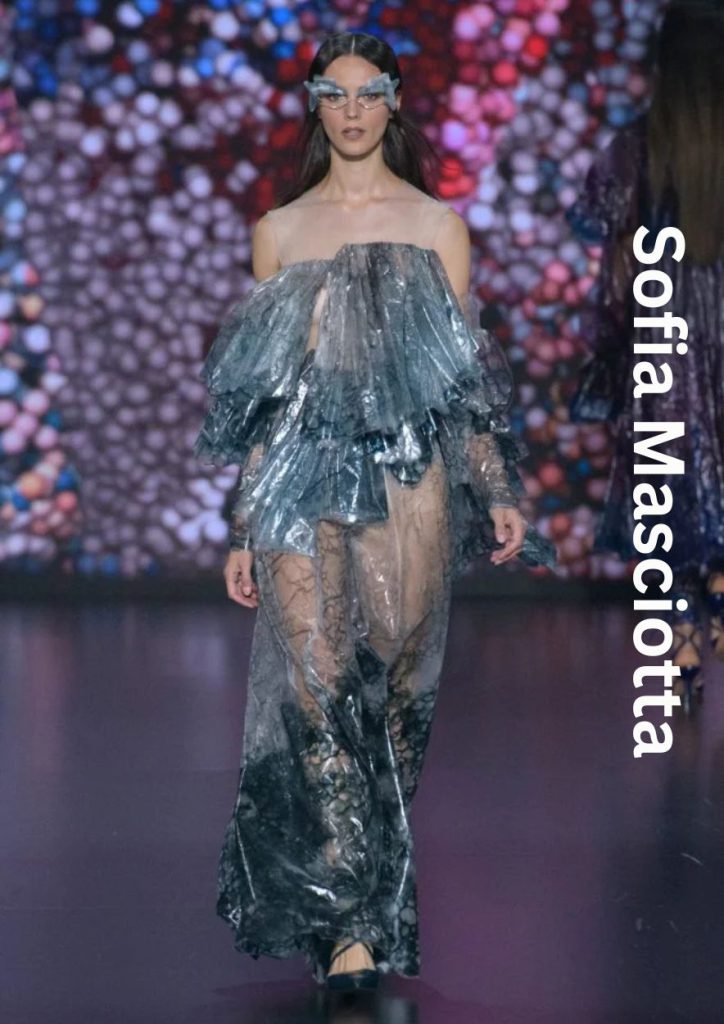
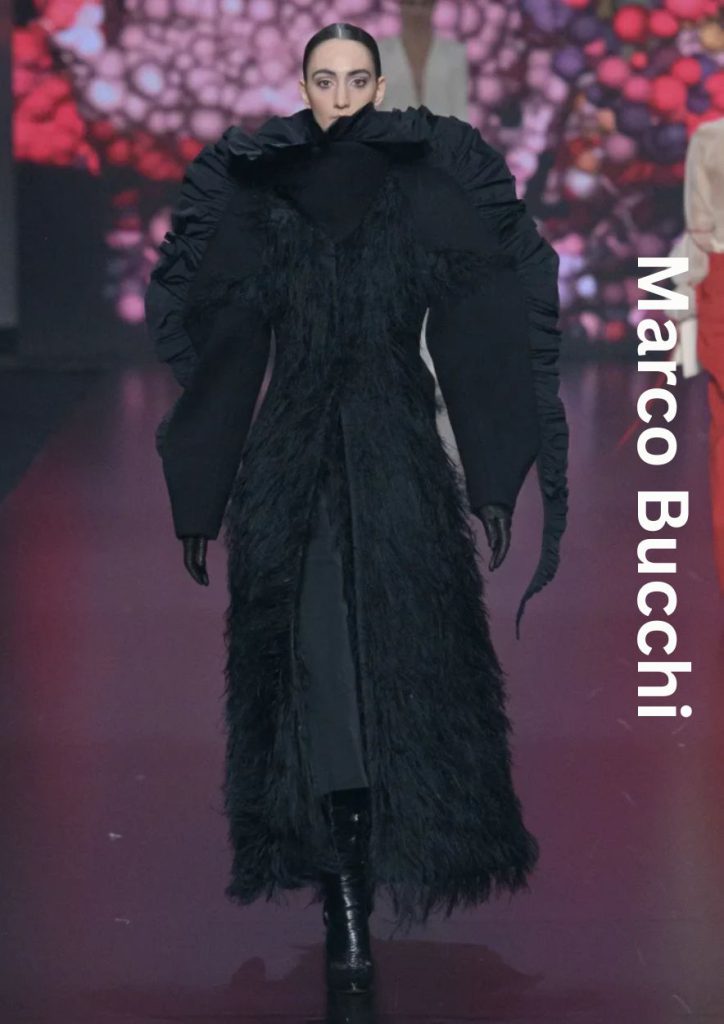
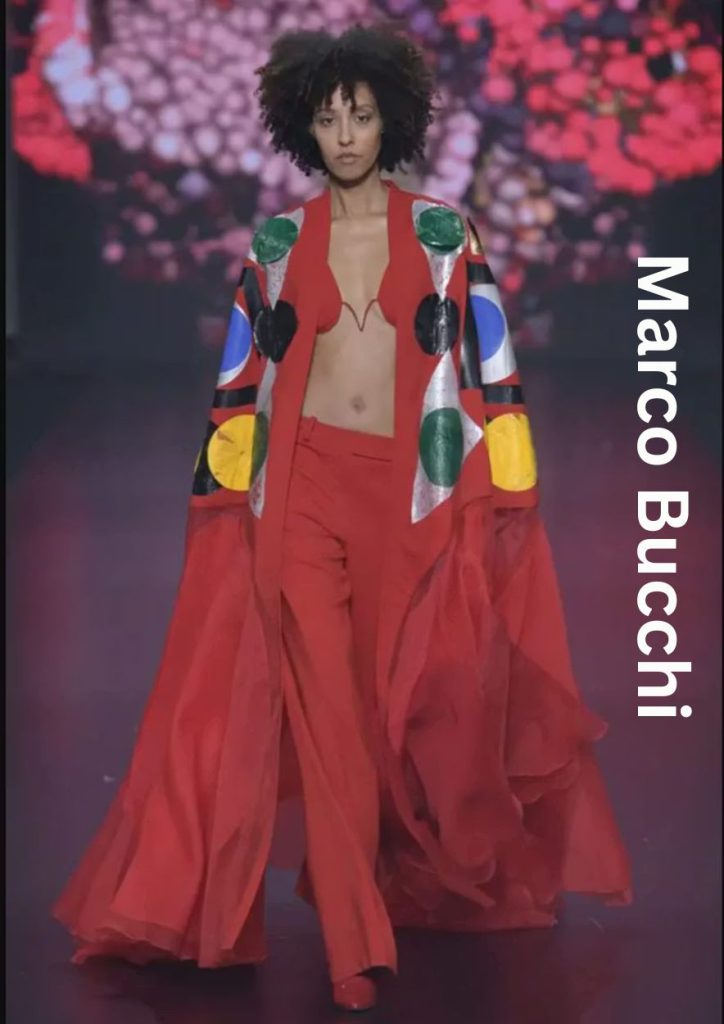
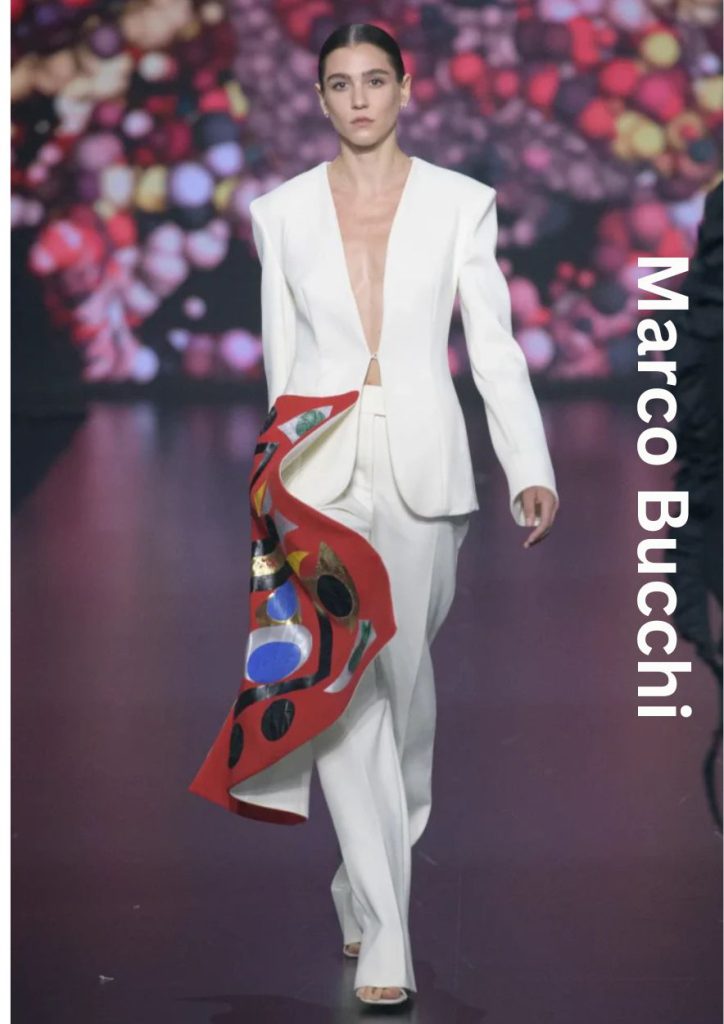
A small diary containing love stories, distant, projected memories that come back to life after a long hibernation. Music, with its sweet sound, melts the glaciers of the heart and as in a spring everything blooms and faces become clear again. The images contained in the small notebook serve to crystallize forever those emotions that catapult us far away, to primitive Sardinia: with its folk costumes, rich in details and volumes that structure the entire collection. Only the photographs and some written dedications testify to that youthful love, which has now faded. Bucchi Fabrizio’s work becomes part of the looks by wrapping them, like a blanket or a metaphorical hug, because death has forever separated a grandfather from his grandson. And between the pages, between those lines, there remains the black, of absence, of emptiness, of pain that tries to erase like a stain of ink, all that is beautiful that has been written.
But love can awaken us again and make us remember “always the hours” spent together.