

W: Wendy Rowe
NAME: Jude Hinojosa
Institution: Central St Martins
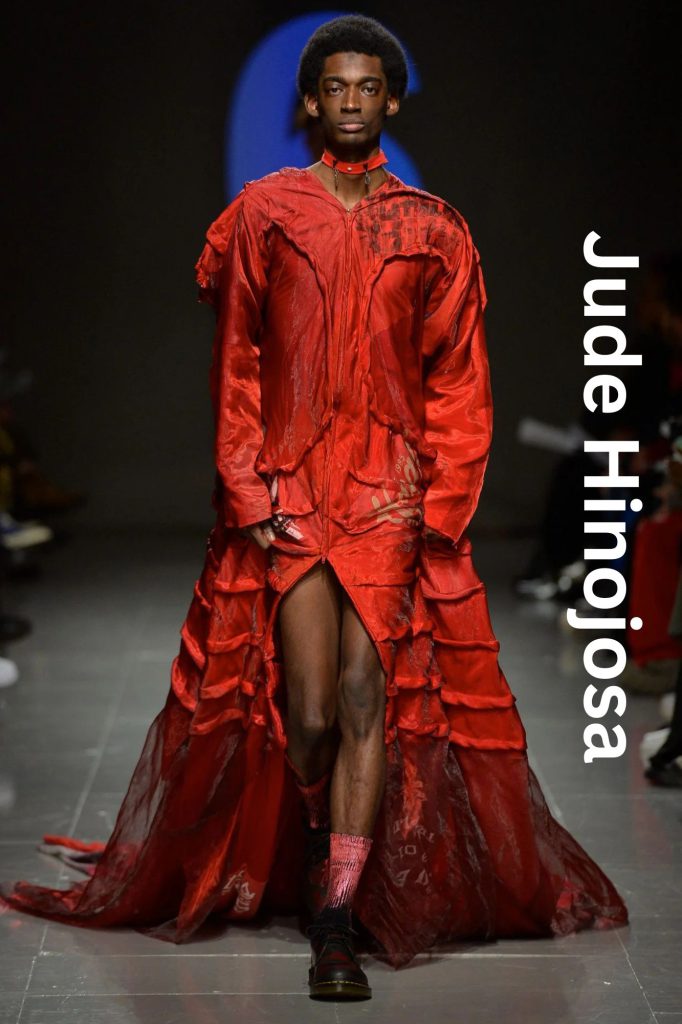
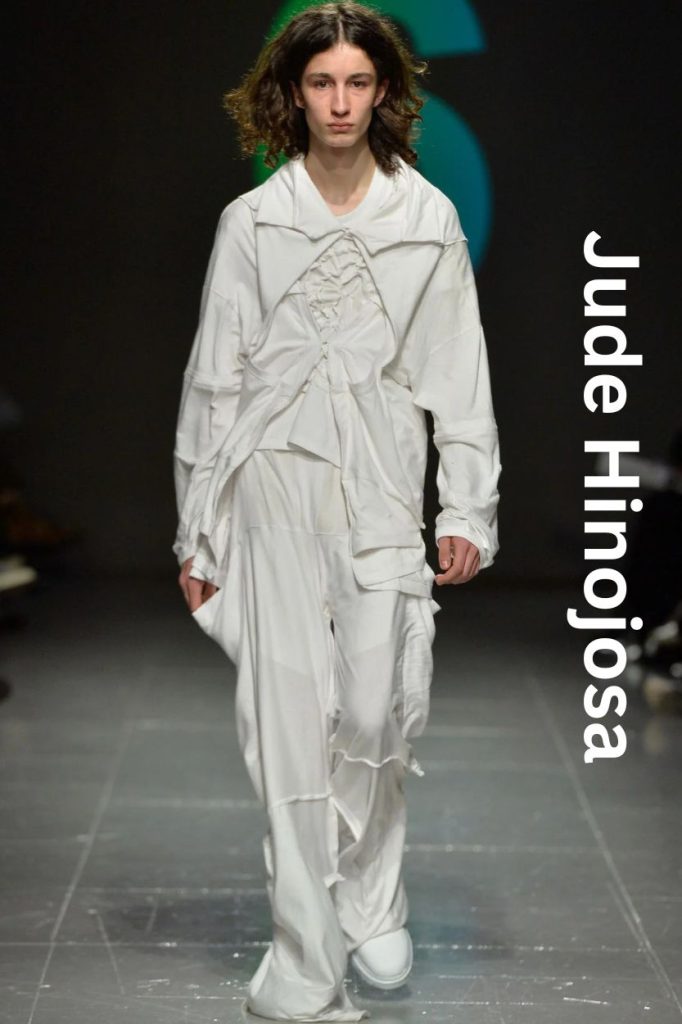
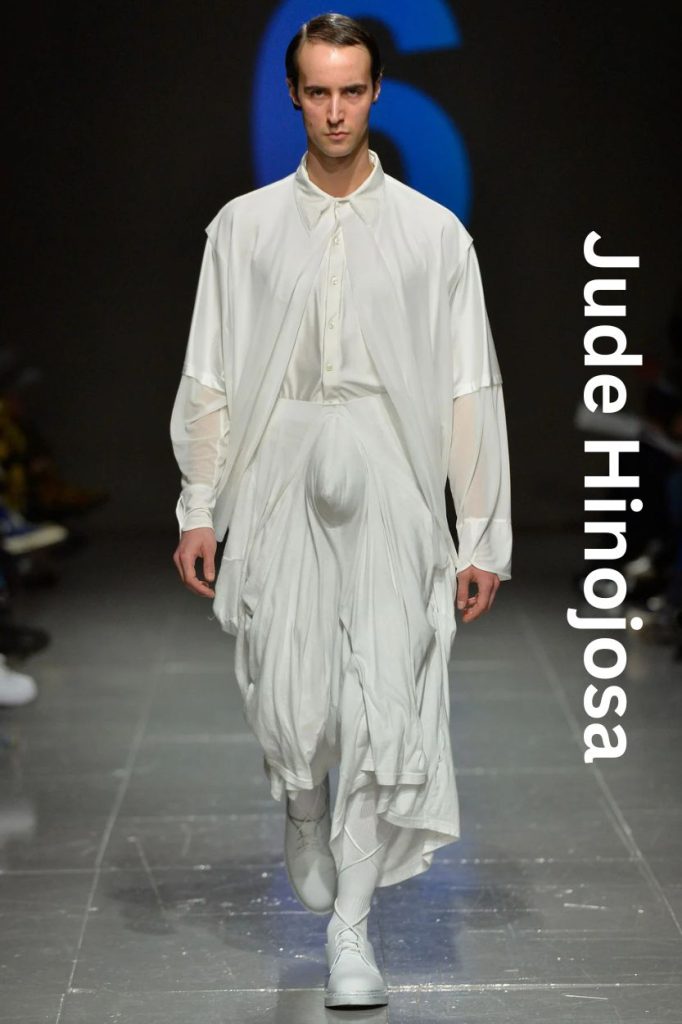
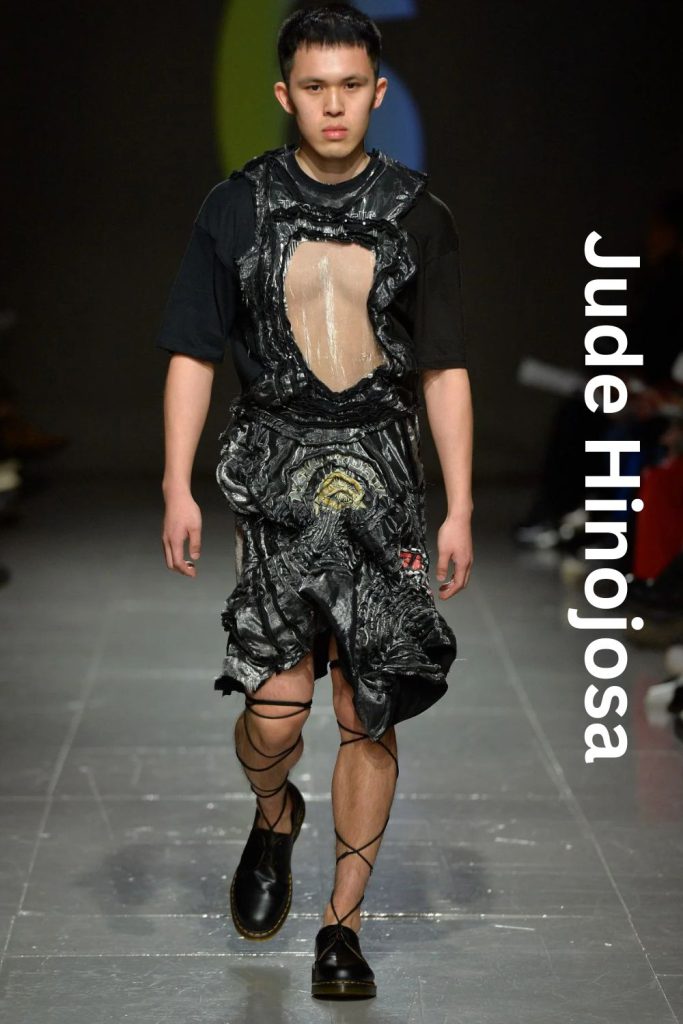
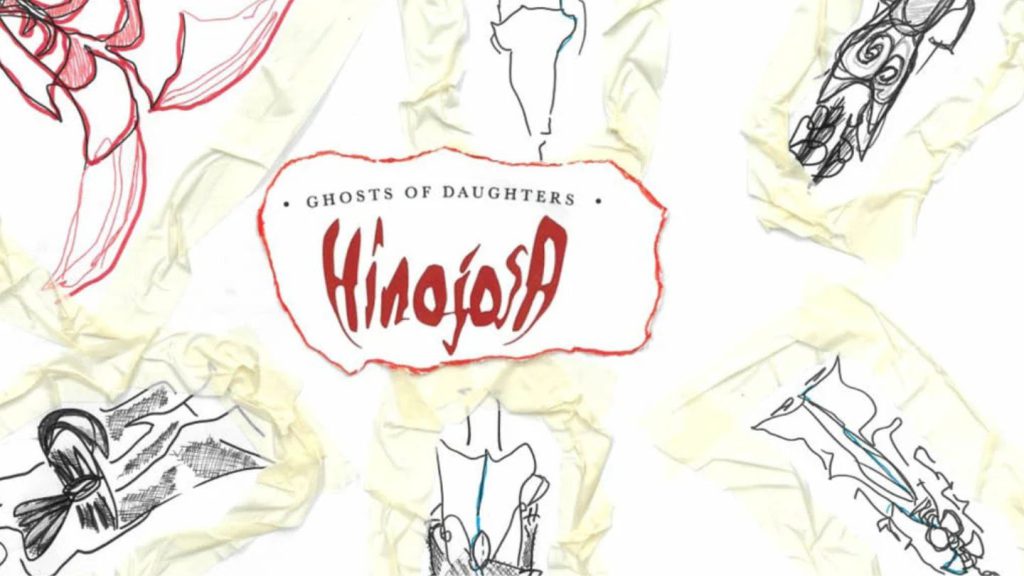
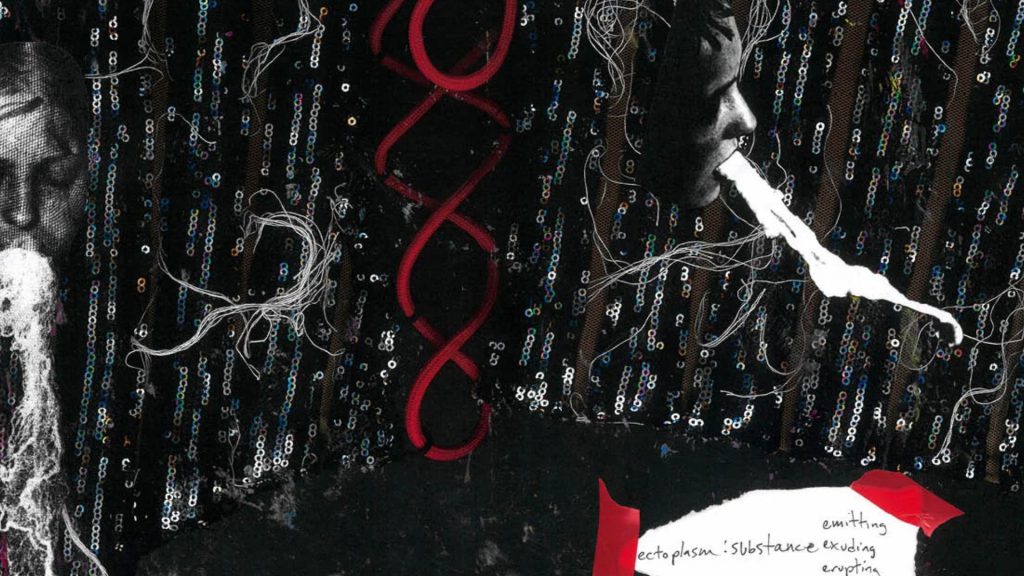
THEME: “Ghosts of Daughters” is inspired by spiritualist art and seances, where the dead use the living as a form of communication
The Sketchbook (The "Aha!" Moment)
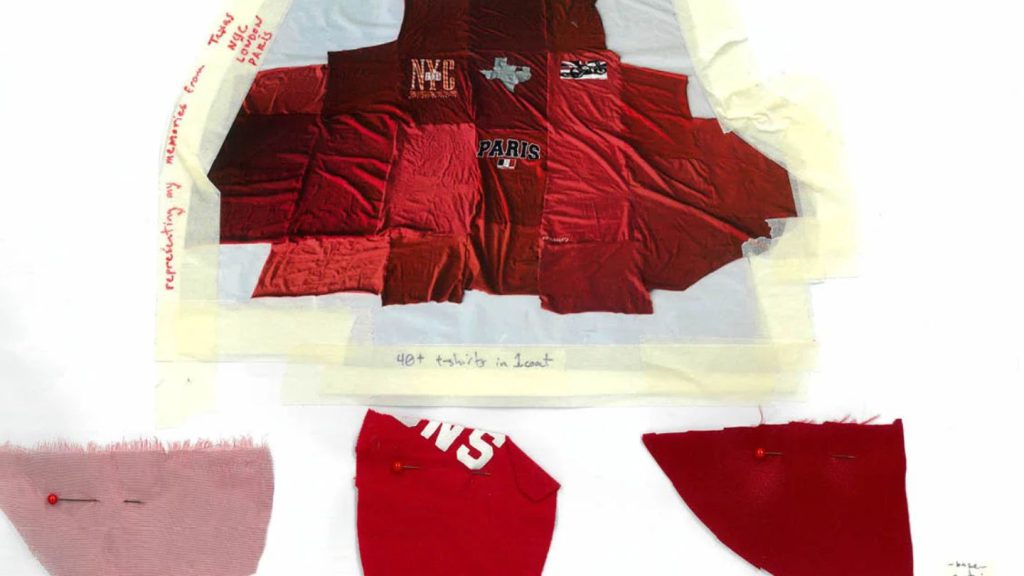
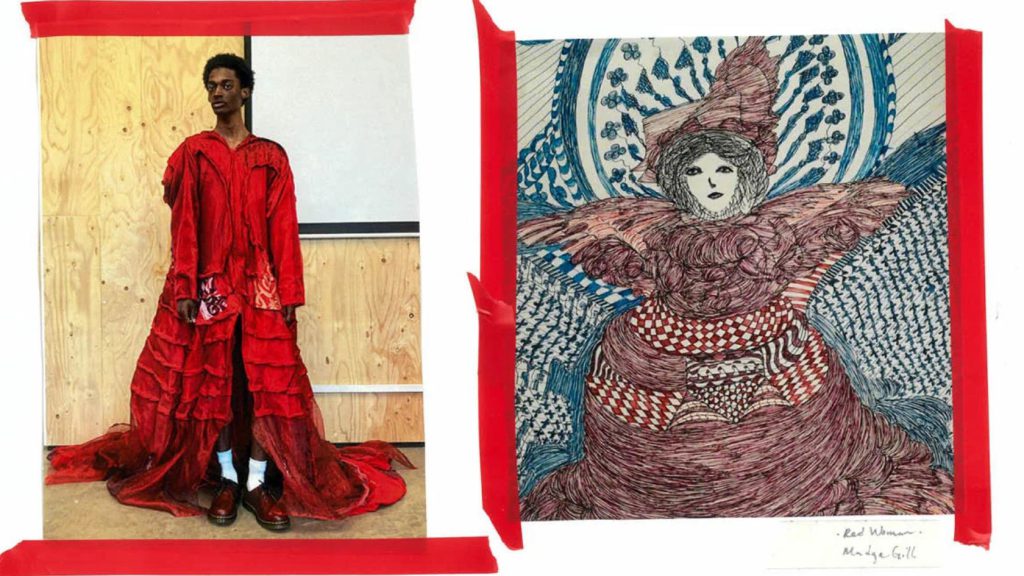
For Jude Hinojosa, the creative spark didn’t ignite in a sterile studio, but in the quiet, dusty corners of thrift stores and family attics. The "Aha!" moment came from a fascination with spiritualist art and the concept of "Ghosts of Daughters." Hinojosa viewed second-hand garments not as waste, but as vessels for the memories of their former wearers.
The sketchbook became a portal, blending Texas roots with London’s avant-garde. Influenced by spiritualist artist Madge Gill, Hinojosa began sketching the "accordion textile"—a structural innovation designed to expand and contract with the wearer’s breath, mimicking the pulse of a living being. The goal was clear: to create "clothes with built-in drama" that bridged the gap between masculine tradition and non-binary emotional expression.
he Twirl Stage (The Tension of Texture)
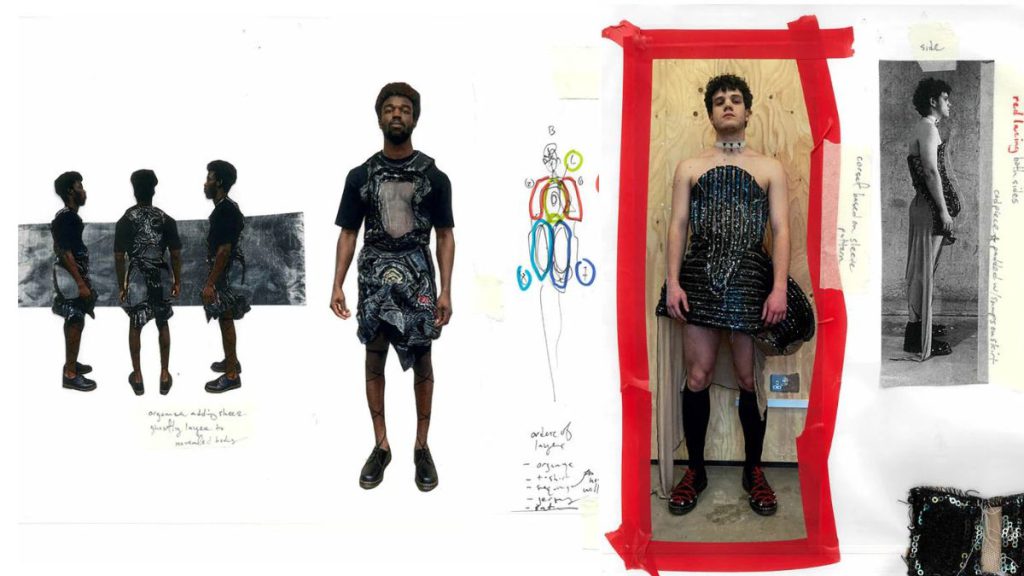
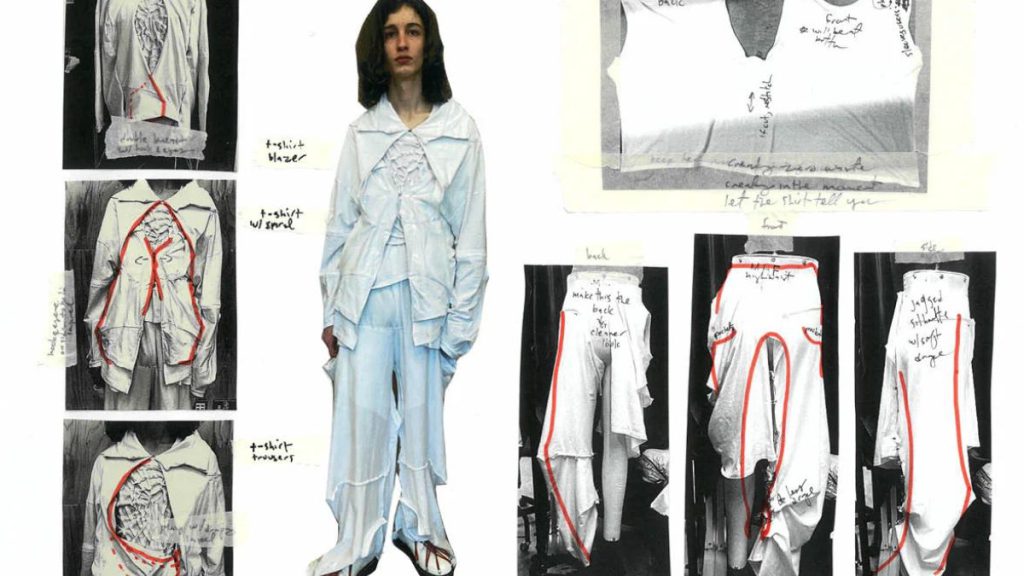
In the studio, the collection moved from paper to "The Twirl"—the kinetic phase where fabric must prove its worth. This stage was defined by the tension between upcycled menswear and ethereal distortion.
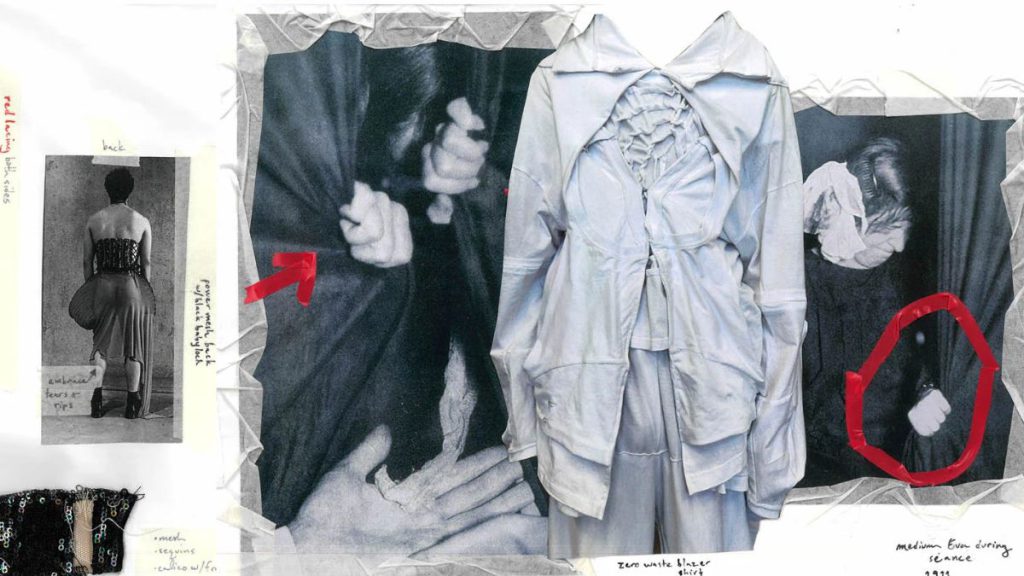
Hinojosa’s process was "organic and intuitive," often letting the fabric dictate the silhouette. Using a zero-waste technique, the designer treated tailoring like a puzzle, deconstructing traditional lapels and suit jackets only to reassemble them into fluid, haunting shapes. The "tension" here was literal: the accordion pleats provided a mechanical stretch that fought against the rigid history of the garments. It was a period of "permitted failure," where Hinojosa experimented with how a heavy wool blazer could be transformed into something that felt as light and ephemeral as a séance.
The Catwalk (The Final Reveal)
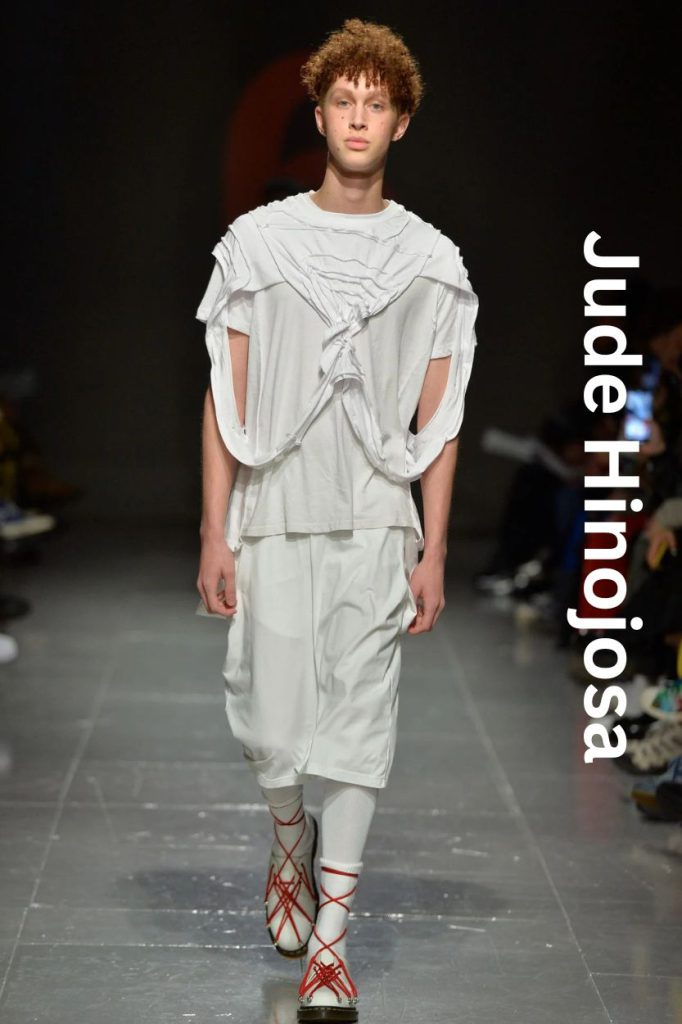
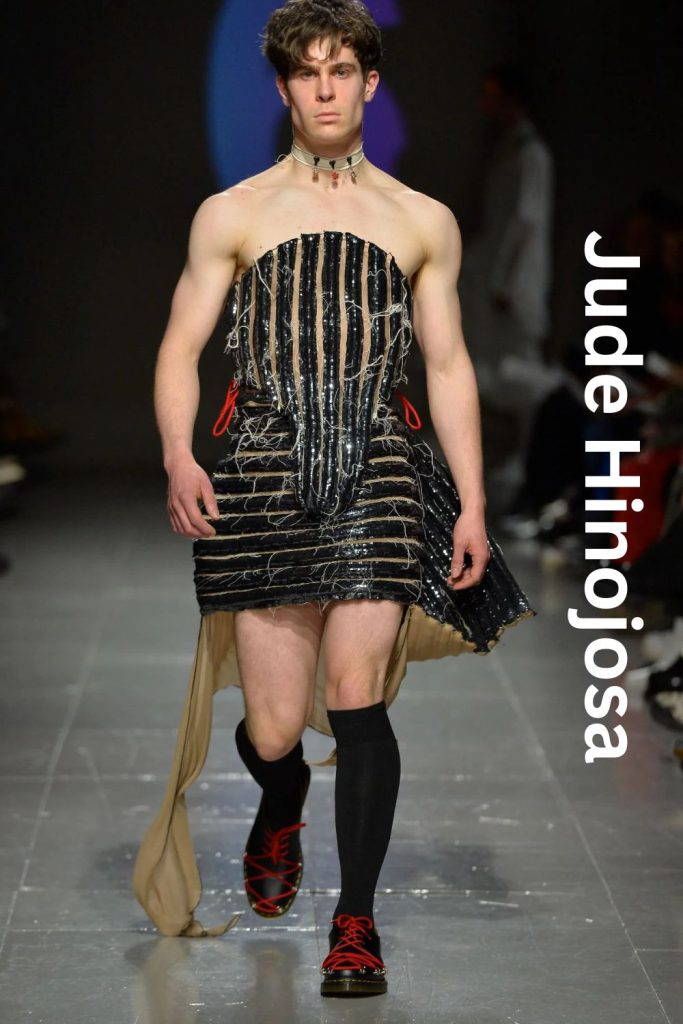
When the lights hit the Central Saint Martins runway in 2023, the result was a masterclass in "mystical haunting." The final reveal showcased a collection that felt both ancient and futuristic.
The garments moved with a ghostly grace; as models walked, the accordion textiles breathed, revealing flashes of hidden layers. What looked like a standard suit from a distance transformed into a distorted, sculptural form up close. By using upcycled foundations, Hinojosa successfully anchored radical non-binary silhouettes in a sense of "familiarity." It wasn't just a fashion show; it was a physical manifestation of memory—proving that menswear can be soft, emotional, and profoundly beautiful without losing its edge.