


“Ultimately, expression and desirability are known to trump exclusivity, and evidently to young expressionists authenticity often matters lesser than their association to a brand, tribe or an idea.”
W: AKASH DAS
Youth fashion is possibly the clearest language of self-expression and identity, driving both demands and desires. As "youthquakes" push the boundaries of change, aesthetics have become a hotbed for originality and individuality. The race to adopt unique aesthetics has made streetwear the new currency of style for young expressionists globally. Factors such as exclusivity, "drop culture," and limited editions—designed to manufacture and amplify hype—are bred into the very business models of luxury streetwear. Younger artistic directors, such as Off-White’s Virgil Abloh and Vetements’ Demna Gvasalia, have been at the forefront of this movement.
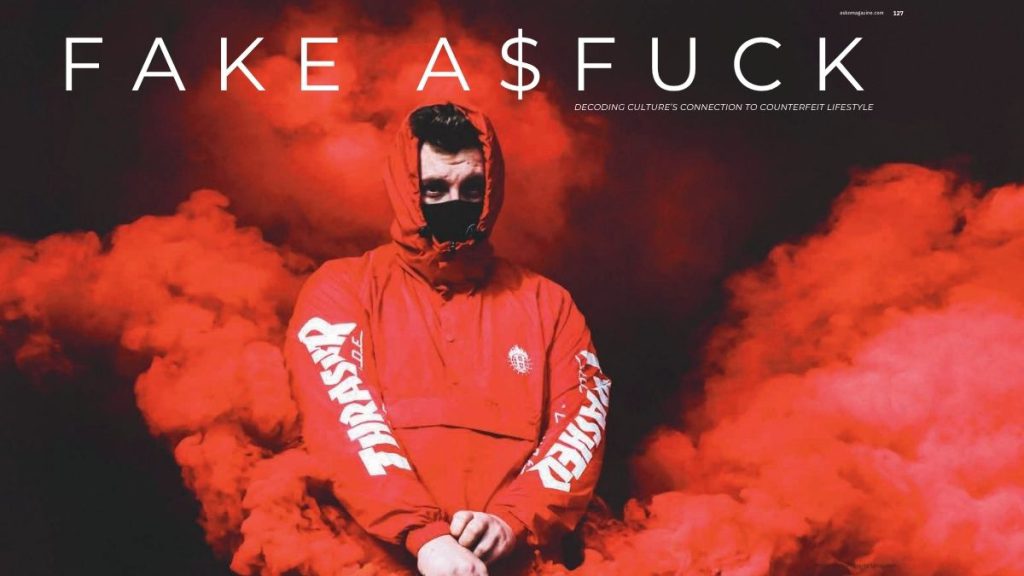
I: Tom Roberts Unsplash
This presents a stark contrast to streetwear’s humble origins as an influential but democratic style that arose from expression rather than the market. However, while the spirit and tenacity of streetwear reign stronger than ever, its diversity has reduced drastically. This is due to the blurring of lines between high fashion and sub-culturally attuned designs, as well as the homogenisation of its market. This shift has catapulted streetwear to cult status as drops in accessibility, linked to premium pricing, became the norm—ultimately envisioning a new version of luxury.
While this is great news for a fashion and lifestyle industry desperate for "newness," it leaves a large population of aspiring youth—including long-standing fans—empty-handed due to a narrower reach. Coupled with the complications perpetuated by a resale market, counterfeiting has become the only respite for addressing their desires in an over-saturated market. While counterfeiting isn't a new concept—Louis Vuitton has more counterfeited products to its name than any other luxury brand—its amplified reach now poses new opportunities (engaging with emerging markets) and challenges (curbing an illicit race to empower youth culture).
Whilst counterfeiting brings a sense of "cool affordability" to consumers, it also functions as a successful business model. The culture of knock-offs—essentially an economy of "rip-off" versions of luxury fashion—has operated for as long as mass-market demand has soared. These models allow affordable price tags on visibly similar runway designs.
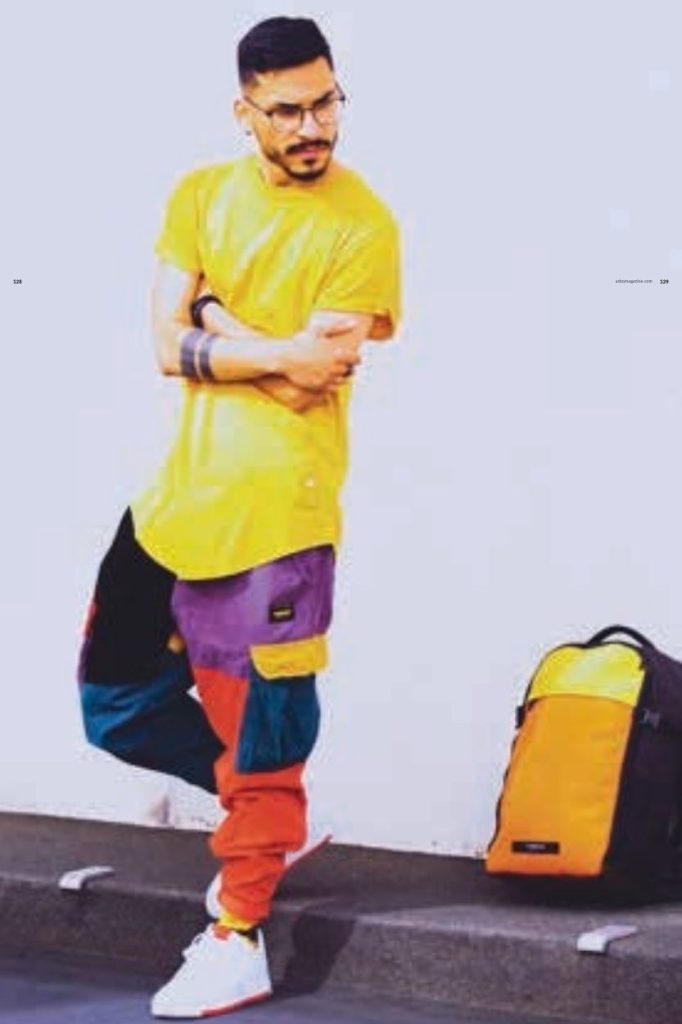
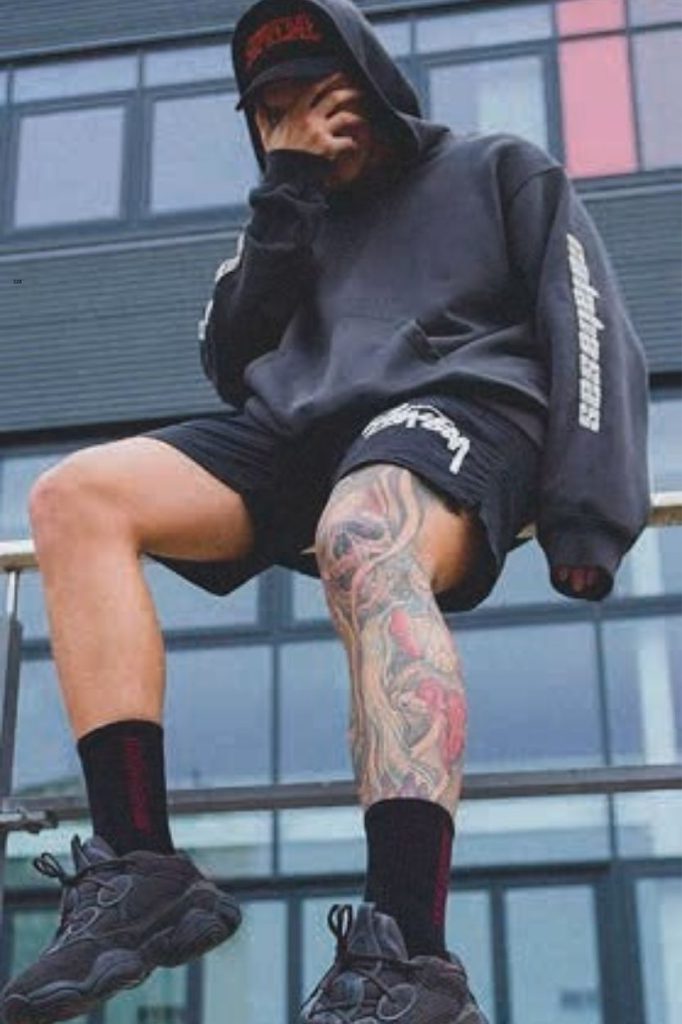
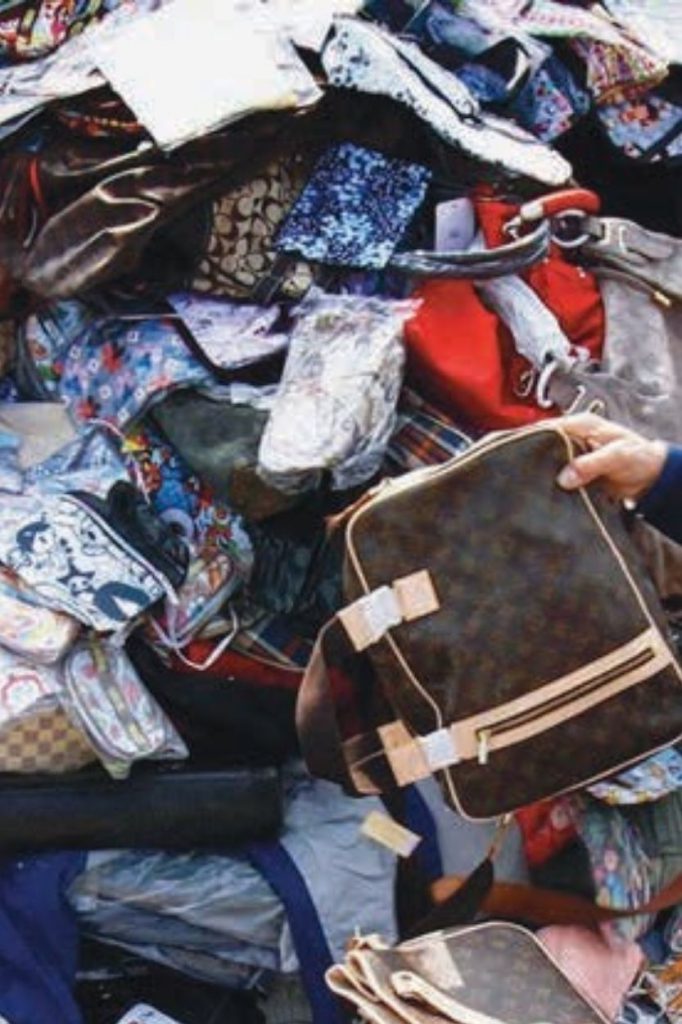
I:Gazelle Rahmani from Pexels. Bugremoda. Fake products seized at Taiwanese market. Photo Beto Franklin from Pexels
"WHILE MANY CITIES ARE HUBS TO THESE CULTURAL SPIKES, SEOUL SCORES THE HIGHEST IN COUNTERFEIT STREETWEAR CULTURE.”
are made unique by tweaking details to create new aesthetic identities. Highsnobiety recently interviewed a Moscow-based counterfeit seller who noted that even customers wearing authentic Raf Simons often agree there is little to no difference in their "counterfeited cousins." This isn't an isolated case. Seoul claims to be the global counterfeit capital, with regulated factory systems and supply chains in place to deliver products that are sometimes as good as, or better than, the retail versions. Known as "1:1" in the replica community, these products are identical in fabrication and detail but delivered at a significantly lower cost.
Certain cities have become hotbeds for youth tribes transforming counterfeit culture into the mainstream.
Seoul, South Korea: Seoul scores highest in counterfeit streetwear culture. What started as an underground subculture post-civil war has become a symbol for youth hyped by social media. As the 5th wealthiest city in the world, its clothing-obsessed culture is driven by Hallyu (the Korean Wave). Because many streetwear brands are unavailable locally, resale prices can reach 5 to 10 times the retail price, creating an intense drive for replicas.
Moscow, Russia: Moscow follows closely. Stringent regulatory policies, a fragile economy, and geopolitical upheavals have kept Russia somewhat insulated from global luxury segments. However, social media ensures that the desire for expression remains high, fueling a buzzing bootleg economy.
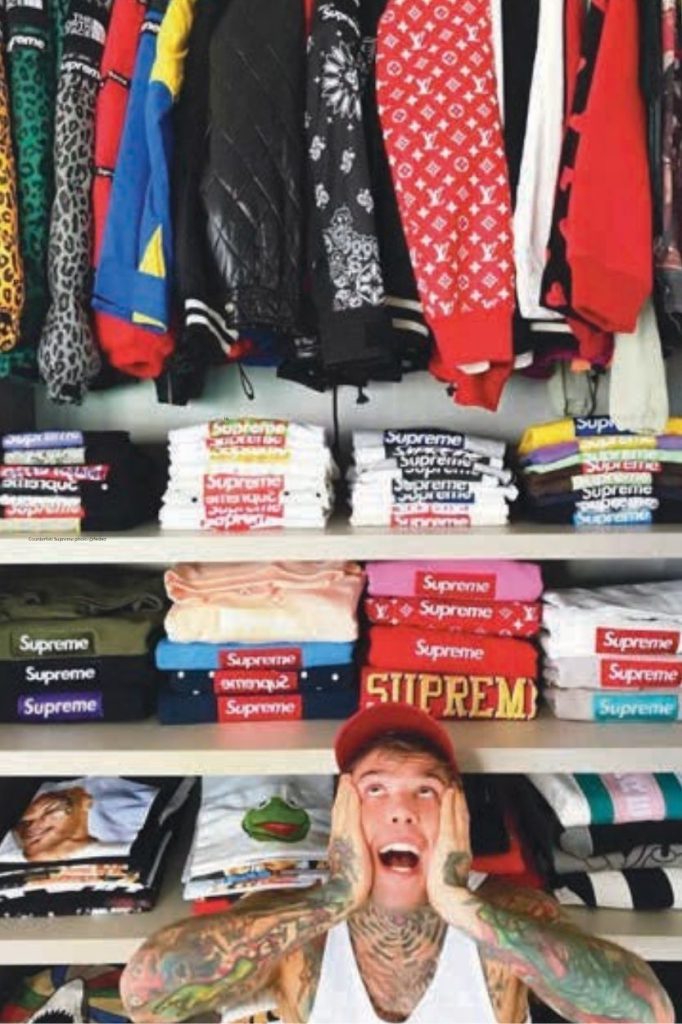
Counterfeit Supreme photo @fedez
Delhi, India: Indian youth culture is intensely invested in counterfeiting as luxury prices remain high for the majority. Palika Bazaar in Delhi is the country's largest underground shopping site, witnessing daily surges of crowds seeking knock-offs. The Sarojini Nagar market also attracts global footfall, filled with affordable replicas fuelled by a rising middle class and a demographic becoming economically independent sooner.
There are arguments that counterfeiting might actually benefit the industry. In their 2012 book The Knockoff Economy, Kal Raustiala and Christopher Sprigman specify that "fashion not only survives despite copying, it thrives due to copying." This "Piracy Paradox" suggests that rampant copying in industries with ambiguous legal boundaries often spurs innovation and acts as free advertising via peer endorsement.
The lines between authentic and knock-off are blurring due to the shifting needs of Gen Z and Millennials. While Millennials laid the foundation for values like sustainability and authenticity, Gen Z consumers tend to favour expression over experience and individuality over originality. In an era where the "look" is the primary currency, the distinction between a genuine label and a high-quality replica becomes less relevant than the identity the garment projects.
According to many replica enthusiasts and sellers, the lines between authentic products and knock-offs are being blurred at an alarming rate. This shift is essentially due to the changing psychology of the emerging needs of Gen Z, alongside the peaking of Millennial aspirations.
The Millennial generation laid the foundation for most contemporary consumption values globally, including a focus on sustainability, ethicality, and authenticity in design, experiences, and product innovation. This susceptibility to prioritise experiences over branded products led Millennials to create cross-pollination avenues for luxury and streetwear.
Gen Z consumers, on the other hand, tend to favour expression over experience and individuality over originality, according to a report from the International Trademark Association. For this demographic, the "visual" of the brand often carries more weight than the heritage of the supply chain. In a digitally-driven landscape where looking the part is a form of social currency, the counterfeit market provides a bridge between high-fashion desires and the economic realities of a younger, brand-conscious generation.