


At the intersection of Gujarati textile heritage and contemporary British womenswear, Dimple Sheth’s label is rooted in family,
love and labour behind a garment.
W: Sahara Jasmine Harmony | @saharmonyy I: - Sahara Jasmine Harmony @saharmonyy & Tahiti Fagan-Michaelson @tahiti._


Walking into the SHETH LONDON press preview, I was warmly welcomed by Dimple Sheth into a space inspired by the artisans’ home in Gujarat. Cultural artefacts, traditional tools and handmade objects filled the room with a sense of love and life. The atmosphere felt familial, inviting me to connect with the
people and culture behind the clothes.
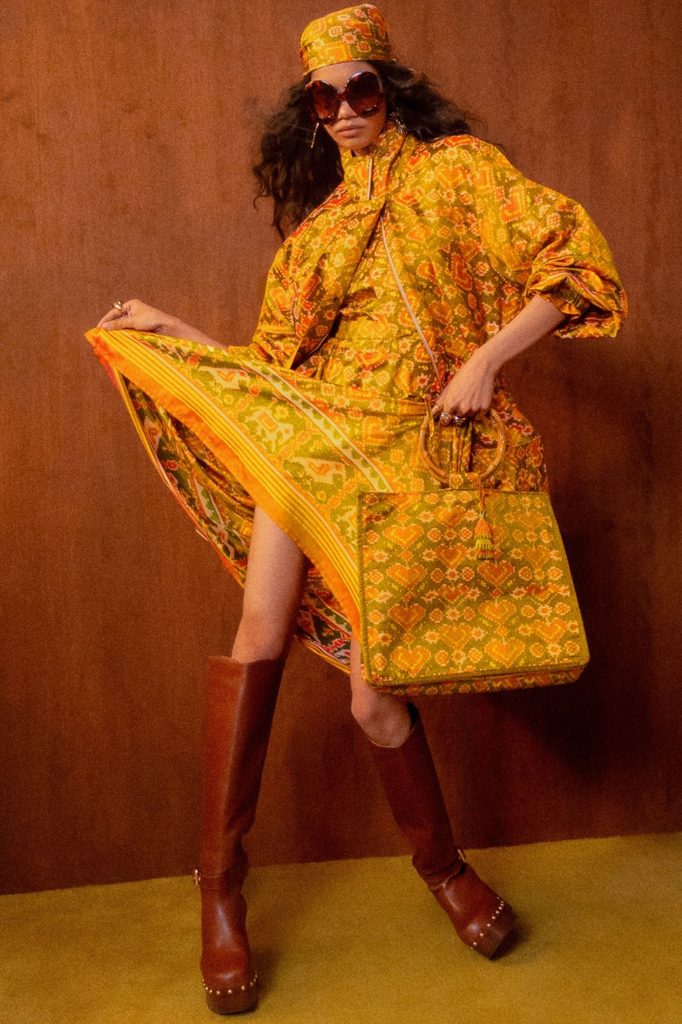
After sixteen months spent developing her label, Dimple wasvisibly emotional. Watching her, I found myself close to tears, too. It was moving to witness the eight of her work coming to life. A London-trained designer from Gujarat, Sheth brings traditional Gujarati craftsmanship into contemporary British
womenswear, combining Patola and Tangaliya weaving with modern silhouettes. Her vision is grounded in a simple idea; keeping traditional craft alive while creating a new space in contemporary fashion.
An intersection of two worlds The name SHETH LONDON connects her family name with the city where she studied fashion at the University of the Arts London. Building the brand gave Sheth an opportunity to create something of her own while drawing on her family’s legacy of business and her connection to Gujarati culture. At the heart of the label is the Makvana artisan family in Rajkot, Gujarat, whose expertise in weaving, spinning and beadwork brings the collection to life. Sheth described the artisans as the “heartbeat and core of the brand”.
“It is a huge responsibility,” she explained, reflecting on the importance of representing traditional craftsmanship and the people behind it. She initially expected to launch the brand within four or five months. Coordinating artisans, manufacturers and her team across India and London soon proved more complex than
anticipated. Learning to reinterpret traditional techniques while preserving their authenticity has been one of her biggest lessons.
“I am constantly learning,” she said.
The people behind the process
The preview itself reflected Sheth’s relationship with the artisans. Inspired by the welcome she received when visiting their home, she recreated elements of that environment in London, incorporating cultural artefacts and offering guests the same sense of hospitality she had experienced in Gujarat.
“It’s not just about the brand but about the people,” she explained.
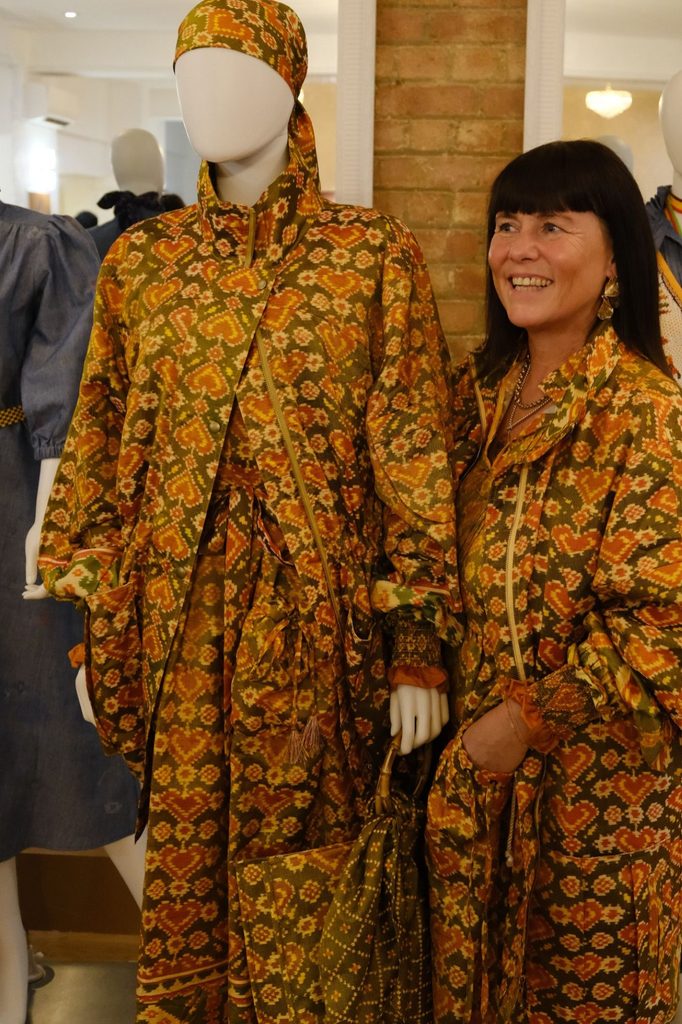
Sheth also spoke about creating studio workspaces for the artisans, decorated with cultural artefacts and connected to their surroundings. She spoke of them as family rather than simply as workers, and her affection for them was evident throughout our conversation. a fashion industry increasingly drawing on Indian craft, this relationship matters. Traditional techniques carry generations of knowledge, yet the people who maintain them can easily be overlooked. Sheth wants the artisans’ contribution to remain at the centre of her brand.
A century of history, sewn into the present The collection’s standout piece, the Poppy Waistcoat, began with a beaded textile Sheth found in her grandmother’s
wardrobe. Around a century old, the panel became the inspiration for a contemporary garment that brings family history into a new generation.
Featuring approximately one kilogram of ceramic beads, the waistcoat takes around twenty days to make by hand.
“I didn’t know it would take 20 days to make the jacket,” Sheth admitted.
The process gave her a new appreciation for the time and labour involved in traditional craftsmanship. Every bead represents another act of skilled work, with he finished piece reflecting the patience and knowledge of the people who made it.
Other pieces carry similar stories. A beaded bag from her grandmother’s wardrobe took around fifteen days to make, while the handmade belts also require days of work. At the preview, miniature handlooms, spinning equipment and toolkts offered a glimpse into the techniques behind the collection.
The team spins yarn, weaves fabric and dyes textiles using traditional methods. Production remains limited to reflect the time and skill these processes demand.
Looking forward Sheth describes her designs as relaxed, free-flowing and distinctive, with considered details giving each garment its own character. Each piece carries subtle differences, shaped by the nature of handwoven textiles. The dress she wore to the preview offered a glimpse of a future collection.
“We are not a trend-based brand,” she explained.
For Sheth, the challenge is to create contemporary clothing while staying connected to the traditions and people that shape it. Her approach is still evolving, but the purpose behind it remains clear: to bring Gujarati craftsmanship to a wider audience and honour the community that sustains it.
Leaving the preview, I pondered how much life a garment can hold. A grandmother’s heirloom, an artisan’s knowledge and a designer’s vision can all come together in a single piece of clothing. At SHETH LONDON, the craft carries these stories forward, stitch by stitch.