

W: Mary Holloway I:CatwalkPictures
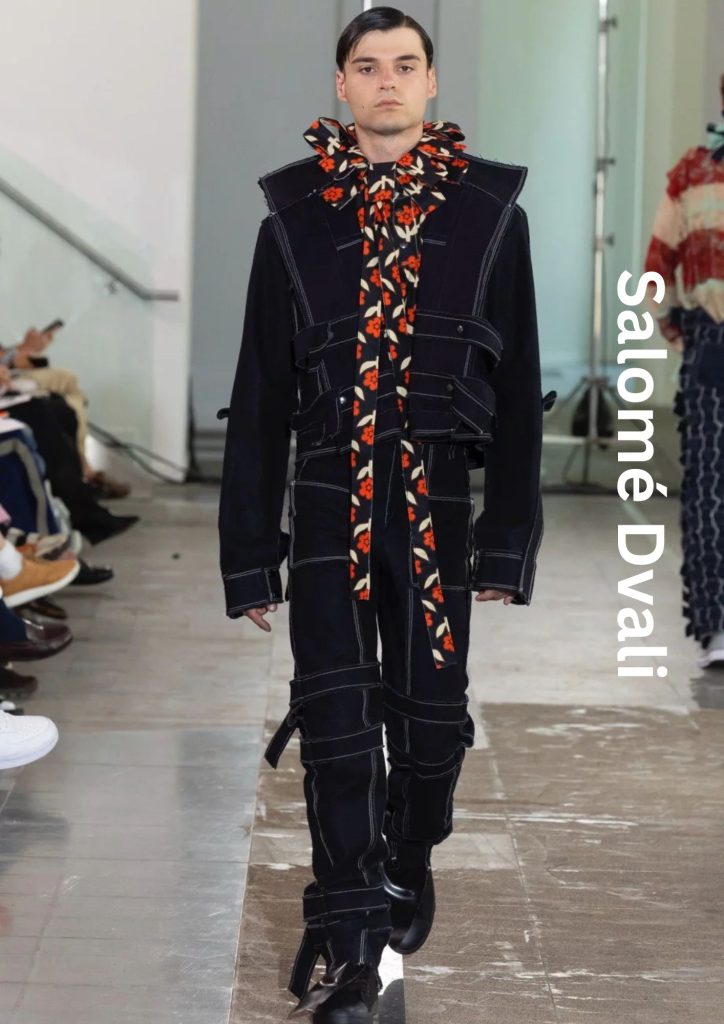
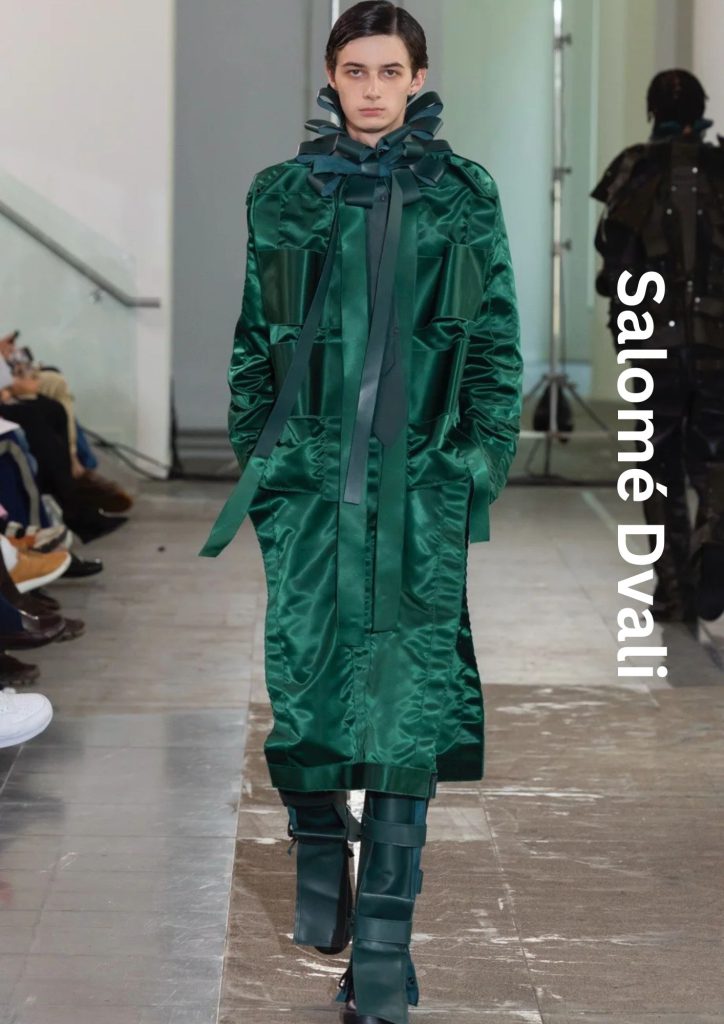
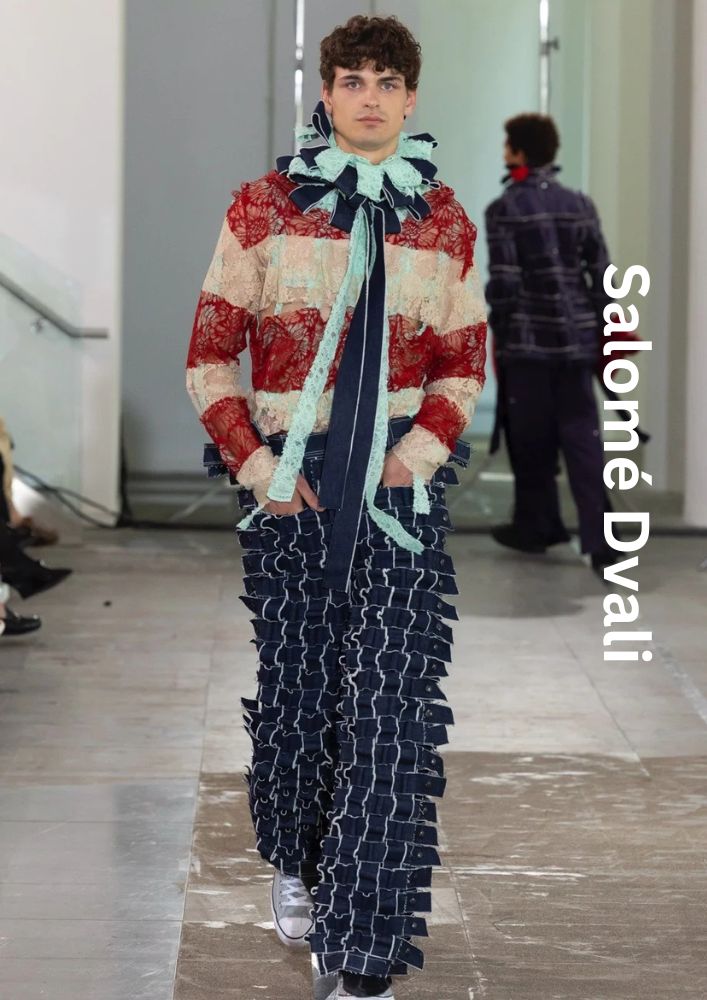
Salomé Dvali’s graduate collection, recently unveiled at the La Cambre-Mode[s] showcase, marks the arrival of a designer who treats fabric with the precision of a structural engineer. Titled "Where Soundlines Fold," the collection is a rigorous exploration of volume and geometry, solidifying Dvali’s reputation as one of the most intellectually focused talents emerging from the Brussels-based institution. By bridging the gap between industrial rigidity and the fluid motion of the human form, Dvali has managed to create a body of work that feels simultaneously like protective armor and high-fashion poetry.
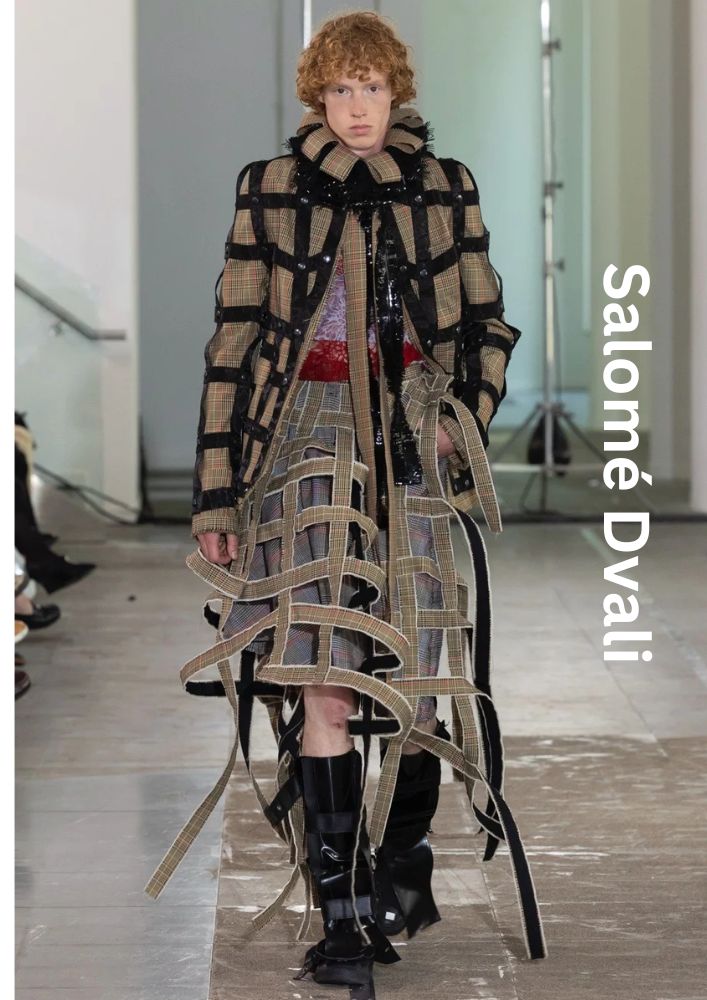
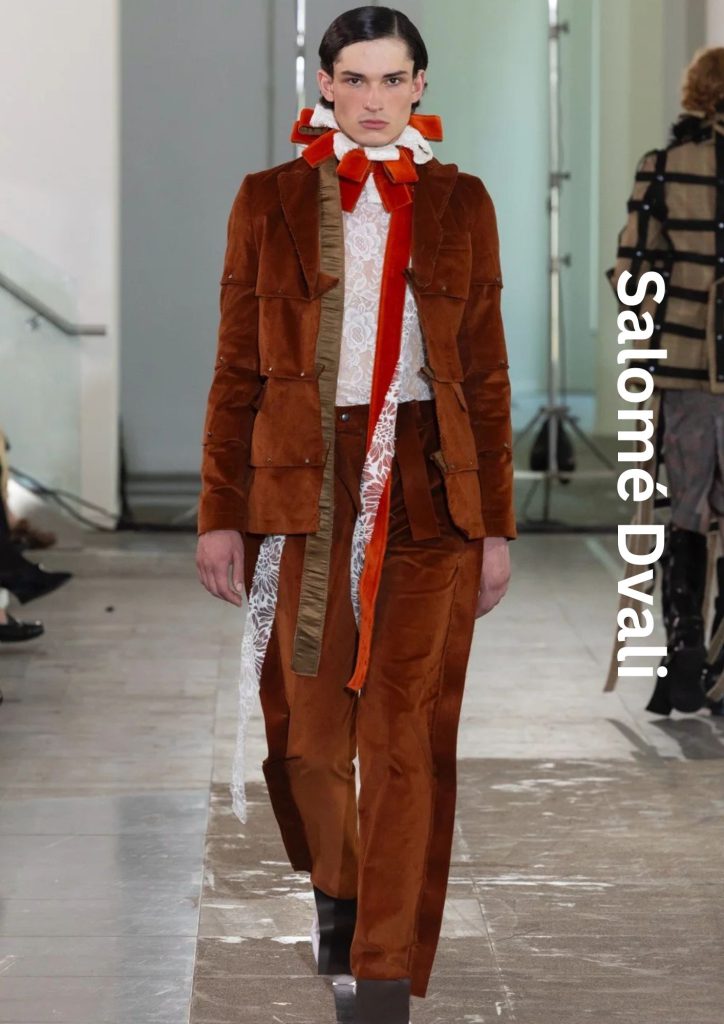
The primary inspiration for the collection stems from the geometric constructions of the late Colombian sculptor Edgar Negret. Much like Negret’s "machine-like" sculptures, which utilized exposed bolts and folded metal to create organic rhythms, Dvali treats her textiles as architectural planes. Collaborating with prestigious suppliers such as Scabal and BuyLeatherOnline, she utilized heavy, high-integrity wools and leathers to build silhouettes that maintain their shape regardless of the wearer’s posture. This is "sculptural tailoring" in its truest sense; every seam feels deliberate, and every fold appears calculated to catch the light in a specific, intentional way.
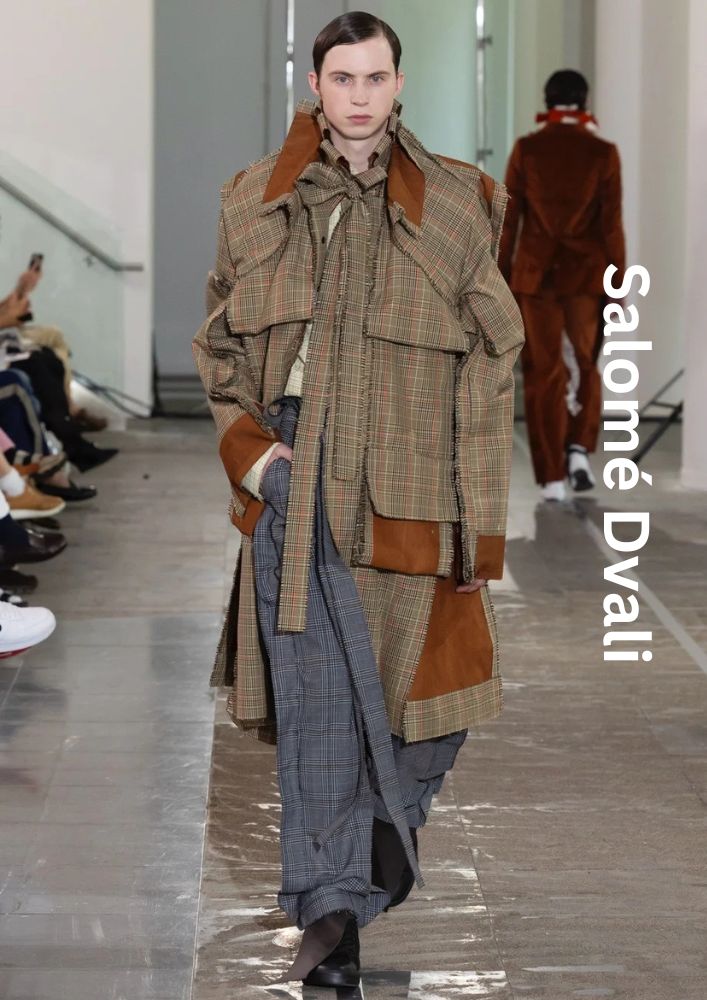
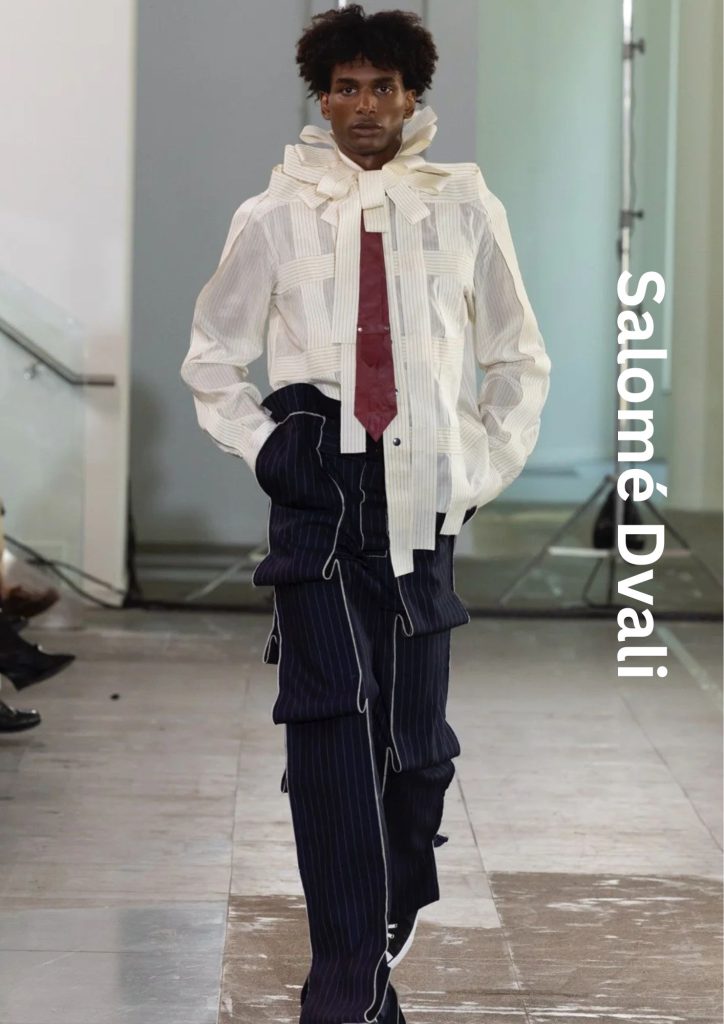
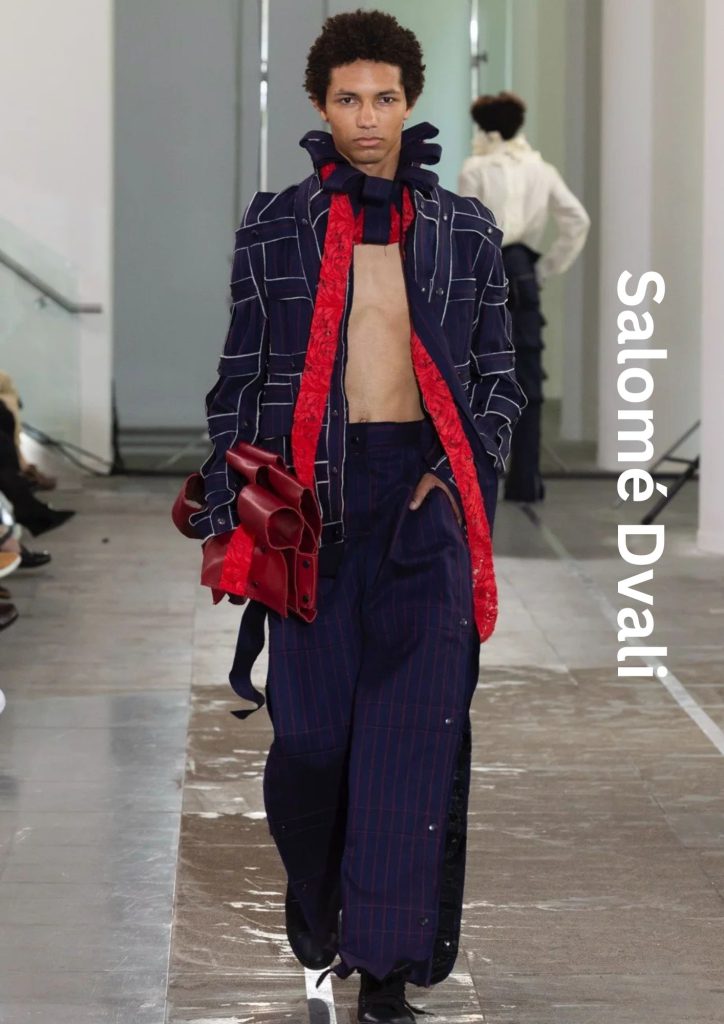
In a landscape often dominated by fleeting digital trends, Dvali’s 2025 output is refreshingly permanent. Her approach to menswear is particularly striking, moving away from traditional draping in favor of interlocking panels and sharp, angular lapels that seem to be snapped or bolted together. Despite the perceived "stiffness" of these geometric shapes, the garments possess a surprising grace in motion. This tension—between the industrial appearance of the construction and the natural ease of the model—is where Dvali’s genius lies. She has moved beyond the experimental textures of her previous work toward a mature design language rooted in fine art and bespoke craftsmanship.
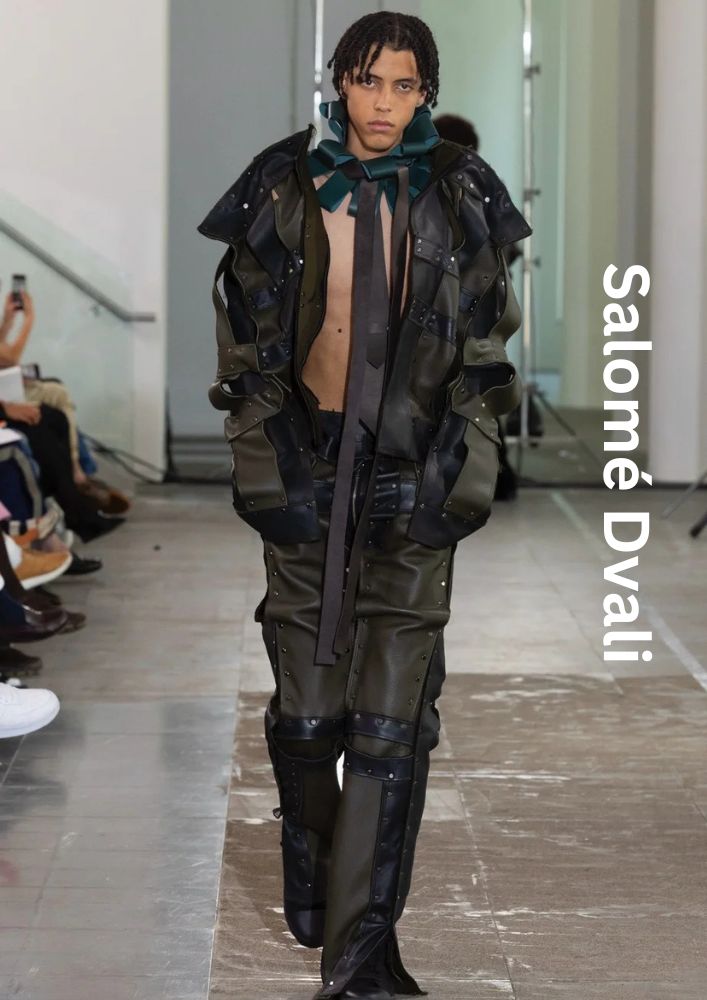
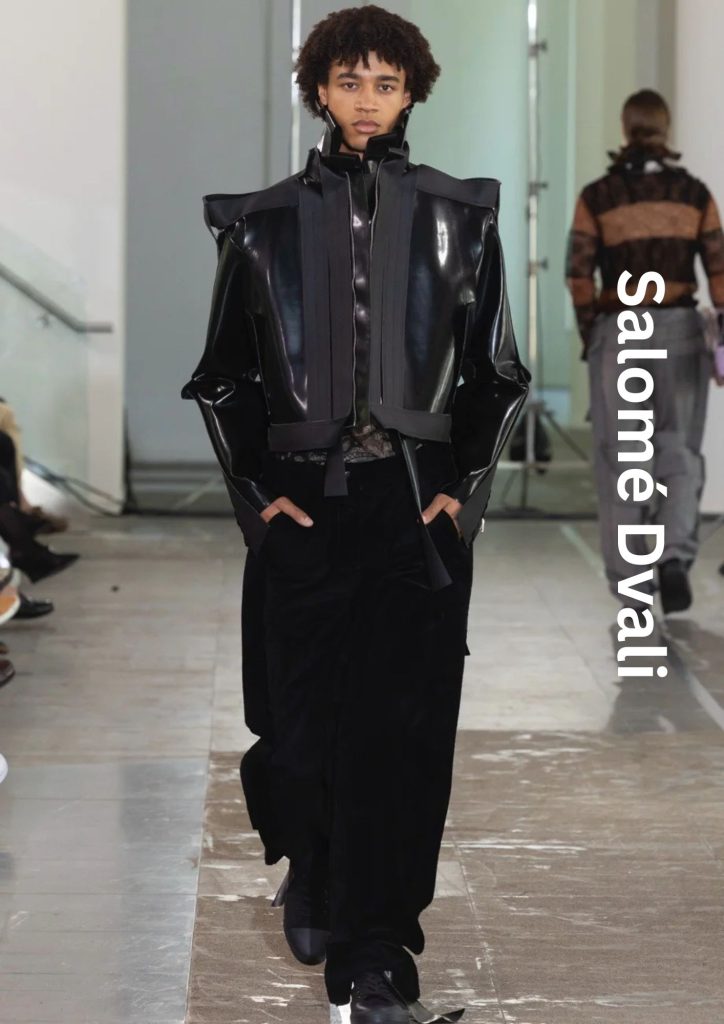
Ultimately, Salomé Dvali is a designer for the modern modernist. Her 2025 show was a standout for its refusal to compromise on technical complexity, favoring a muted, sophisticated palette that allowed the intricate pattern-cutting to remain the protagonist. As she transitions from the academic environment of La Cambre to the global stage, Dvali remains a vital "one to watch." She is not merely making clothes; she is folding space and sound into wearable structures that challenge our perception of what a silhouette can be.